Why the Millennial Vote is Walking Away
“You cannot expect loyalty from people who feel like collateral damage”—Guest Opinion by Jonathan Hoffman
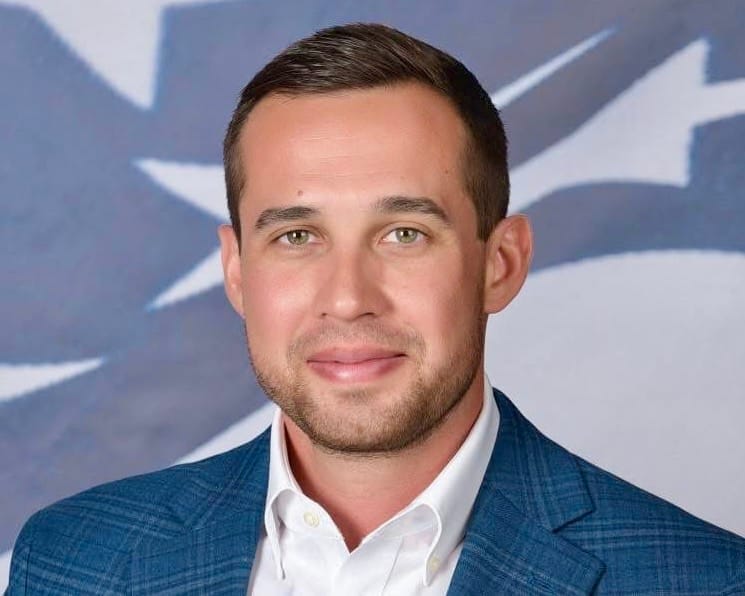
Guest Opinion by Jonathan Hoffman, CEO and President of Southern Freedom Society
In 2024, millennials (roughly ages 30–45) made up one of the largest voting blocs in the country. We’re talking about somewhere in the range of 70–75 million eligible voters nationwide. These aren’t casual voters. These are working adults, parents, people trying to build a life while carrying the weight of today’s economy.
They weren’t just participating. They were deciding outcomes.
And for a moment, something was shifting.
The GOP had a once-in-a-generation opportunity. Economic reality was forcing millennials to reevaluate everything. This is the generation stuck in the middle—raising families, trying to buy homes, juggling childcare, insurance, groceries, and a cost of living that has completely outpaced wages.
The gap between what they earn and what it takes to live a stable life isn’t theoretical. It’s their everyday reality.
Many were starting to move right, not out of blind loyalty, but because they were looking for something different. Something that actually addressed the pressure they’re under.
They were ready to be part of a new coalition.
Instead, they got the same old playbook.
Rather than going all-in on the issues that matter most to millennials—housing affordability, wage growth, inflation, and economic stability—leadership pivoted right back to establishment priorities. Foreign conflicts. Political theater. Business as usual.
And then came another major disappointment.
A lot of people were watching closely to see who would be backed and elevated in Alabama. The expectation was that endorsements would reflect that same shift—toward candidates who actually represent the frustrations and priorities of everyday people.
Instead, for many, the majority of the candidates endorsed by Trump in Alabama felt like more of the same.
That was a letdown.
Because for voters who were already on the fence, already questioning whether anything was really changing, that signaled that maybe it wasn’t.
To millennials, that doesn’t feel like a minor political decision. It reinforces the idea that the system keeps recycling the same type of leadership, regardless of what voters are actually going through.
And the truth is, this frustration didn’t start here.
The distrust. The skepticism. The feeling that the system isn’t built for them. That’s been building for years. Millennials came of age during the 2008 financial crisis, carried debt longer than any generation before them, and are now trying to build families in one of the toughest economic environments we’ve seen in decades.
The patience was already wearing thin.
But now, especially here in Alabama, it’s been pushed even further.
After the shenanigans, the backroom decisions, and the ballot access denials, the Alabama GOP didn’t just ignore the fire. They poured gasoline on it.
You cannot tell people the system is fair while controlling who is even allowed to be on the ballot.
You cannot talk about freedom and representation while shutting out candidates that don’t fall in line.
And you cannot expect a generation of adults—who are raising kids and paying the bills—to stay engaged when they feel like the outcome is being shaped before they ever get a say.
That doesn’t just create frustration. It creates disengagement.
And now we’re seeing the fallout.
Recent 2026 polling trends show nearly half of millennials have little to no confidence in the upcoming elections.
Do the math on that.
If you’re looking at roughly 70–75 million millennial voters, that means somewhere around 30 to 35 million people in this age group alone are losing confidence in the system.
That’s not a small number. That’s a political earthquake.
This isn’t a fringe group. This is one of the largest and most economically active voting blocs in the country. If even a fraction of that group decides to sit out, you’re not looking at a dip in turnout. You’re looking at a fundamental shift in how elections are decided.
And it’s not a shift from one party to the other.
It’s a walk away from the system entirely.
That’s what should concern everyone.
Because when a generation that is carrying the weight of the economy feels economically squeezed, politically ignored, and procedurally shut out, they don’t just switch sides. They disengage.
You cannot build a winning coalition while convincing that same group their voice doesn’t matter.
You cannot expect loyalty from people who feel like collateral damage.
And you cannot win elections on the backs of voters you’ve given every reason to walk away.
If this continues, 2026 won’t just be another election cycle.
It will be a referendum on whether the generation currently holding the economy together still believes this system is worth participating in at all.
Jonathan Hoffman is an Alabama entrepreneur and political campaign consultant who became involved in grassroots activism through local civic issues in his community. He is the founder and CEO of Southern Freedom Society, a citizen-funded media organization focused on public engagement and political awareness. He works with local candidates and volunteers across the state on communication and outreach efforts.
This opinion piece originally appeared on Facebook. It is reprinted here with the permission of the author.
Opinions do not reflect the views and opinions of ALPolitics.com. ALPolitics.com makes no claims nor assumes any responsibility for the information and opinions expressed above.