A New Contract for Alabama’s Veterans
“Veterans in Alabama do not need more symbolism. They need results”—Guest Opinion by Amanda Pusczek
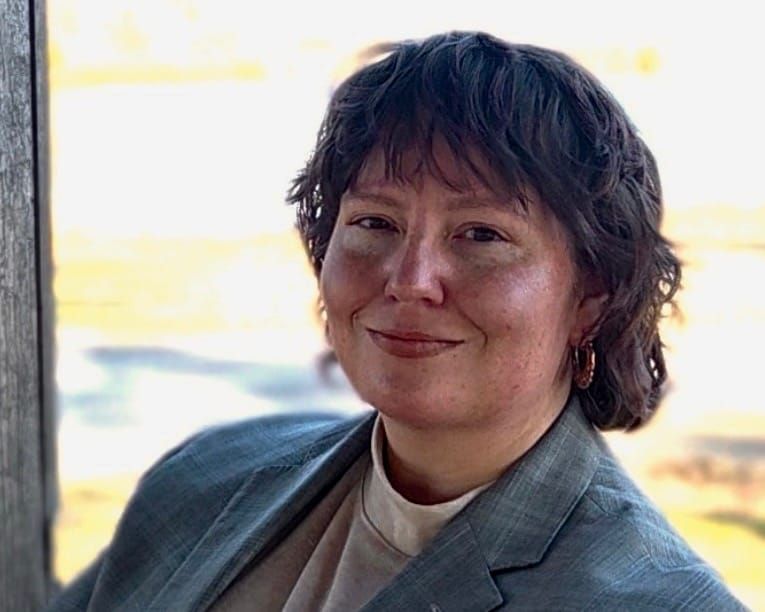
Guest Opinion by Amanda Pusczek
As the May 19th primary day edges closer, the air in Alabama is thick with more than just the humidity of early spring. It is thick with the sound of campaign promises. Across the 4th District—from the diners in Cullman to the community centers in Hamilton, from the courthouse steps in Jasper to the main streets of the Shoals—candidates on either side of the aisle have begun their seasonal clamor for the "Veteran Vote."
It is a predictable ritual, as choreographed as a parade.
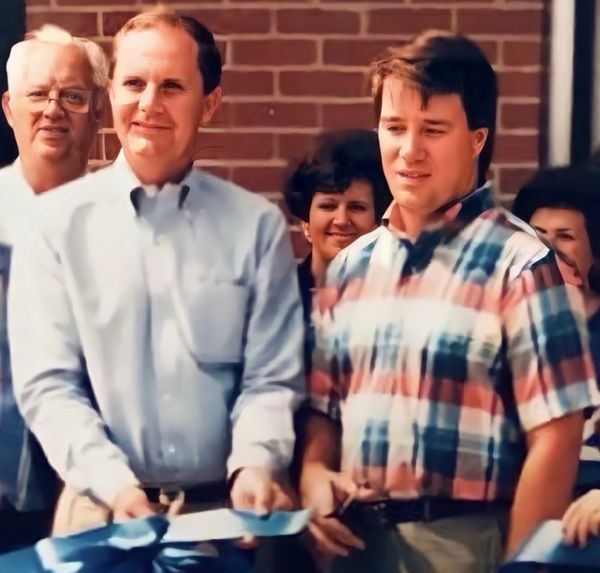
For incumbents, this outreach usually looks like a series of well-timed photo opportunities. There are ribbon cuttings for facilities that have been underfunded for years, and ceremonial pinning events where the gratitude is high but the follow-up is low. We see the billboards wrapped in patriotic red, white, and blue, featuring bold slogans about "Standing with Our Heroes." During these events, veterans are brought to the front of the room, thanked for their service with a firm handshake and a smile, and then sent back to navigate the frustrating realities of daily life. They are left to wait for the "real" recognition—the benefits, the healthcare appointments, the housing assistance—to arrive in the mail, if it arrives at all.
For challengers, the approach is often similar, if a bit less polished. These promises are made in living rooms, at small backyard gatherings, and in the corners of local VFW halls. You hear the vague assurances and the carefully chosen words: "I’m a fighter for veterans." "I’ll never forget your sacrifice.”
But as you listen closely, you realize there is rarely a written policy, a defined budget plan, or a single metric that can be measured or held accountable once the election is over.
So, as we stand on the precipice of another election cycle, the question remains: who is actually fighting for them?
Incumbents and challengers alike lean on ideals instead of action because ideals are easy.
Ideals don’t require a line-item budget. They don’t require a difficult vote on the House floor. They don’t require the hard work of oversight. But let’s be very clear: ideals do not house people. They do not feed families. They do not provide medical care for a chronic injury sustained in the line of duty.
Veterans in Alabama do not need more symbolism. They do not need another lapel pin or a commemorative coin. They need results.
Alabama is home to more than 370,000 veterans. These are men and women who have served in every theater of conflict, from the mountains of Afghanistan to the jungles of Vietnam, and those who kept the peace during the long decades of the Cold War. They represent a massive portion of our state’s soul and its workforce. Yet, despite this enormous population, our infrastructure for veteran care is woefully inadequate.
Currently, there are only two full-service VA medical centers in the entire state of Alabama. Think about the geography of the 4th District for a moment. For a veteran living in a rural stretch of Winston or Franklin County, access to care doesn't just mean a quick trip to the doctor. It means a long drive—sometimes two or three hours—followed by a long wait in a crowded lobby, and, too often, the news that their treatment has been delayed or rescheduled.
Calls for expanded access in underserved regions have persisted for decades. We have heard the same speeches about "bringing care to the veteran" for twenty years, yet those calls remain largely unanswered. The consequences of this inaction are not abstract or political; they are measured in worsening health outcomes, untreated mental health crises, and, in the most tragic cases, lives cut short by a system that simply couldn't get to them in time.
The urgency of this situation is compounded by a demographic reality that many politicians choose to ignore: the age of Alabama’s veteran population. Roughly 65% of our veterans are 45 or older, and more than a third are over the age of 65. These are our neighbors who are entering the years where they need the most support from the healthcare and social systems they were promised.
At the same time, Alabama consistently ranks near the bottom nationally in senior care and general quality of life for the elderly. We have a crisis of care that is hitting our veterans first and hardest. Yet, in the halls of Congress, there has been very little meaningful conversation about expanding senior services. Instead, we see efforts to trim "excess" from the budget.
While the cost of living rises—from the price of eggs at the grocery store to the cost of heart medication—more of our veteran retirees are being forced back into the workforce just to keep their heads above water. Others are delaying retirement altogether, working well into their 70s because the "fixed" income they relied on is no longer enough to cover property taxes and utility bills. We are asking people who have already given their best years to the country to give even more, simply because the system failed to plan for their aging.
Housing presents another growing crisis that cannot be solved with a patriotic slogan. In recent years, cuts to federal housing programs and a lack of local investment have slowed the development of affordable units to a crawl. This has tightened an already strained market in Alabama, making it nearly impossible for a veteran on a fixed income to find a safe, stable place to live.
Veterans are often told that "dedicated funding streams" for veteran housing still exist. On paper, it looks like the money is there. But funding without available housing is an empty promise. You can give a veteran a housing voucher, but if there isn't a single apartment in their county that accepts it, or if the waitlist for a one-bedroom unit is three years long, that voucher is just a useless piece of paper.
For our seniors and veterans on fixed incomes, the gap between the assistance they are offered and the availability of actual roofs and walls continues to widen. We see it in the increasingnumber of veterans "couch surfing" with family members, or living in homes that are falling into disrepair because they cannot afford the retrofits needed to stay mobile and independent.
Economic stability is also under immense pressure. It is a little-known fact outside of military circles that veterans make up roughly one-third of the federal workforce. They transition from the uniform into roles at the Department of Defense, the VA, the Postal Service, and other agencies where they continue to serve their country in civilian roles.
However, recent political instability and budget cuts have left many of these workers facing layoffs, furloughs, or extreme uncertainty. These are individuals who planned their lives around the stability of a federal career, only to find themselves used as bargaining chips in partisan budget battles. They are confronting financial insecurity with little acknowledgment from those in power who claim to "support the troops." If you support the troops, you must also support the workers they become once the uniform comes off.
Veterans are not asking for gestures. They are asking for solutions that reflect the magnitude of their service. If I am elected to represent the 4th District, I am not going to offer you more of the same. I am offering a commitment to the following pillars of a new contract for Alabama veterans:
- A Fully Funded, Decentralized VA Healthcare System
We must move beyond the "two-center" model. We need a VA system that provides timely, accessible care regardless of where a veteran lives. This means investing in more community-based outpatient clinics (CBOCs) throughout rural Alabama. It also means ensuring that discharge status is not a barrier to receiving basic mental health and emergency care. We need to expand mental health services to include robust trauma and PTSD support, with providers who are specifically trained in service-related conditions, including the long-term effects of toxic exposure from burn pits and chemicals.
Furthermore, we need to fix the bureaucracy of travel. Our veterans shouldn't have to wait months for a travel reimbursement check after driving 100 miles for a check-up. We need systems that work in real time, acknowledging that for a veteran on a fixed income, the price of a tank of gas is a significant barrier to care.
- Dignity in Aging
We must invest in programs that reduce senior isolation and strengthen our communities. This includes supporting intergenerational housing projects, volunteer networks, and opportunities for veterans to continue finding purpose in their post-service lives. We need to bridge the digital divide by providing access to technology and training so that older veterans can utilize telehealth and stay connected to their families. Most importantly, we need reliable, affordable transportation networks in rural Alabama that keep seniors connected to their doctors and their neighbors.
- A "Housing First" Reality
We need to stop talking about vouchers and start talking about construction. We must restore and expand federal programs that incentivize the development of affordable housing specifically for veterans. This includes support services that prevent homelessness before it begins—legal aid for those facing eviction, financial counseling, and emergency grant programs. We also need to fund home retrofit programs that allow older veterans to install ramps, grab bars, and other modifications so they can age with dignity and independence in their own homes.
- Accountability in Benefits and Employment
Navigating the VA shouldn't require a law degree. We need to fund more dedicated benefits counselors who are embedded in our communities, not just behind a phone line in Washington.
We also need job placement programs that are insulated from shifting political priorities—protections that ensure when a veteran enters a training program or a federal job, that opportunity won't disappear because of a change in the administration.
In short, the veterans of Alabama are asking for what anyone would: access to the things they were promised, stability in their daily lives, support when they fall on hard times, and accountability from the people they sent to represent them.
For too long, the "Veteran Vote" has been treated as a monolithic block that can be bought with a few patriotic platitudes every two or four years. But Alabama veterans are not a campaign prop. They are a diverse, aging, and increasingly vulnerable population that has been let down by a "business as usual" approach in Washington.
The 4th District deserves a representative who understands that a "thank you for your service" is only the beginning of the conversation, not the end of it. We need to move past the billboards and the ribbon cuttings. We need to roll up our sleeves and do the boring, difficult, essential work of governing.
Veterans in Alabama know exactly what they need. They’ve been telling us for years. The only question left is whether the people seeking their votes are finally willing to deliver it. On May 19th, and every day after, I intend to show you that I am.
Amanda Pusczek is a seasoned medical professional and lifelong advocate for marginalized and “othered” communities. Her decades of nursing have shown her what policy failures look like in real life — families bankrupted by illness, rural hospitals shuttered, patients turned away. Amanda is running for Congress as a Democrat in Alabama’s 4th District because care should not depend on your ZIP code, income, or job.
For more information, visit https://www.amandaforalabama.com or follow her on social media.
Opinions do not reflect the views and opinions of ALPolitics.com. ALPolitics.com makes no claims nor assumes any responsibility for the information and opinions expressed above.