A Visionary Move: President Trump Restores American Naval Supremacy
“These ships are floating deterrence—clear, visible, unmistakable signals that America will not be pushed, boxed in, or outmatched”—Perry O. Hooper Jr.
Guest Opinion by Perry Hooper, Jr.
For years, Washington talked about “deterrence” while quietly accepting decline. Presidents came and went, defense strategies were rebranded, and yet America’s shipyards rusted, our fleet aged, and our adversaries pressed forward with confidence. That era is over.
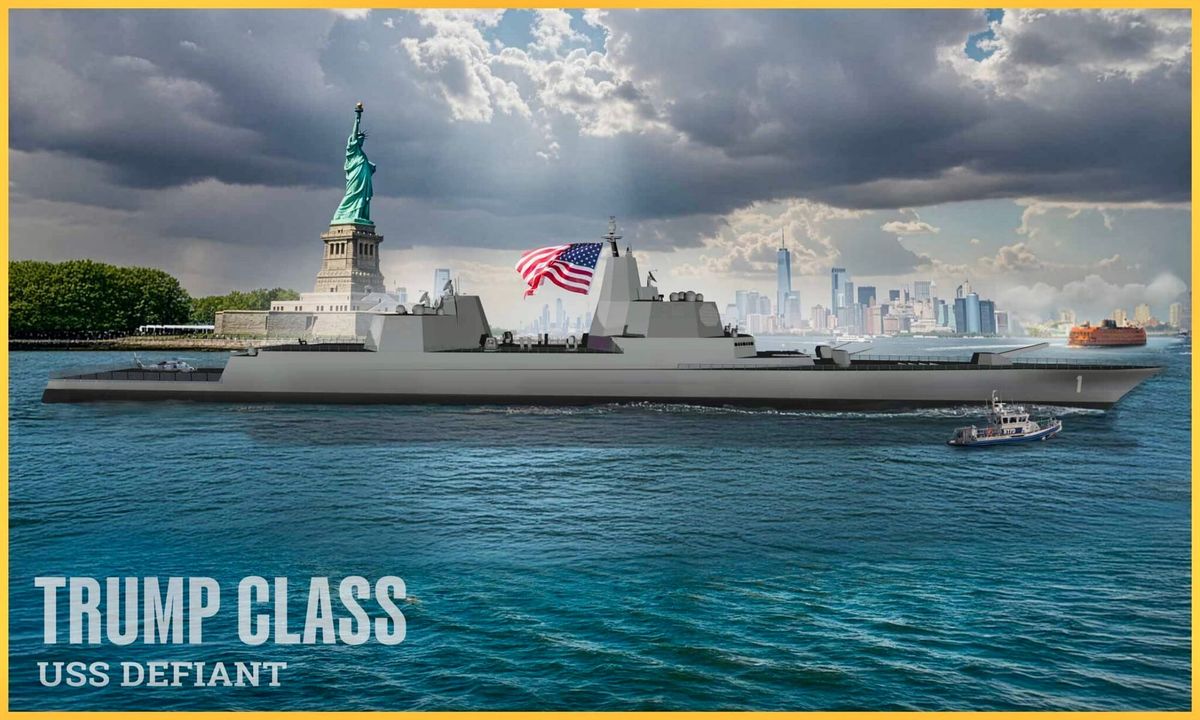
President Donald J. Trump’s announcement of a new class of American battleships is not nostalgia. It is strategy. It is foresight. And it is exactly the kind of bold, unapologetic leadership the moment demands.
The critics are already predictable. They scoff at the word “battleship,” as if strength itself were outdated. They whisper about costs while ignoring the price of weakness. They argue yesterday’s wars while President Trump prepares America for tomorrow’s threats. That contrast tells you everything you need to know.
This new class of battleships is not a return to World War II steel and cannons. It is a forward-looking platform built for the modern battlefield: missile dominance, hypersonic capability, layered air and missile defense, and yes drones. The ability to project overwhelming power anywhere on the globe. These ships are floating deterrence—clear, visible, unmistakable signals that America will not be pushed, boxed in, or outmatched.
More importantly, this decision reflects something Washington had forgotten: peace is preserved by strength, not by press releases or multilateral wishful thinking. Our adversaries—China, Russia, Iran, and their proxies—understand power. They respect capability. They exploit hesitation. President Trump understands this reality instinctively, and he acts accordingly.
There is also a deeper, often ignored dimension to this move: American industry. Building a new class of battleships means reviving shipyards, rebuilding supply chains, training skilled workers, and restoring pride in American manufacturing. It means jobs, apprenticeships, and industrial capacity that serve both national defense and economic resilience. This is national security policy that actually strengthens the nation.
Contrast that with the last administration’s approach: endless studies, diversity seminars, procurement delays, and shrinking readiness. We were told that restraint would calm the world. Instead, it emboldened aggressors and left America reacting instead of leading. President Trump is flipping that script—decisively.
Equally important as the ships themselves is how they will be deployed. This is where the true vision of President Trump’s decision comes into focus.
These new American battleships are designed to operate as command-and-control anchors in multiple configurations—far more flexible than traditional surface combatants. In some theaters, they will serve as the centerpiece of Surface Action Groups, operating independently or alongside destroyers and cruisers to project power without relying on a carrier’s presence. In others, they will integrate seamlessly into Carrier Strike Groups, extending missile defense coverage, increasing strike capacity, and reducing vulnerability to saturation attacks.
In the Indo-Pacific, where distance, deterrence, and survivability define strategy, these battleships can operate forward as persistent deterrence platforms—capable of defending allies, protecting sea lanes, and holding adversary assets at risk without escalating to open conflict. Their missile-heavy design allows them to respond rapidly across air, surface, and subsurface domains, creating uncertainty for any adversary contemplating aggression.
In the Middle East, their deployment sends an equally clear signal. Whether countering Iranian proxy threats, reinforcing NATO’s eastern flank, or ensuring freedom of navigation in contested waters, these ships act as visible symbols of American resolve. They do not need to fire a shot to be effective. Their presence alone reshapes calculations in foreign capitals.
Crucially, these battleships also give the President and military commanders options. They reduce dependence on any single asset, complicate enemy targeting strategies, and allow the United States to surge credible force without immediately committing carriers or large troop deployments. That flexibility is not accidental—it is strategic design.
This is how deterrence is supposed to work: layered, mobile, unmistakable. Not hidden. Not ambiguous. Not apologetic.
Another underappreciated advantage of this new battleship class is speed—both physical speed and operational speed—compared to traditional carrier deployments.
Aircraft carriers are unmatched symbols of American power, but they are also complex, layered, and deliberately paced assets. A carrier strike group moves at the speed of its slowest supporting element. Its deployment is visible, deliberate, and often telegraphed well in advance.
These new battleships are different. With projected speeds exceeding 30 knots, they can outrun and outmaneuver carrier groups, repositioning rapidly across theaters without the same logistical and operational footprint. They can surge ahead, flank, or redeploy independently while carriers follow on a broader timeline.
A fast-moving battleship group can arrive first, establish missile defense coverage, impose sea control, and create a buffer that protects follow-on forces. It buys time, space, and options—the three currencies of modern warfare.
This is not about replacing carriers. It is about complementing them intelligently.
It’s also about drones, distributed Power, and the evolution of naval warfare. A critical dimension of this new battleship class is how it is designed to operate in conjunction with unmanned systems.
These ships act as motherships for a distributed network of drones—air and surface, and subsurface. Extending their reach far beyond the horizon. Unmanned systems provide surveillance, targeting, screening, and reconnaissance, multiplying effectiveness while reducing risk to sailors.
This unmanned integration shortens decision cycles. Data flows directly into command systems, enabling rapid response across missions. Speed of information becomes decisive.
This Is 4D chess at sea. Visible strength up front. Strategic depth underneath. Opponents react to what they see while leverage develops where they cannot. History will look back on this moment as a turning point. When America chose renewal over retreat, confidence over caution, and leadership over managed decline. The oceans still matter. Sea lanes still matter. Deterrence still matters.
And America is leading again.
Perry O. Hooper Jr. is a longtime Alabama Republican figure, former Alabama Legislator and Montgomery businessman. He served as Co-Chair of “Alabama Trump Victory” in 2016, and served as an at-large delegate to the Republican National Convention. He is a noted civic leader in Montgomery with deep family roots in Alabama’s legal and political history.
Opinions do not reflect the views and opinions of ALPolitics.com. ALPolitics.com makes no claims nor assumes any responsibility for the information and opinions expressed above.