
Alabama Fuel Network Aids Storm Prep and Recovery
Local petroleum and convenience stores play key role in stocking essentials, powering recovery, keeping communities moving as winter storm hits
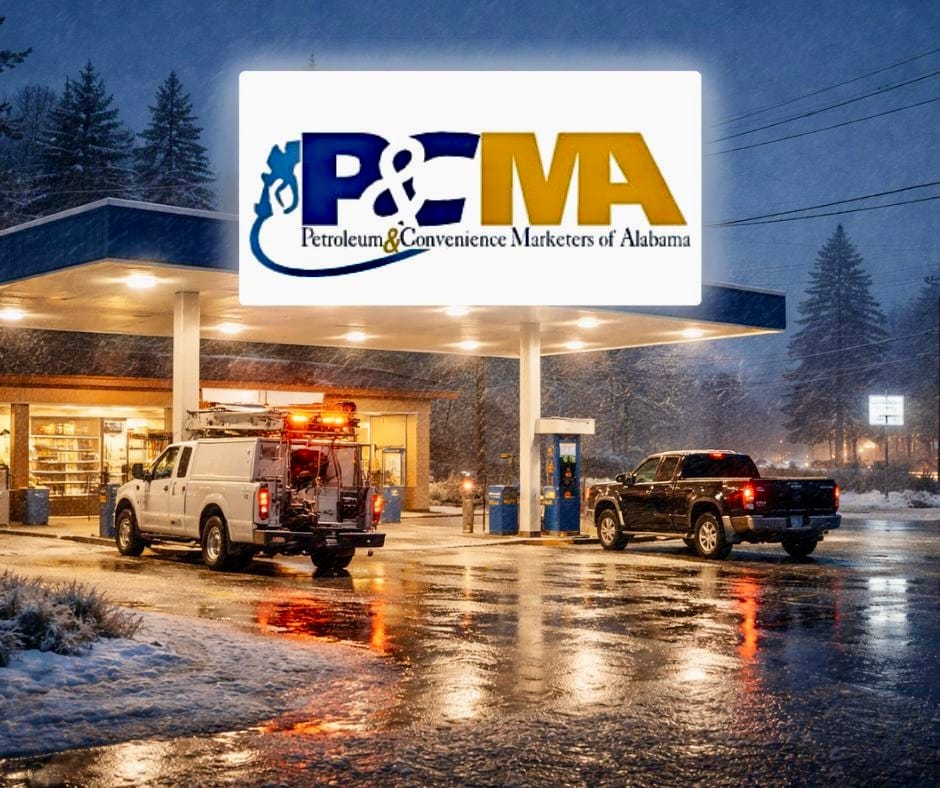
Across Alabama, the State’s convenience stores and fuel suppliers are stepping up to help communities before, during and after severe weather strikes.
As Winter Storm Fern battered the central and eastern United States this weekend, ice, sleet and snow brought hazardous conditions to northern and central Alabama. The National Weather Service reported ice buildup on lines and downed trees, while Gov. Kay Ivey declared a State of emergency and activated the National Guard to aid response efforts Statewide.
The storm — part of a larger system that knocked out power for more than a million customers across the U.S. and disrupted thousands of flights — has underscored how critical fuel access and stock of essentials are when weather turns extreme.
For everyday residents, petroleum and convenience stores are familiar fixtures on Alabama’s street corners. But their role goes far beyond snacks and gasoline. The Petroleum and Convenience Marketers of Alabama (P&CMA), a nonprofit trade group representing about 200 petroleum marketers and convenience store operators Statewide, says its members are vital when storms approach and in the hours and days that follow.
“Fuel and access to essential goods quickly become lifelines,” said J. Bart Fletcher, President of P&CMA. Before a storm, stores stock up on fuel, food, water, ice, batteries and other supplies so families can prepare close to home.
Behind the scenes, bulk fuel providers coordinate with suppliers and emergency planners to ensure deliveries can support critical infrastructure if power is lost. After the storm, that coordination becomes even more important, Fletcher said.
“Generators powering hospitals, emergency shelters, and homes depend on fuel,” Fletcher continued. “Utility crews restoring electricity and water need reliable access to gasoline and diesel.”
That work often begins before roads are clear and conditions are safe. P&CMA members invest year-round in backup power, storage, trained drivers and emergency plans. These investments help keep fuel flowing to first responders, utility crews and residents when other systems are strained.
While the sight of a store with its lights on and pumps flowing can signal a return to normal, P&CMA leaders note that the bulk fuel operations behind the scenes are just as essential to recovery. Without fuel deliveries to generators and recovery crews, reopening roads and restoring services can slow.
Employees at local stations often live in the same communities affected by storms, and many report to work even if their own homes were damaged. Their efforts, the group says, are part of what helps towns and cities rebound after extreme weather.
With severe weather systems like Winter Storm Fern crossing broad regions and unpredictable conditions becoming more common, Alabama’s resilience hinges on strong partnerships between industry, government and emergency responders. The State’s petroleum and convenience network remains a key part of that system — keeping people prepared, powered and moving before and after the storm.