Alabama Leads 24 States Urging Federal Trans Funding Halt
Alabama AG Marshall urges HHS to permanently block Medicare and Medicaid funds for child sex-change procedures
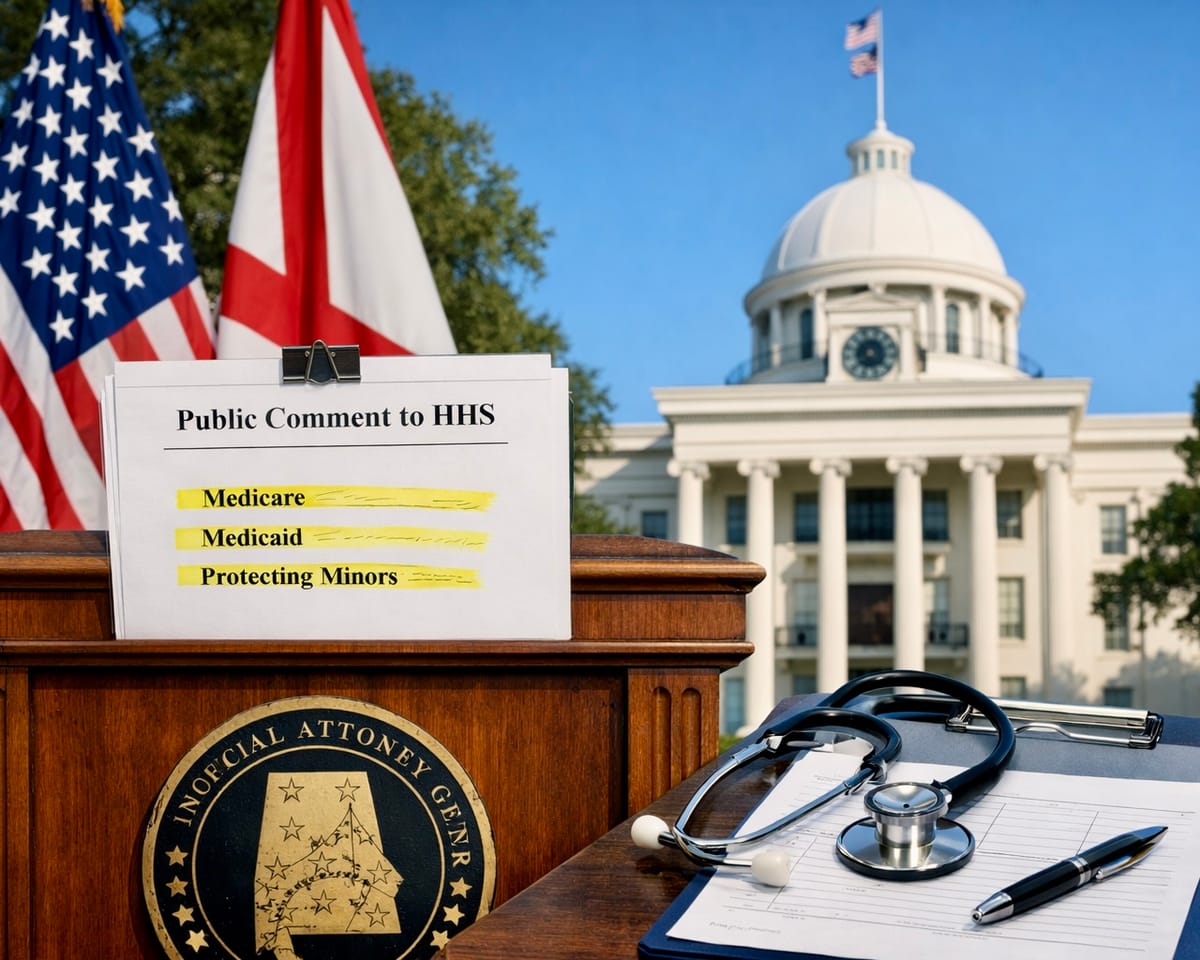
Alabama Attorney General Steve Marshall is leading a coalition of 24 States in urging the federal government to permanently stop Medicare and Medicaid funding for sex-change procedures involving minors.
In a formal comment letter filed this week with the U.S. Department of Health and Human Services, the States asked federal officials to finalize proposed rules that would end taxpayer funding for such procedures under Medicare, Medicaid, and the Children’s Health Insurance Program. The letter was addressed to HHS Secretary Robert F. Kennedy Jr. and comments on two pending regulatory changes under review by the Centers for Medicare & Medicaid Services.
“Medicaid and Medicare should never have been allowed to use taxpayer dollars to fund radical and dangerous sex-change procedures for children. We support the Trump administration’s proposal to reverse course,” Attorney General Marshall said. “We know the dangers of these procedures firsthand. Through years of litigation defending Alabama’s law, we uncovered a political and medical scandal involving the leading medical guidelines that recommend using sterilizing hormones and surgeries to ‘treat’ children suffering from gender dysphoria. The guidelines were built on ideology and politics, not science, and have led to untold harm to children and their parents. Children deserve better, and the first step in helping them is to stop funding the harm.”
The letter draws heavily on evidence gathered during Alabama’s defense of its 2022 law restricting certain medical treatments for minors. During that litigation, the State examined the “Standards of Care 8,” published by the World Professional Association for Transgender Health (WPATH).
According to the coalition’s filing, evidence showed that WPATH used its eighth edition guidelines, known as SOC-8, to advance political and legal objectives. The States argue the organization adjusted treatment recommendations based on political factors, departed from accepted best practices in drafting medical guidance, and limited the release of systematic reviews evaluating the safety and effectiveness of these procedures for minors. The letter also references evidence that WPATH labeled castration as “medically necessary” for certain biological males who identify as “eunuchs.”
The coalition contends that federal healthcare programs should not subsidize treatments they believe lack strong scientific backing and carry long-term risks for children.
Marshall was joined on the letter by Attorneys General from Alaska, Arkansas, Florida, Georgia, Idaho, Indiana, Iowa, Kansas, Kentucky, Louisiana, Missouri, Montana, Nebraska, North Dakota, Ohio, Oklahoma, South Carolina, South Dakota, Tennessee, Texas, Utah, West Virginia, and Wyoming.
Alabama has been at the center of legal battles over youth gender-transition care in recent years. In 2022, the Legislature passed the Vulnerable Child Compassion and Protection Act, banning puberty blockers, cross-sex hormones, and gender-affirming surgeries for individuals under age 19. The law faced federal challenge shortly after its enactment. Plaintiffs — including advocacy groups and families — argued the ban was unconstitutional and harmful to transgender youth. However, in May 2025 they withdrew their lawsuit, leaving the statute in force and marking a significant victory for state officials who defended the measure in court. Supporters, including Attorney General Marshall, said the withdrawal validated concerns about the science and policies behind youth gender-transition care. Critics of Alabama’s law had described it as an infringement on parental rights and medical decision-making.
Nationally, the debate over age limits for surgical interventions has also shifted among medical professionals. Recently, the American Society of Plastic Surgeons recommended that gender-related chest, genital, and facial surgeries generally be delayed until a patient is at least 19 years old, citing limited evidence that benefits outweigh risks for younger patients. While other medical groups, including the American Medical Association and the American Academy of Pediatrics, maintained that decisions should be made by doctors, patients, and families, they echoed a cautious stance on surgical care for minors.
The full comment letter filed with HHS is available through the Alabama Attorney General’s Office at THIS LINK.