Alabama Ranks 45th in Freedom: A Wake-Up Call for the Yellowhammer State
Guest Opinion by Murray Edwards
Guest Opinion by Murray Edwards
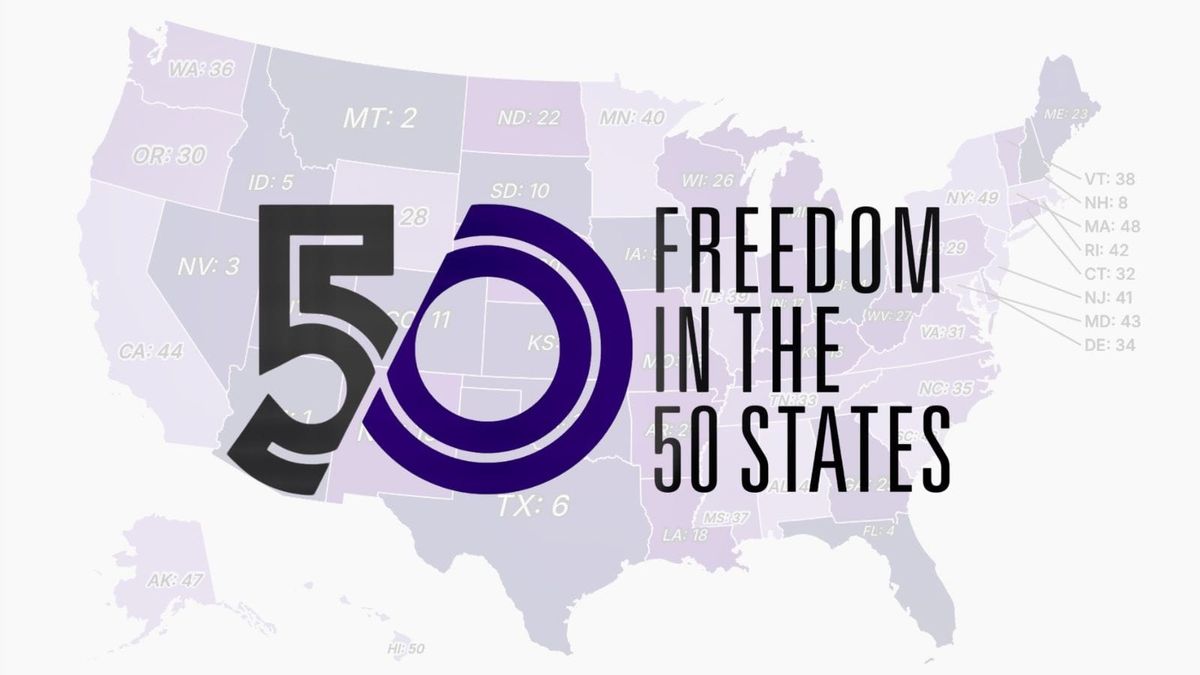
The recent Cato Institute’s 2026 edition of Freedom in the 50 States delivers an uncomfortable verdict for Alabama: 45th overall.
That places the state near the bottom of the pack, behind California of all places, and ahead of only a handful of others (South Carolina, Alaska, Massachusetts, New York, and Hawaii). For a Deep South state long governed by Republicans and proud of its conservative reputation, the ranking is a stinging indictment of policy choices that have prioritized control over liberty.
Cato’s index is not a partisan scorecard. It measures how state policies protect or restrict both economic freedom (fiscal burden, housing, occupational licensing, tech and consumer rules) and personal freedom (education choice, firearms, speech and association, medical decisions, recreational activities, and limits on law enforcement overreach). States and governors are scored across 97 policy variables in 10 categories. Arizona tops the list, followed by Montana, Nevada, Florida, and Idaho. Many high-ranking states are Republican led, but the bottom tier includes three red states, Alabama among them.
Outgoing Governor Kay Ivey ranks as the seventh-worst governor overall, an outlier among Republicans whose peers largely dominate the top of the gubernatorial rankings.
Alabama’s weaknesses are telling.
It ranks near the bottom (48th) in Freedom from Law Enforcement Overreach, a category that examines civil asset forfeiture protections, police accountability, surveillance limits, and related safeguards.
Cato assigns F grades to states like Alabama in this area for weak forfeiture rules and limited remedies against overreach. Recreational freedom is another soft spot (Alabama at 38th); policies restricting adult access to marijuana, hemp products, and certain gambling options drag the score down.
Governor Ivey received an F in related gubernatorial assessments for advancing further restrictions.
Speech and association protections land in the middle of the pack. While Alabama has historically performed better on some fiscal measures (relatively low state-level tax burdens) and firearms, those strengths are not enough to offset regulatory and personal-freedom shortfalls under the index’s weighting.
This is not new. Earlier Cato editions consistently showed Alabama doing better on economic freedom than personal freedom, a pattern common in socially conservative Southern states. Low taxes help, but occupational licensing barriers, housing restrictions, limited education choice relative to leaders like Arizona or Florida, and heavy-handed approaches to victimless adult activities erode overall liberty.
Neighbors such as Florida (4th), Georgia (25th), and Texas (6th) demonstrate that conservative governance can produce stronger results when it prioritizes broad individual autonomy rather than selective controls.
The ranking should embarrass Montgomery. Republican majorities have controlled the Legislature and the governorship for years. Claims of “conservative” leadership ring hollow when the result is near-bottom freedom scores and a governor graded poorly by a think tank focused on limited government. Voters who support the GOP for lower taxes, gun rights, and skepticism of expansive government deserve policies that actually expand opportunity and personal autonomy, not more licensing hurdles, forfeiture risks, or recreational prohibitions that treat adults like wards of the state.
Alabama has the ingredients for better: a right-to-work tradition, strong Second Amendment support in practice, and room to expand school choice and housing reforms that other states have used to climb the rankings.
Policymakers could start by strengthening protections against civil forfeiture, easing occupational licensing reciprocity, advancing broader education savings accounts, and revisiting restrictions on adult recreational choices that do not harm others. Doing so would not abandon conservative principles; it would fulfill them.
The Cato results are a data-driven reminder that party labels do not guarantee freedom.
Alabama can remain culturally traditional while becoming freer and more prosperous. The alternative is continued stagnation near the bottom of the rankings, with citizens paying the price in opportunity and autonomy.
What will incoming Governor Tommy Tuberville do to improve Alabama’s standing? The House and Senate have chosen to retain Nathanial Ledbetter as House Speaker and Garlan Gudger Jr as Senate Pro Tem—leaders who could be seen as part of the problem.
Will they take a different approach?
Only time will tell—and Alabamians will be watching.
Originally published on The Newscasters’ Studio, reprinted here by permission.
Opinions do not reflect the views and opinions of ALPolitics.com. ALPolitics.com makes no claims nor assumes any responsibility for the information and opinions expressed above.