
Alabama Wants to Lead Autism Research — So Why Is It Mandating 1990s Nutrition Policy?
“If Alabama truly wants to lead, it must first stop making nutrition decisions that contradict modern biology”—Alicia Haggermaker
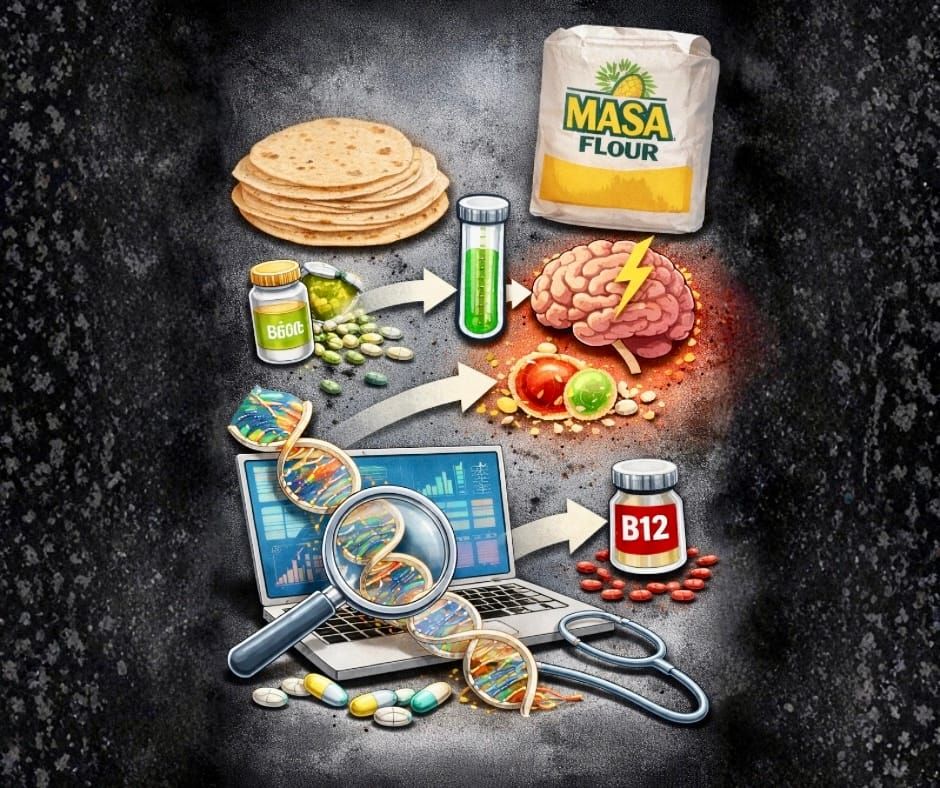
Guest Opinion by Alicia Boothe Haggermaker
Alabama has recently signaled that it wants to position itself as a leader in autism research and innovation. That’s an ambitious and commendable goal. Families affected by autism need better science, better policy, and better outcomes.
But if Alabama truly wants to lead, it must first stop making nutrition decisions that contradict modern biology.
In 2026, Alabama will require synthetic folic acid to be added to corn masa and tortillas sold in the state. This policy mirrors older grain-fortification strategies originally designed decades ago. While well-intentioned, it reflects an outdated, one-size-fits-all understanding of human metabolism—an approach fundamentally at odds with what autism research now tells us.
The Problem Isn’t Folate. It’s the Form
Folate (vitamin B9) is essential. That part isn’t controversial.
What is controversial—and increasingly well documented—is the assumption that synthetic folic acid behaves the same way in every human body.
It doesn’t.
A significant portion of the population carries genetic variations affecting folate metabolism, including polymorphisms in the MTHFR gene. These variants do not cause autism, but they do affect how the body processes folic acid. In some individuals, synthetic folic acid is poorly converted into its usable form, leading to unmetabolized folic acid circulating in the bloodstream.
This matters because unmetabolized folic acid has been associated in the literature with:
- Interference with natural folate utilization
- Masking of vitamin B12 deficiency
- Immune and neurological signaling disruptions
- The illusion of adequate nutrition without functional sufficiency
Autism research increasingly emphasizes biochemical individuality, gene–environment interaction, and metabolic diversity. Mandating a synthetic nutrient that a non-trivial subset of the population struggles to process runs counter to that direction.
You Can’t Claim Precision Science While Practicing Nutritional Uniformity
Autism is not a single condition with a single cause. It is a spectrum influenced by genetics, epigenetics, immune function, gut health, environmental exposures, and nutrient metabolism. Alabama’s own rhetoric around autism research acknowledges complexity.
Yet this policy does the opposite.
Mandatory fortification assumes:
- Everyone metabolizes nutrients the same way
- Synthetic and natural forms are interchangeable
- Population averages matter more than vulnerable subgroups
That approach may reduce certain risks at a population level—but it also ignores those who do not fit the average, including many families already navigating neurodevelopmental differences.
Leadership in autism research does not come from doubling down on 1990s nutrition policy. It comes from integrating current metabolic science, genetic variability, and informed choice.
There Is a Better Path Forward
This is not an argument against preventing neural tube defects. It is an argument for doing it better.
A modern, science-aligned approach would include:
- Allowing or encouraging bioactive folate forms (such as 5-MTHF) instead of only synthetic folic acid
- Clear labeling so families can make informed decisions
- Education for healthcare providers about folate metabolism variability
- Targeted supplementation strategies rather than blanket mandates
In short: precision nutrition instead of nutritional blunt force.
If Alabama Wants to Lead, It Has to Update the Map
You cannot claim leadership in autism research while enforcing policies that disregard metabolic diversity. You cannot study complexity with one hand and legislate uniformity with the other.
Alabama has an opportunity here—not just to follow federal precedent, but to model a smarter, more nuanced approach that reflects where science actually is, not where it was 30 years ago.
Leadership isn’t repeating old rules louder.
Leadership is recognizing when the rules need to evolve.
Alicia Boothe Haggermaker is a lifelong resident of Huntsville, Alabama, and a dedicated advocate for health freedom. For more than a decade, she has worked to educate the public and policymakers on issues of medical choice and public transparency. In January 2020, she organized a delegation of physicians and health freedom advocates to Montgomery, contributing to the initial draft of legislation that became SB267.
Opinions do not reflect the views and opinions of ALPolitics.com. ALPolitics.com makes no claims nor assumes any responsibility for the information and opinions expressed above.
References and further reading:
📜 Alabama Folic Acid Mandate (Primary Text)
Alabama House Bill 384 — Introduced PDF (full text):
https://alison.legislature.state.al.us/files/pdf/SearchableInstruments/2025RS/HB384-int.pdf
Alabama House Bill 384 — Enrolled PDF (final enacted text with folic acid amounts):
https://alison.legislature.state.al.us/files/pdf/SearchableInstruments/2025RS/HB384-enr.pdf
Legiscan — Enrolled Bill PDF (alternate download):
https://legiscan.com/AL/text/HB384/id/3231540
📖 Federal Context on Corn Masa Fortification
FDA — Fortifying Corn Masa Flour Products with Folic Acid (policy & allowable levels):
https://www.fda.gov/food/food-additives-petitions/fortifying-corn-masa-flour-products-folic-acid
FDA — Folate & Folic Acid Nutrition and Supplement Facts (includes corn masa):
🧠 Folate Biology & Nutrition
NIH Office of Dietary Supplements — Folate Fact Sheet (Health Professional):
https://ods.od.nih.gov/factsheets/Folate-HealthProfessional/
NIH Folate Fact Sheet for Consumers (PDF):
https://ods.od.nih.gov/pdf/factsheets/folate-consumer.pdf
🧬 MTHFR Gene Info (Genetics & Function)
MedlinePlus — MTHFR Gene Mutation Test:
https://medlineplus.gov/lab-tests/mthfr-mutation-test/
MedlinePlus — MTHFR Gene Overview:
https://medlineplus.gov/genetics/gene/mthfr/
🧪 CDC on Folic Acid—(Use to support neural-tube defect prevention context)
CDC Folic Acid Facts for Clinicians:
https://www.cdc.gov/folic-acid/hcp/clinical-overview/index.html
CDC — MTHFR Gene Variant & Folic Acid Facts:
https://www.cdc.gov/folic-acid/data-research/mthfr/index.html