Barry Moore Bill Targets Unified National Veterans Strategy
Bipartisan plan would set clear goals, metrics, and coordination to improve outcomes for Veterans returning to civilian life
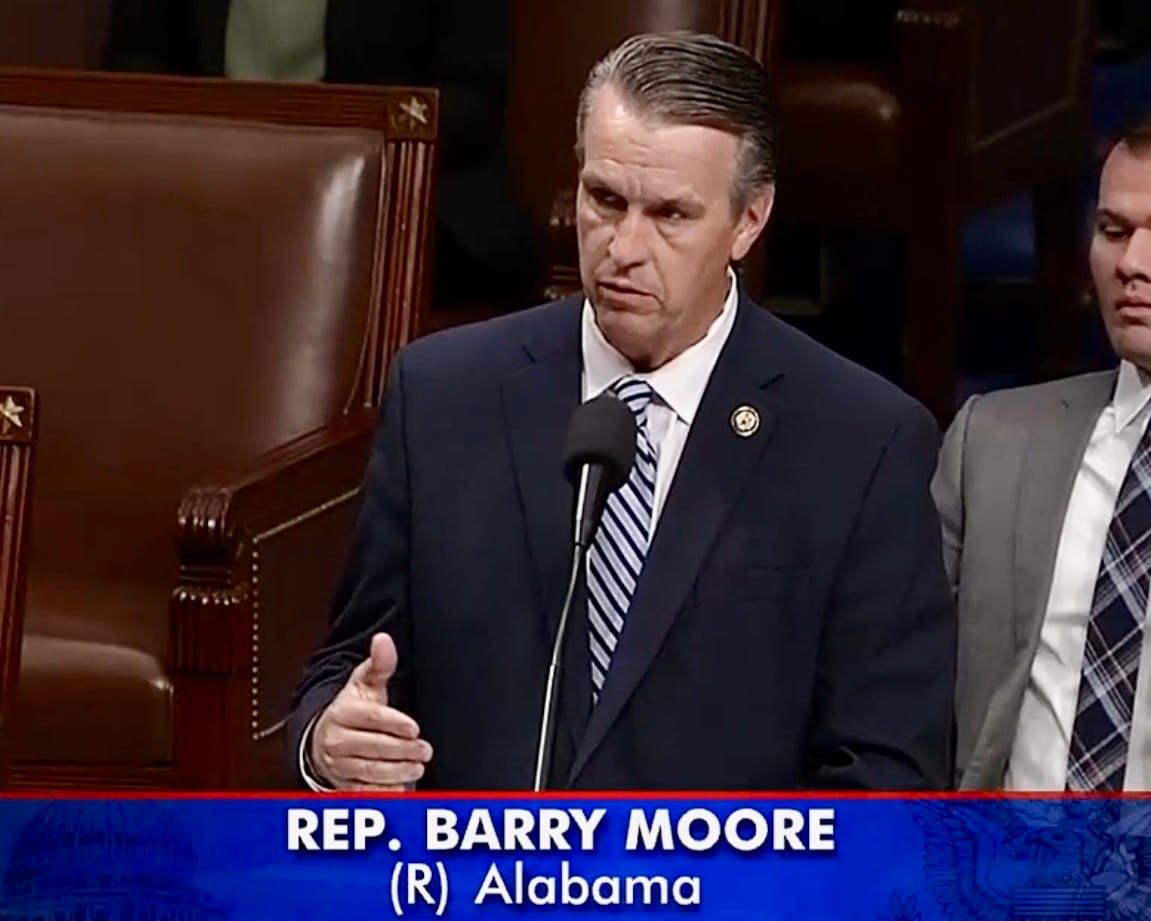
U.S. Representative Barry Moore (R-AL-01) has introduced the National Veterans Strategy Act of 2026, a bipartisan effort aimed at bringing order and accountability to how the federal government supports America’s Veterans.
The legislation, introduced in the House by Moore in conjunction with the Senate version by Senators Jerry Moran (R-KS) and Richard Blumenthal (D-CT), would require the White House to develop a clear, measurable national strategy for Veteran success — one that aligns efforts across federal, state, and local agencies, as well as nonprofit and private partners.
At present, Veteran support programs often operate in silos. Lawmakers say that lack of coordination leads to wasted resources and missed chances to improve outcomes for those who have served.
Under the bill, the President would be required to define what “success” looks like for Veterans using measurable benchmarks across health, education, employment, family stability, and civic life. A full national strategy would then be submitted to Congress every four years, with annual progress reports to track results.
“America’s Veterans have already fulfilled their duty to this nation, and now it’s our responsibility to ensure they have every opportunity to succeed when they return home. Under past administrations, we’ve spent billions of taxpayer dollars across disconnected programs without a clear definition of success or a coordinated plan to achieve it. The National Veterans Strategy Act brings accountability and unity to these efforts by establishing measurable goals and aligning resources around what truly matters - helping our Veterans thrive in their careers, their families, and their communities. We owe them more than our thanks, we owe them results,” said Moore.

Support for the measure extends beyond Capitol Hill, with major Veteran-focused organizations backing the effort.
“Combined Arms strongly supports the National Veterans Strategy Act and applauds Rep. Barry Moore for introducing this important legislation,” said Mike Hutchings, Chief Executive Officer of Combined Arms. “In a deeply fragmented world of Veteran services, this bill helps bring the pieces together. With the Senate already moving forward and Representative Moore introducing the House companion, the National Veterans Strategy Act is building the bipartisan momentum this issue has always deserved. Combined Arms was founded on the belief that transformational change requires coordination, data, and accountability at scale. This legislation delivers all three.”
Veterans groups echoed that call for a more unified approach.
“AMVETS welcomes the introduction of the National Veterans Strategy Act in the House,” said Paul Shipley, National Commander of AMVETS. “For years, we have called for a unified national approach that better aligns the important work being done at the federal, state, and local levels. Establishing a formal national strategy will help ensure that the substantial investments already made by taxpayers and donors are coordinated and used as effectively as possible. AMVETS looks forward to working with Members of Congress, the administration, and partners across the country to help ensure every Veteran has a clear pathway to success while strengthening the civic health of the nation we all served.”
Advocates say the current system often treats Veterans’ needs in isolation, rather than as part of a broader life transition.
“Vietnam Veterans of America proudly supports the introduction of the House companion to the National Veterans Strategy Act of 2026. Veterans’ lives do not fit neatly into separate boxes, and the support systems meant to serve them should not either. For too long, too much of the work being done on behalf of Veterans has been disconnected, uneven, and difficult to measure. This legislation offers a better path forward by creating a more unified, thoughtful, and accountable approach to Veteran success. If we truly value Veterans, then we should be willing to act like it. VVA urges Congress to advance this important legislation so our nation’s commitment to Veterans is guided by strategy, not fragmentation,” said James McCormick, Executive Director of Government Affairs for Vietnam Veterans of America.
If passed, the bill would also require consultation with Veterans, stakeholders, and the public during the strategy’s development. Congress would retain the authority to review — and reject — the plan before it takes effect.
Supporters say the goal is simple: replace a patchwork system with a clear roadmap, backed by data, and built to deliver results for those who served.