BREAKING: Secretive Polling Operation Raises Alarms in Alabama Elections
That lack of transparency is now becoming a central issue.

A controversial polling operation is drawing scrutiny across Alabama after media outlets began reporting results from a survey with no disclosed funding source, raising serious concerns about transparency and credibility in a critical election year.
The Alabama Poll has been cited in recent coverage suggesting a tight three-way race. But unlike traditional polling firms, this operation does not disclose who is paying for the polling or who is shaping the questions being asked.

That lack of transparency is now becoming a central issue.
According to its own materials, the organization operates as a subscription-based service where clients can pay to insert custom questions into surveys. Those questions, along with the identity of the paying clients, remain confidential. In other words, the public has no way of knowing who is behind the data being released or what interests may be influencing it.
Despite that, some outlets have begun reporting the poll as if it reflects an independent snapshot of Alabama voters.
Critics say that it is misleading.
Efforts were made to obtain clarity on the poll’s funding. Michael Lowry, who operates The Alabama Poll, was contacted on two separate occasions and asked directly who paid for the survey. In both instances, Lowry stated that the polling is “subscription-based” and said he could not disclose his clients. While he was given a fair opportunity to provide transparency, no additional details about funding or sponsorship were offered.
Traditional polling standards require disclosure of funding sources, methodology, and full question wording. Without that information, it becomes impossible to determine whether a poll is measuring public opinion or attempting to shape it. The structure of this polling model allows for both.
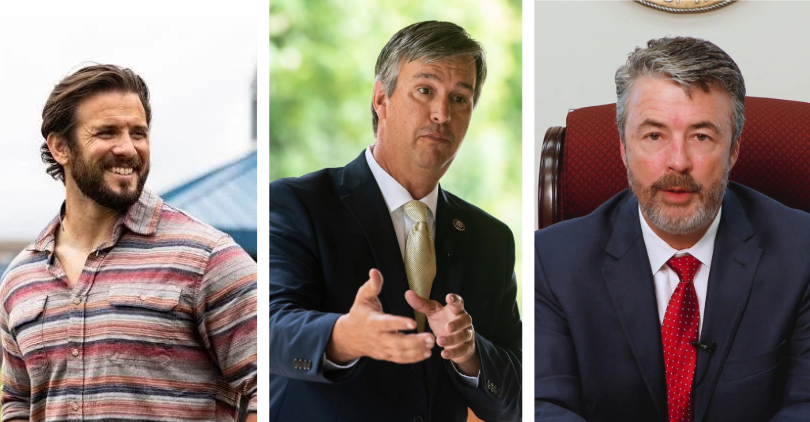
At the same time, other credible polling circulating in Alabama tells a very different story. Recent data shows Barry Moore leading with 24 percent, followed by Steve Marshall at 19 percent and Jared Hudson at 13 percent, with a large share of voters still undecided. Those numbers point to a developing race, not a dead heat.
There are also major factors that polling snapshots alone do not capture. Outside political action committees are expected to spend roughly six million dollars in the race, yet only about half of that has been spent so far on behalf of Moore. With six weeks remaining, the remaining three million dollars could significantly reshape the race as voters begin to tune in.
Beyond the numbers, the controversy is now extending into broader concerns about political messaging and party unity.
Some observers argue that promoting a poll with undisclosed funding while downplaying the significance of a Presidential endorsement sends a conflicting message to Republican voters. President Donald Trump remains the most influential figure in Republican politics, and his endorsement is widely considered a decisive factor in primary elections, particularly in Alabama. Moore has also earned endorsements from Vice-President JD Vance, Jim Jordan, and Turning Point Action.
The concern from critics is that elevating a poll with undisclosed backers while minimizing those endorsements risks undermining not just one campaign, but the broader Republican message. In a state where support for the President remains strong, that approach has been described by some as counterproductive to party unity and a dangerous narrative to push.
As the election enters its final stretch, the debate over this poll is likely to intensify. At stake is not just who is leading in the numbers, but whether voters are being given accurate and transparent information to make their decisions.
In Alabama, where elections are often decided by trust and credibility, that question may matter more than any single poll.