Eliminating the grocery tax: affordable, achievable, and fiscally prudent
“It is long past time to get rid of the Alabama grocery tax”— Guest Opinion by Elijah Davidson
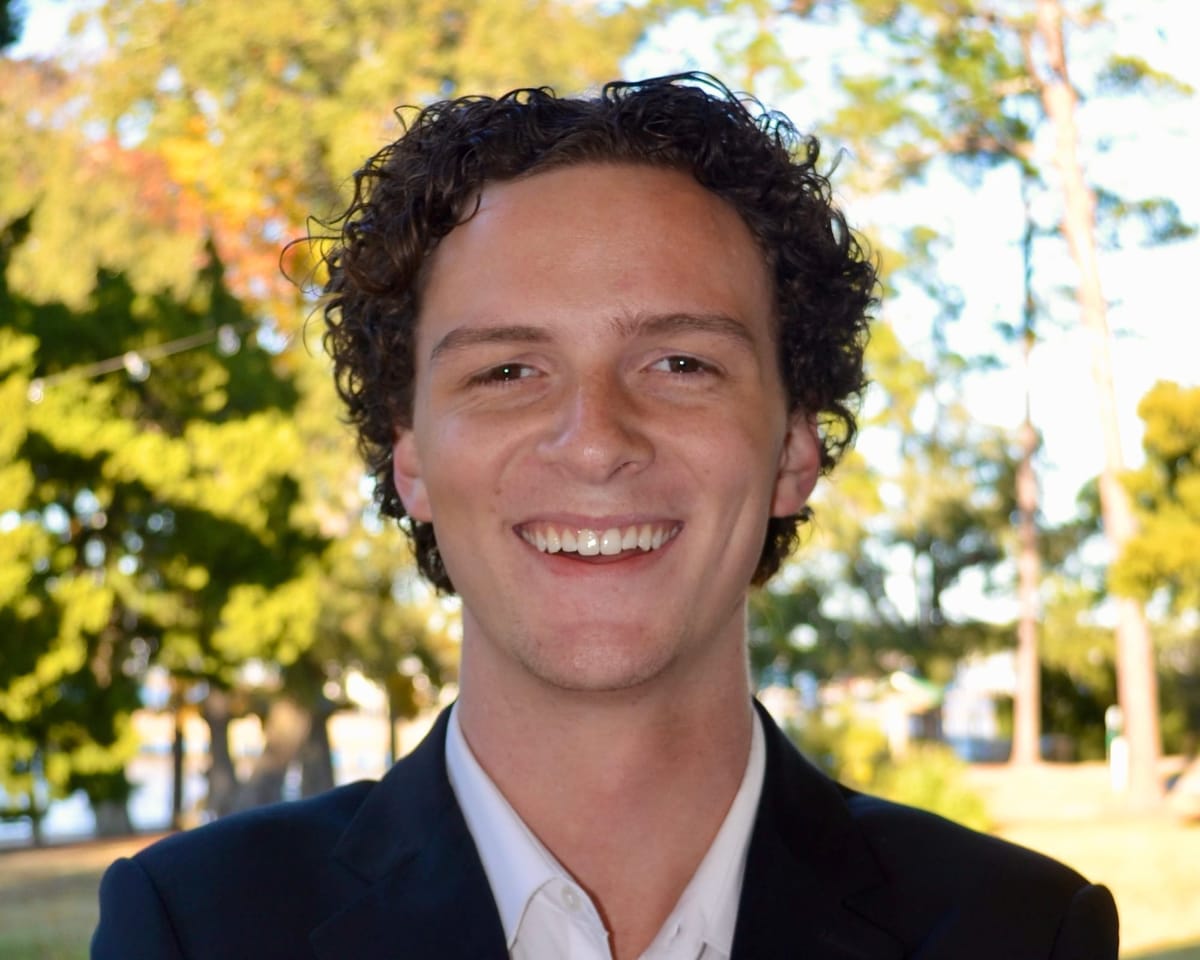
Guest Opinion by Elijah Davidson
$576 per year.
That’s how much Wade Payne, President of the Alabama Grocers Association, estimates the average Alabama family of four would save if the state grocery tax were fully eliminated.
When I speak about eliminating the grocery tax, two questions consistently arise: How will you pay for it? and Won’t this take money away from public schools? These are valid concerns—and they deserve thoughtful, well-researched answers.
Before its reduction in 2025, Alabama’s grocery tax generated hundreds of millions of dollars annually, with nearly all of that revenue directed to the Education Trust Fund (ETF). Estimates suggest that each 1% reduction in the grocery tax decreases ETF revenue by roughly $120 million per fiscal year. The most recent cut—from 3% to 2%—is expected to reduce revenue by that amount annually. Eliminating the remaining 2% would likely reduce ETF revenue by an additional $240 million per year.
That is obviously a significant amount of money. But it is only part of the picture.
This estimate assumes no behavioral changes in the economy on the part of Alabama consumers. In reality, eliminating the grocery tax would likely increase consumer spending in other areas—spending that still generates sales tax revenue for the state. That offset matters and should be part of any honest discussion.
It is also very important to recognize that Alabama’s education budget has experienced consistent surpluses in recent years. Lawmakers have allocated billions into reserve accounts such as the Budget Stabilization Fund, the Educational Opportunities Reserve Fund, and the Advancement and Technology Fund. These reserves are intended to stabilize education funding during periods of economic downturn—but their consistent growth over the last few years raises a fair question: is it accurate to claim that eliminating the grocery tax would harm school funding?
Appropriating even a portion of these recurring surpluses could provide meaningful tax relief to Alabamians—especially the 41% of families who, according to U.S. Census data, struggle to afford groceries and other basic necessities.
For those who remain unconvinced or prefer alternative approaches that do not touch ETF revenue, there are other viable options worth considering.
The first one I will propose is that Alabama should undertake a comprehensive review of government spending and operations. I have proposed the creation of an Alabama Government Efficiency Task Force composed of independent financial professionals who would be responsible for evaluating every state agency’s funding structure, spending patterns, and operational efficiency.
The numbers suggest this review is overdue. In February 2026 alone, personnel costs totaled approximately $192 million—projecting to more than $2 billion annually. Employee benefits added another $89 million for the month, or over $1 billion annually. Together, these categories represent a substantial portion of state spending.
Beyond personnel costs, numerous boards, commissions, and agencies receive millions in annual appropriations, some of which may be duplicative or unnecessary. For example, the Alabama Board of Cosmetology and Barbering received more than $3 million in 2024, despite similar functions being consolidated under broader licensing authorities in other states.
A serious, non-political audit could identify inefficiencies, redundancies, and opportunities for consolidation or modernization. Other states have done this successfully, uncovering savings ranging from tens to hundreds of millions of dollars. Alabama could do the same—and those savings could help offset the cost of eliminating the grocery tax.
Second, policymakers could consider capping the state income tax deduction for federal taxes paid. A proposal put forward by Alabama Arise would cap this deduction at $3,500 for single filers and $7,000 for married couples filing jointly. Estimates from the Legislative Services Agency suggest this reform could generate approximately $520 million in annual revenue.
Notably, analysis of this proposal indicates it would not increase taxes for the vast majority of households. In fact, taxpayers earning below roughly $1.4 million annually would likely see a net tax cut.
While this proposal was put forward before the reduction of the grocery tax from 4% to 2%, it suggests that even a modified version of this policy could generate sufficient revenue to offset the remaining cost of full elimination.
Ultimately, regardless of which approach one prefers, the conclusion is clear: eliminating the grocery tax is affordable, achievable, and fiscally prudent.
For many Alabama families struggling to make ends meet, an extra few hundred dollars per year is not insignificant—it can mean the difference between getting by and falling behind into even greater debt and financial hardship. While eliminating the grocery tax will not solve the affordability crisis by itself, it is a practical, targeted reform that would provide immediate relief to those that need it most. It hurts no one and benefits everyone from the richest to the poorest of Alabamians.
It is long past time to get rid of the Alabama grocery tax.
If elected as State Representative for District 95, I will fight tooth-and-nail to make Alabama more affordable—and eliminating the grocery tax will be a top priority.
22 year old Elijah Davidson is a lifelong resident of South Baldwin County whose prior political experience includes leading the Turning Point USA chapter at Gulf Shores High School (which became the largest in the nation) and working for former Speaker of the House Newt Gingrich.
Davidson describes his top priorities as affordability and lowering the cost of living for all Alabamians. He is also running to implement term limits, reduce State legislators’ salaries, combat “good ol’ boy” politics, protect South Baldwin County’s coastal environment from harmful development practices, and support young people who are trying to buy their first home.
Davidson will face incumbent Frances Holk-Jones and businessman Joe Freeman in the May 19 Republican primary.
For more information on Elijah Davidson and his campaign, visit davidsonfordistrict95.comor follow him on Facebook.
Opinions do not reflect the views and opinions of ALPolitics.com. ALPolitics.com makes no claims nor assumes any responsibility for the information and opinions expressed above.