Epstein, ICE, and the Next Expansion of the Surveillance State
How “Protection” Keeps Becoming Permanent Control—Guest Opinion by Alicia Boothe Haggermaker
Guest Opinion by Alicia Boothe Haggermaker
No one wants to be the person who questions policies framed as “protecting children.”
So almost no one does.
Because the moment you ask hard questions, people start looking at you sideways.
Why are you uncomfortable with this?
What are you trying to hide?
It’s easier to stay quiet.
I’m not going to.
Not because I don’t care about abuse.
Because I care enough to look past slogans and into systems.
History shows us something uncomfortable:
Some of the most powerful surveillance states were built in the name of protection.
- Terrorism
- Immigration
- Crime
Now: child exploitation.
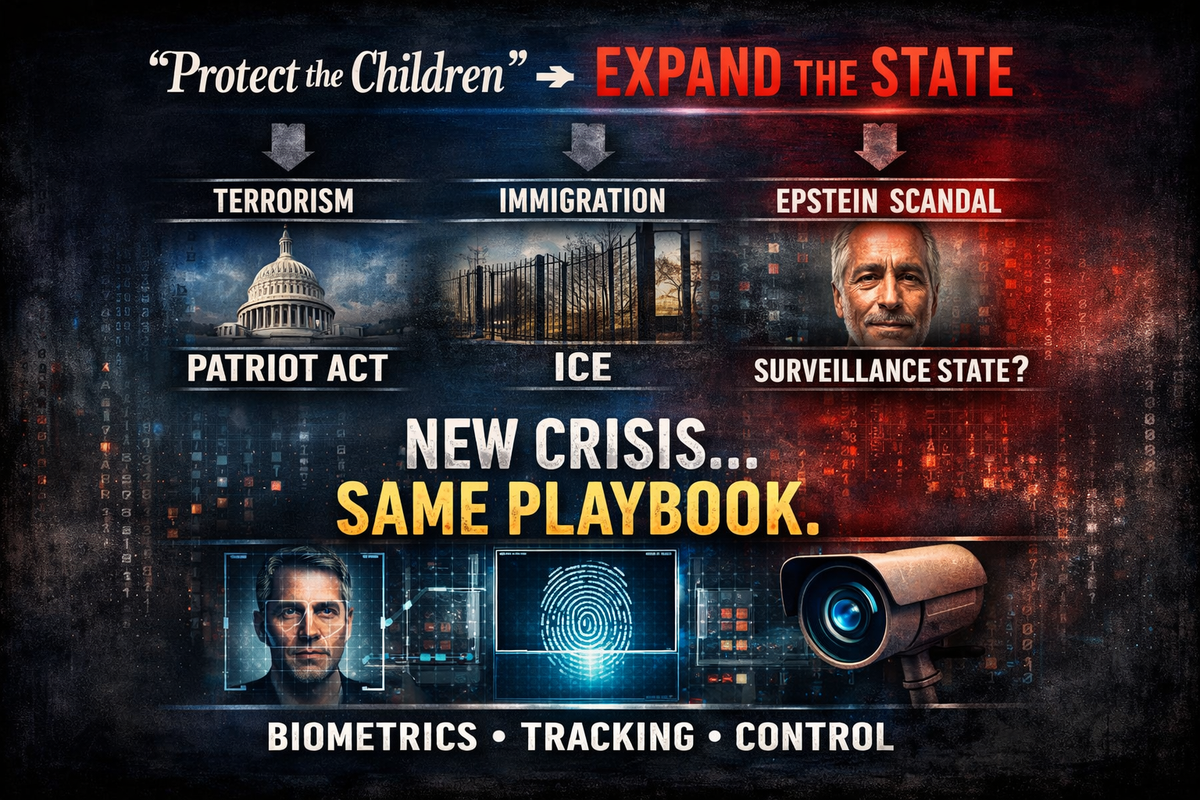
Different crises. Same machinery.
The Distraction
Right now, people are arguing about Epstein.
- Who knew
- Who was involved
- Who covered up what
And none of it changes the outcome.
Because regardless of who gets named, the response is already decided:
- More monitoring
- More databases
- More verification
That was always the plan.
Scandals don’t lead to reform — they lead to infrastructure.
Infrastructure that never threatens elites.
Infrastructure that regulates everyone else.
The Template
We’ve seen this before.
- After 9/11 → Patriot Act
- Immigration → ICE
- Pandemic → tracking systems
Each time: temporary powers became permanent systems.
ICE started as “border security.”
It became domestic surveillance.
- DMVs
- Utilities
- Schools
- Police
All integrated.
Once built, it never shrank.
Why Epstein Is Perfect
Epstein represents everything people fear.
- Abuse
- Coverups
- Elite impunity.
That creates moral urgency — and urgency kills debate.
No one wants to say: “Slow down.”
So systems grow. Quietly.
From Crime to Compliance
Next comes:
- Biometrics
- Facial recognition
- Digital IDs
- AI profiling
Each sounds reasonable.
Together, they form a control grid.
It never stays focused on criminals — it expands.
From “dangerous people”
To “dangerous ideas”
To “non-compliant citizens”
Labels change. Databases don’t.
Surveillance Isn’t Neutral
“It’s fine if you’re not doing anything wrong.”
That misses the point.
Surveillance shapes behavior.
People who are watched self-censor.
That’s not safety -- that’s managed obedience.
The Temporary Lie
Every expansion is “temporary.”
None of it disappears.
It gets normalized.
Budgets grow.
Databases persist.
Powers get repurposed.
What Real Protection Would Look Like
If leaders wanted to protect children, they’d:
- Prosecute enablers
- Expose settlements
- Fix foster systems
- Reform courts
- Fund investigators
That’s hard.
Surveillance is easier — it shifts risk to the public.
The Courage Question
While everyone debates personalities, infrastructure is being built.
Presidents change. Databases don’t.
Scandals fade. Systems remain.
I’m not questioning the need for justice.
I’m questioning whether we’ve learned anything.
Because trading freedom for safety has never worked.
We lose both.
History won’t judge how scared we were.
It will judge what we built while we were scared.
We still have a choice.
Alicia Boothe Haggermaker is a lifelong resident of Huntsville, Alabama, and a dedicated advocate for health freedom. For more than a decade, she has worked to educate the public and policymakers on issues of medical choice and public transparency. In January 2020, she organized a delegation of physicians and health freedom advocates to Montgomery, contributing to the initial draft of legislation that became SB267.
Opinions do not reflect the views and opinions of ALPolitics.com. ALPolitics.com makes no claims nor assumes any responsibility for the information and opinions expressed above.