Everybody Knew — Part II: But Nobody Stopped It
Why silence survives even when people see the warning signs—Guest Opinion by Alicia Boothe Haggermaker
Guest Opinion by Alicia Boothe Haggermaker
In the first piece of this series, I wrote about a difficult truth: abuse scandals rarely begin with complete ignorance.
More often, they begin with whispers.
People notice the warning signs.
People feel that something isn’t right.
And years later, when the story finally breaks, the same quiet sentence appears again:
“Yeah… we kind of knew.”
Which raises the harder question.
If people knew…
why didn’t anyone stop it?
The answer is uncomfortable, because it forces us to look at human behavior more honestly than most people would like.
Silence doesn’t just happen because people are cruel or indifferent.
Often, silence survives because of social pressure.
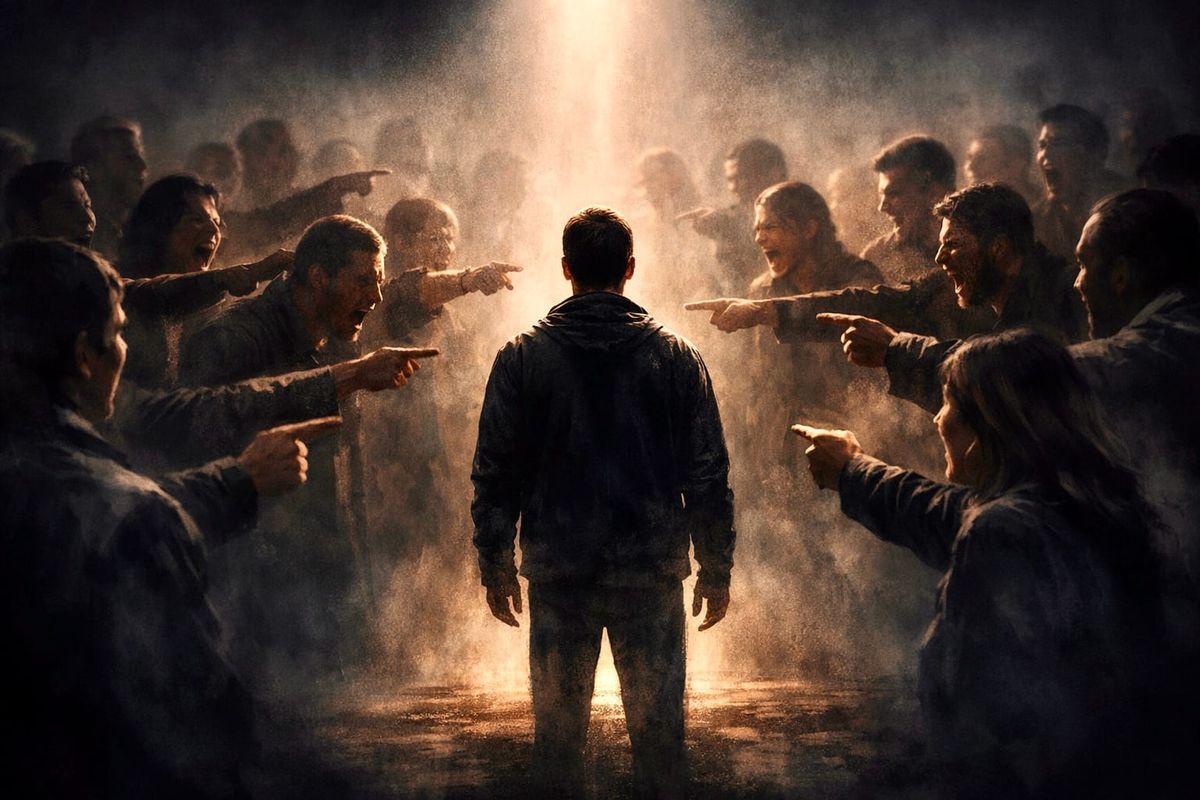
Anyone who has watched a public controversy unfold online knows the pattern. The moment someone raises an uncomfortable question, the peanut gallery appears.
Not to investigate.
Not to understand.
But to defend the tribe.
People rush to pick sides.
Narratives form instantly.
Anyone asking questions becomes the target.
Incentives absolutely play their role. Careers, influence, and institutional power matter.
But nothing is quite as powerful as a half-informed angry mob.
People watch what happens to the first person who steps outside the approved narrative. They see the ridicule. The dog-piling. The character attacks.
And most people make a quiet calculation.
Is it worth it?
Humans are social creatures. For most of our evolutionary history, rejection from the group carried real danger. Being cast out of the tribe meant isolation, vulnerability, even death.
Today the stakes aren’t survival in the wilderness.
It’s your self-esteem and your reputation’s survival in society.
Your job.
Your social standing.
Your relationships.
Your place in the tribe.
So people stay quiet.
But there is another reason silence persists, and it’s one we rarely talk about.
A lot of abuse goes unaddressed because people fear sovereignty.
Not the political buzzword version.
The real kind.
The moment when you can no longer hide behind institutions, traditions, or the approval of the crowd and have to make a moral decision on your own.
Sovereignty means you don’t get to wait for permission.
You don’t get to hide behind what everyone else is saying.
You don’t get to pretend you didn’t see what you saw.
And that moment can be terrifying.
Because being supported and managed is easier than doing it for yourself.
Systems offer protection.
Tribes offer belonging.
Institutions offer cover.
Inside those systems, responsibility becomes easier to diffuse.
Someone else will handle it.
Someone else will report it.
Someone else will deal with the consequences.
But when everyone waits for someone else, silence becomes the default.
And silence becomes the system.
The uncomfortable truth is that many people do see warning signs.
They feel that something is wrong.
They notice the power imbalance.
They recognize behavior that doesn’t sit right.
But speaking first carries a cost.
It risks reputations.
It risks relationships.
It risks becoming the target instead of the problem.
So people hesitate.
And hesitation is exactly what allows harm to continue.
Eventually the scandal breaks.
The headlines explode.
The outrage erupts.
The investigations begin.
And suddenly everyone asks the same question.
“How could this happen?”
But that question is often asked far too late.
Because the real moment of decision happened years earlier — when someone first noticed something was wrong and had to choose whether to say something out loud.
That moment is where silence either continues…
or finally breaks.
And that leads to a deeper question.
If protecting systems is what humans naturally do…
what would it look like to choose truth instead?
What would real moral courage actually look like today?
In the next piece, I want to explore that question through a lens most people think they already understand:
If Jesus walked the earth today… would he protect these systems — or flip their tables?
The first part of this series may be read HERE.
Alicia Boothe Haggermaker is a lifelong resident of Huntsville, Alabama, and a dedicated advocate for health freedom. For more than a decade, she has worked to educate the public and policymakers on issues of medical choice and public transparency. In January 2020, she organized a delegation of physicians and health freedom advocates to Montgomery, contributing to the initial draft of legislation that became SB267.
Opinions do not reflect the views and opinions of ALPolitics.com. ALPolitics.com makes no claims nor assumes any responsibility for the information and opinions expressed above.