Finally, a Campaign That Actually Has a Plan
Guest Opinion by Perry Hooper Jr.
Guest Opinion by Perry Hooper Jr.
American politics has become a multibillion-dollar industry devoted to winning elections, with far too little attention paid to what happens after the votes are counted. Candidates surround themselves with high-priced consultants, pollsters, advertising agencies, and professional political operatives who can manufacture a slogan, test a talking point, and produce a television commercial that would make Madison Avenue proud. They can tell you everything that is wrong with government, identify a dozen people to blame, and promise a better tomorrow. But ask them exactly what they intend to do once they take office, how they intend to accomplish it, and how taxpayers will know whether they succeeded, and suddenly you get what we used to call coach speech: plenty of inspiring words, lots of enthusiasm, and absolutely no answer to the questions.
We have seen this political song and dance for so long that many voters have come to accept it as normal. Candidates promise to cut taxes without explaining what spending they will eliminate. They promise to improve education without telling us how they intend to measure improvement. They promise to eliminate government waste while carefully avoiding any discussion of which agencies, programs, or bureaucracies might actually face the chopping block. The campaign consultants get paid, the politicians get their headlines, and the taxpayers are expected to applaud another collection of promises that never see the light of day.
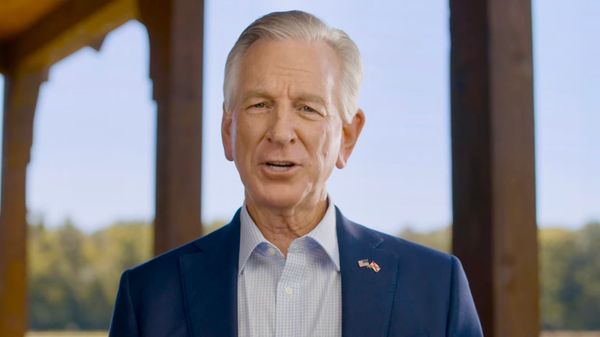
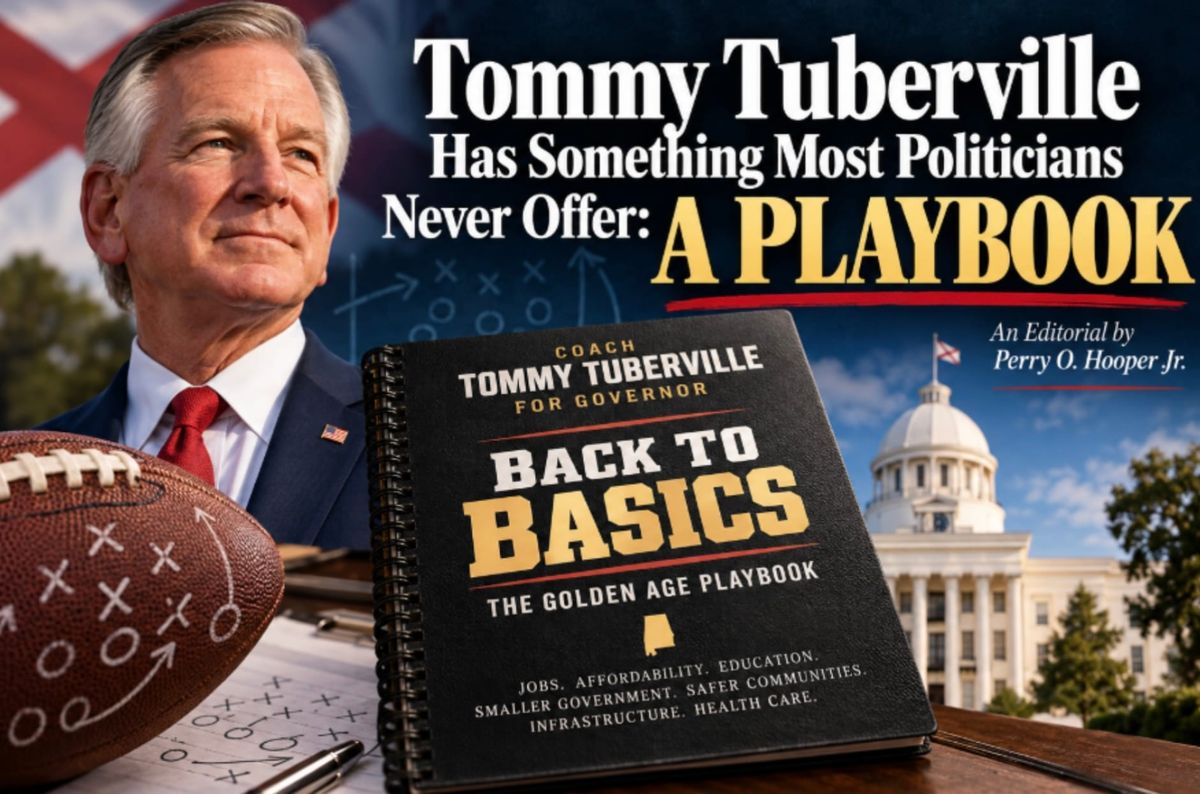
That is why something happening in Alabama's 2026 race for Governor deserves serious attention. Senator Tommy Tuberville has produced something that ought to be standard equipment for anyone seeking executive office but has become almost a novelty in modern politics: an actual governing playbook. His Back to Basics: The Golden Age Playbook is not simply another campaign brochure decorated with photographs and patriotic slogans. It lays out seven priorities, specific executive actions, legislative proposals, implementation schedules, and measurable objectives. It tells Alabamians what he proposes to do, when he intends to do it, and how the public can determine whether his administration delivered.
And Coach has not limited himself to a handful of pleasant-sounding generalities. His playbook identifies seven specific areas where he intends to concentrate his administration's attention and resources.
First, Bring the Jobs Home an aggressive economic development operation to recruit manufacturing, corporate headquarters, suppliers, and higher-paying jobs while helping existing Alabama businesses expand. It calls for industrial sites that are ready before prospects arrive, faster permitting, stronger workforce training, and economic development reaching all 67 counties. The objective is not simply to announce investments at a press conference but to see businesses open their doors, hire Alabama workers, and put real good paychecks into Alabama households.
Second, Affordability goes straight to the kitchen table, where families are struggling with groceries, electricity, insurance, child care, and taxes. The playbook outlines eliminating the remaining state grocery tax, eliminating the state income tax in stages, providing property tax relief beginning with seniors, and protecting families from having to subsidize the electricity infrastructure required by major industrial power users. These proposals require careful budgeting and legislative action, but they establish specific commitments rather than another vague promise to make life more affordable.
Third, Education focuses on making every Alabama student life ready. The proposals include improving reading and mathematics through eighth grade, strengthening school accountability, expanding school choice, fully funding First Class Pre-K, and revitalizing career and technical education. The playbook calls for connecting education with the skills employers actually need and publishing results that parents can understand. The objective is to judge educational success by what students learn and what they are prepared to accomplish, not simply by how much money government spends.
Fourth, Smaller Government Means Lower Taxes takes direct aim at the size, cost, and efficiency of state government. The plan calls for reviewing agencies, grants, contracts, regulations, and more than 450 boards and commissions. It proposes consolidating overlapping agencies, reducing unnecessary administrative costs, and independently auditing the savings. Coach Tuberville estimates that these changes will eventually produce $150 million to $200 million in annual savings. That estimate will be demonstrated through actual results, but at least the public has a specific proposal and a number against which performance can be measured.
Fifth, Safe Streets and Safe Homes addresses violent crime, gangs, law enforcement, prison administration, and the protection of children. The playbook proposes additional state support for local police, stronger action against violent offenders and criminal gangs, safeguards for children in foster care, background checks for adults working with children, and additional measures against online predators. Protecting innocent people is one of government's most fundamental responsibilities, and this priority places those responsibilities squarely on the governing agenda.
Sixth, Infrastructure recognizes that jobs and economic growth cannot flourish without the roads, bridges, ports, broadband, electricity, water, and sewer systems needed to support them. The plan calls for a funded strategy to widen Interstate 65 to three lanes in each direction, improvements connected to the Port of Mobile, completion of rural broadband projects, and assistance for smaller communities that need modern water and sewer infrastructure. It also proposes publicly scoring transportation projects so taxpayers can see why particular investments receive priority.
Seventh, Health Care concentrates on access to affordable medical services, particularly in rural Alabama. Tuberville proposes reforming certificate-of-need requirements, expanding telehealth, increasing access to physicians, supporting rural hospitals, and strengthening efforts to prevent Medicaid fraud, waste and improper payments. His playbook expressly rejects Medicaid expansion and instead proposes changes to the existing program, including directing the state's share of recovered fraud dollars back into patient care.
Those seven priorities cover an enormous amount of ground, and nobod pretends that every proposal can be accomplished with the stroke of a Governor's pen. Alabama has a Legislature for a reason. Tax changes require legislation. Budgets must balance. Agency reorganizations must comply with state law. And federal requirements cannot simply be wished away because Montgomery finds them inconvenient.
Perhaps the most significant feature is the proposed public scoreboard. Politicians love to announce programs, but government has developed a remarkable talent for confusing money spent with results achieved. An agency gets a larger appropriation and declares progress. A new program hires more employees and calls it success.
Coach Tuberville's playbook proposes public measurements for workforce participation, actual investment, educational achievement, government efficiency, public safety, infrastructure, and health care. It calls for agencies to publish performance plans and for the annual State of the State address to become a report on the commitments made in the playbook. Those measurements will produce credible data and independent scrutiny, but the principle is important: government should be expected to demonstrate what it accomplished with the authority and resources entrusted to it.
With the November 3 election approaching, Alabamians have an opportunity to examine something more substantial than the usual parade of campaign speeches and political advertisements. They have a written agenda containing specific commitments that can be questioned, debated, and measured. Agree or disagree with individual proposals, the document provides a concrete basis for examining how Tuberville intends to govern.
There is an old football truth that every coach understands: you can win the press conference and still lose the game. The speeches do not put points on the board. The slogans do not move the chains. And the excuses do not change the final score. On November 3, Alabama voters will choose their next Governor. After that, the question will no longer be who delivered the best campaign speech. It will be who delivered on the promises made. Tuberville has put his playbook in writing, and that gives Alabamians something they should demand from every politician: a plan they can hold up against the scoreboard.
Perry O. Hooper Jr. is a longtime Alabama Republican figure, former Alabama Legislator and Montgomery businessman. He served as Co-Chair of “Alabama Trump Victory” in 2016, and served as an at-large delegate to the Republican National Convention. He is a noted civic leader in Montgomery with deep family roots in Alabama’s legal and political history.
Opinions do not reflect the views and opinions of ALPolitics.com. ALPolitics.com makes no claims nor assumes any responsibility for the information and opinions expressed above.