General Washington's Integrated Army
Guest Opinion by Justice Will Sellers
Guest Opinion by Justice Will Sellers
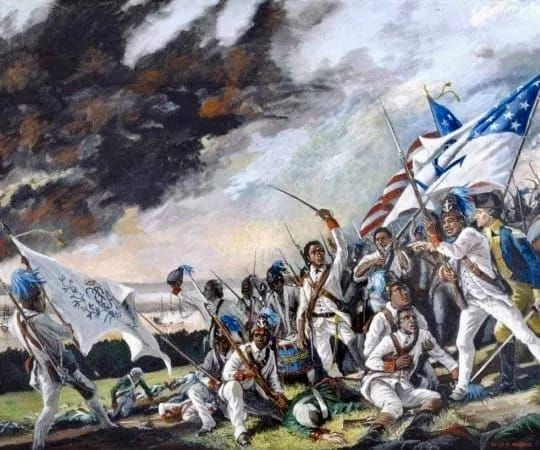
In 1776 - 250 years ago - General George Washington made a decision that was both pragmatic and radical for its time when he integrated the Continental Army, allowing free Black men and later some formerly enslaved men to serve alongside white soldiers.
But rather than being driven by enlightened ideas or progressive principles, Washington’s command decision reflected practical military necessity, political calculation, and an evolving understanding of liberty.
Before the Revolution, Black military service in the colonies was not unprecedented. Enslaved and free Black men fought in colonial militias during conflicts but more often serving in segregated or auxiliary roles. These arrangements, though, were inconsistent and heavily influenced by local laws and racial attitudes. Fearing that armed Black men could challenge the institution of slavery or inspire rebellion, many colonies restricted or discouraged Black enlistment.
When Washington took command of the Continental Army in 1775, these anxieties were widespread, and while some northern colonies were more open to Black enlistment, Southern colonies opposed it. Reflecting his background as a Virginia planter, Washington initially supported a policy barring Black men from enlisting, which aligned with both the prevailing racial prejudice of the era and the political need to maintain unity among slaveholding colonies.
But circumstances changed.
In November 1775, the Royal Governor of Virginia, issued a proclamation offering freedom to enslaved men who fled patriot masters and joined British forces. This policy transformed the war into a direct threat to slavery and exposed a serious vulnerability in the patriot cause. Seeking freedom and protection, thousands of enslaved people fled to the Loyalist side.
This proclamation forced Washington and the Continental Congress to reconsider. Preventing Black enlistment no longer preserved social order but actively weakened the patriot war effort by pushing potential soldiers into British units. Washington reversed his position and allowed free Black men to enlist and fight for liberty. As Black soldiers proved their worth in combat, some states, particularly in New England, permitted enslaved men to enlist in exchange for emancipation.
As commander of the Continental Army, Washington oversaw a coalition of militias more loyal to their colonial leaders than to him or the Continental Congress. To avoid alienating colonial sensibilities, Washington was required to balance a variety of factors so he could field an effective fighting force. In desperate need of manpower, Washington had to prevent Britain from exploiting racial division and undermining the Revolution.
The Continental Army suffered chronic shortages of troops, supplies, and training throughout the war. Desertion was common, enlistments were short-term, and morale often faltered. Black soldiers helped fill critical gaps, especially during difficult periods, such as the winter at Valley Forge.
Most importantly, integrated units proved effective in combat. Black and white soldiers served seamlessly in artillery units, infantry regiments, and support roles. Contemporary accounts from officers and foreign observers noted the discipline and bravery of these troops, undermining claims that Black soldiers were only useful in auxiliary functions.
For Washington, effectiveness mattered more than ideology. He judged soldiers by the content of their character, their ability to fight, endure hardship, and follow orders. Integration, while controversial, worked and paved the way for victory at Yorktown. The Continental Army became one of the first integrated military forces in the Western world, decades before similar policies appeared elsewhere.
Washington’s move toward a racially integrated army exposed him and the colonial leadership to the reality of Black competence, courage, and loyalty. While his decision was made primarily out of necessity rather than principle, the immediate result strengthened the war effort and helped secure independence. The broader implications were more ambiguous as integration challenged racial assumptions and opened pathways to freedom for some while also failing to dismantle the broader system of slavery based on race and institutional inequality.
Washington chose effectiveness over racism, and he set aside prejudice for practicality. Commanding Black soldiers contributed to his evolving views on slavery, prompting him to privately express misgivings about the institution and leading him to free his enslaved people in his will.
Washington’s actions illustrate one tension of the American Revolution: a fight for liberty conducted within a society that denied freedom to some. Integration did not resolve this contradiction, but it made it impossible to ignore.
The integration of the Continental Army had significant repercussions during and after the war. For Black veterans, military service became a powerful argument for freedom and citizenship. Many who served successfully petitioned for emancipation, pensions, or land grants. In the northern states, the contributions of Black soldiers helped accelerate gradual abolition movements in the postwar period.
These gains, however, were uneven and precarious. In the South, most enslaved veterans did not receive lasting freedom, and racial restrictions hardened after the war. Despite their service, Black Americans were largely excluded from the political rights promised by independence. Integration during wartime did not translate into equality in peacetime.
Institutionally, the U.S. military did not continue Washington’s precedent. After the Revolution, Black enlistment declined, and by the early nineteenth century, U.S. armed forces segregated troops. This regression underscores the exceptionalism of Washington’s wartime integration and highlights its necessity in defeating the British.
While Washington challenged deeply rooted racial assumptions by demonstrating that integrated forces could function effectively, the failure to institutionalize integration of the military reflected the nation’s unwillingness to directly confront slavery and racism.
When President Harry Truman desegregated the military in 1948, advocates pointed to Washington’s integration of the Continental Army. His example provided precedent and historical evidence that integration was not radical or untested, but part of the nation’s earliest military tradition in fielding effective combat units, regardless of race.
Washington’s decision stands as a reminder that progress often emerges from practical choices made under pressure, not purely moral rectitude. Still, those choices can carry consequences far beyond their original intent.
By integrating the Continental Army, Washington helped plant a seed of equality that would take time and immense struggle to germinate and bear the fruit of liberty and justice for all.
Will Sellers is a graduate of Hillsdale College and is an Associate Justice on the Supreme Court of Alabama. He is best reached at jws@willsellers.com.
Opinions do not reflect the views and opinions of ALPolitics.com. ALPolitics.com makes no claims nor assumes any responsibility for the information and opinions expressed above.