GOP Wins, Warning Signs Dominate Podcast Election Review
Peeks, Moseley and Hooper debate Trump’s next two years, Tuberville’s narrow win and Alabama’s changing political map
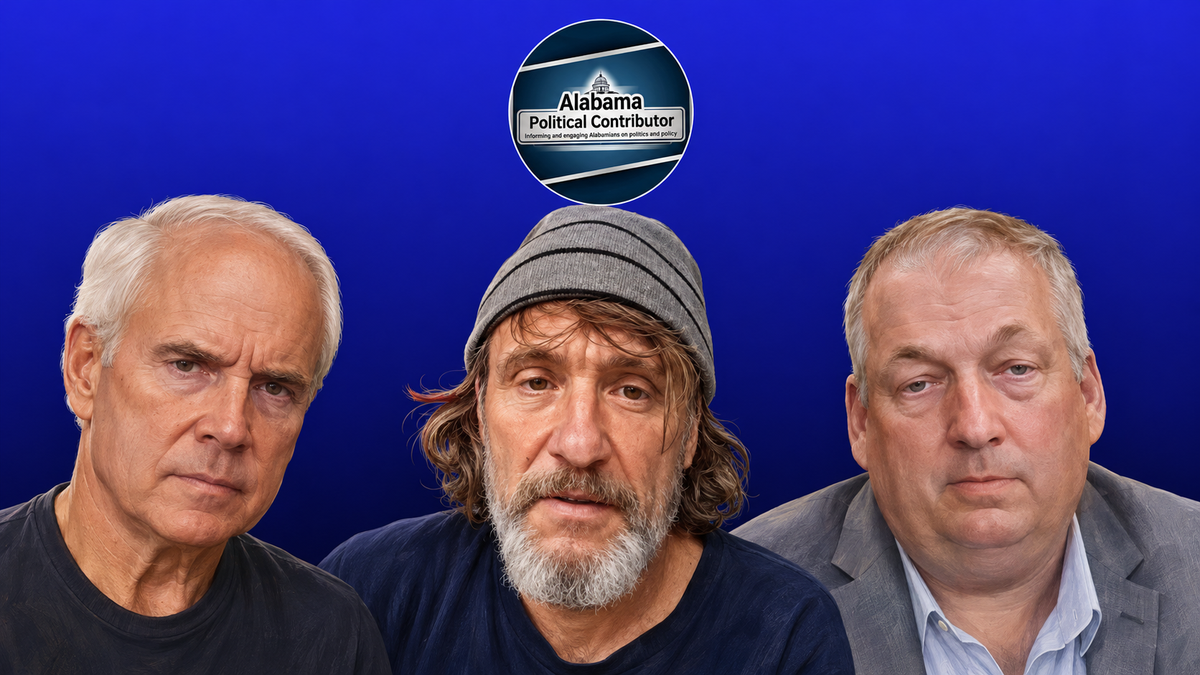
Alabama Republicans held their Statewide offices, but a narrow Governor’s race and losses in North Alabama gave three conservative commentators plenty to question in a blunt post-election review.
Christopher M. Peeks, Brandon Moseley and Perry Hooper Jr. used their Alabama Political contributor podcast to debate what went wrong for Republicans nationally and what their party should learn at home. Their discussion ranged from President Donald Trump’s next two years to the growing clout of Alabama’s two House Democrats.
Peeks opened with a stark assessment of the national results.
“I knew it was going to be bad. I didn’t think it was going to be that bad,” he said in the podcast.
Democrats won control of both chambers of Congress, according to NBC News projections. The panel saw a rough stretch ahead for Trump, though its members disagreed over how much he could still get done.
One view held that hearings and investigations would consume his final two years and stall his agenda. Another held that his veto power would force Democrats to bargain if they hoped to pass bills.
The exchange grew sharp over whether Democratic leaders would seek deals or pack spending bills with policies Republicans oppose. The panel agreed that divided government would make major legislation harder to pass. It split over whether that would bring talks or deeper gridlock.
Gas prices, the Iran war and immigration enforcement all drew scrutiny as possible causes of the GOP’s losses. The speakers supported removing people in the country illegally who commit crimes. But they also debated whether ICE actions had stirred a backlash among Latino voters.
Candidate choice drew criticism, too. The panel questioned Republican decisions in Texas and Ohio, arguing that party leaders too often favor their own picks without enough thought about who can win in November.
In Alabama, the Governor’s race stood out.
The Secretary of State’s unofficial returns show Tommy Tuberville with 51.79 percent to Doug Jones’ 47.86 percent—a margin of 3.93 points. John Wahl won the Lieutenant Governor’s race by 8.71 points, while Barry Moore won the Senate race by 9.50 points.
The panel argued that stronger performances by other Republicans, including Wahl and Corey Hill, helped bring voters to the polls for Tuberville. Its members suggested some of those voters then crossed party lines in the Governor’s race.
North Alabama brought another warning.
Democrats Allison Montgomery, Jared Sluss and Rudolph Valentino Drake won legislative seats held by Republicans. Montgomery defeated Rep. Phillip Rigsby in House District 25, becoming Alabama’s first openly transgender State lawmaker. Republicans still held legislative supermajorities and all State constitutional offices.
Madison County also elected Brett Jones, Alabama’s first openly gay sheriff.
The podcast’s reaction was that Huntsville-area voters had changed in ways Republicans could no longer take for granted.
Brandon Moseley offered a different view of the close Senate District 10 race between incumbent Andrew Jones and independent Jesse Battles: An independent win might cost Republicans a seat on paper without costing conservatives an ally.
“I don't think this is necessarily a loss for Republicans, assuming Jones loses, because Jesse Battles, to me, is more conservative than Andrew Jones,” Moseley said. “The Etowah County Republican Party told the morons at the State party, ‘We like Jesse Battles, leave him alone.’ This was a case where the idiots on the State Steering Committee, which were nowhere to be found in the last month of this election, decided in their insanity to listen to political consultants instead of the people of Etowah County, and they removed Jesse from the ballot so he didn't get to be in the Republican primary. And, they thought Jesse would just say okay and go away, and he said ‘screw that, I'm running as independent.”
For the panel, the race raised a question about what the party had gained by excluding Battles. A candidate arguably more conservative than the Republican incumbent had returned as an independent and put that incumbent’s seat at risk.
The panel’s sharpest criticism fell on the State GOP steering committee. “All those people on the State Steering Committee should resign,” Hooper said. “And Chairman Stadthagen, too,” Mosley agreed.
Battles later gathered more than 3,000 signatures to reach the general election ballot as an independent. His strong showing sharpened the panel’s question: What had the party gained by shutting him out?
Despite claims of victory during the discussion, the race remains unresolved. The Sand Mountain Leader reported Battles ahead by 52 votes, with provisional ballots awaiting review and Jones declining to concede.
The discussion also turned to what Tuberville should do next. One proposal was to borrow Jones’ call for a pause on new data centers, which Hooper strongly rejected out of hand. “I don’t think we need to copy a damn thing Doug Jones does,” he said. Other ideas included a study group on costs and rules, along with local votes before projects move forward.
“I don’t believe you should build a data center in a County unless it’s put on the ballot and the people on the vote approved the data center,” Mosley said.
Despite their partisan concerns, the speakers urged a practical approach to Washington.
They praised Shomari Figures’ campaign against Republican Rhett Marques. Figures won by 7.49 points in the unofficial State returns, which also showed Terri Sewell winning reelection easily.
With Democrats taking power in Congress, the panel argued that Figures and Sewell would gain influence over federal spending. Roads, bridges and Medicaid funding would require Alabama’s delegation to work across party lines.
“If these two congressmen care about helping Alabama and want to help themselves, they’ll find a way to work with the entire delegation and the President,” Hooper said.
“So that we’re not completely cut out,” Mosley agreed.
The full podcast may be seen on YouTube and below: