If Other States Don't Want the Future, Alabama Should Own It
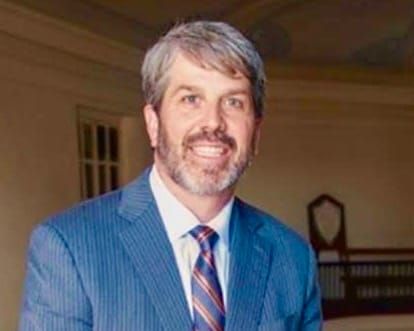
Guest Opinion by Perry Hooper Jr.
Guest Opinion by Perry Hooper Jr.
“There are decades when nothing happens, and there are weeks when decades happen.” In this case it was a day when decades happen. November 3, 2026, was one of that day. In a single election, the political landscape of America was turned upside down. Democrats seized control of Congress, Republicans suffered stunning defeats across the country, and states that once appeared to be Republican strongholds delivered victories to the political left. The consequences for President Donald Trump, his America First agenda, and the future of our nation are enormous. We may be entering some very grim political days in America. But amid the wreckage of Election Day, something extraordinary happened in Alabama. Voters elected Coach Tommy Tuberville governor and preserved Republican control of the Legislature. At precisely the moment much of the country is moving left, Alabama has been handed an opportunity to move forward. And the economic consequences could be historic.
Make no mistake about what happened nationally. Democrats captured both houses of Congress, giving them the power to block President Trump's legislative agenda and launch investigations into his administration. Georgia elected a Democratic governor. Texas, the state that defined the modern Republican economic model, elected a Democrat governor and United States senator, and flipped the State House blue. North Carolina elected a Democrat US Senator and flipped the House and Senate Blue, and even South Carolina elected a Democratic United States senator. The political map of the South has been dramatically rewritten. These are not ordinary election results. They represent a fundamental shift in the balance of political power, with consequences that will extend well beyond the next two years.
Even more disturbing is what is happening within the Democratic Party itself. The Democratic Socialists of America emerged from Election Day with at least five additional members headed to Congress. The movement that helped elevate Alexandria Ocasio-Cortez, Rashida Tlaib, and New York City Mayor Zohran Mamdani is gaining strength, organization, and influence. Traditional Democrats should be asking themselves a very serious question. Who now controls the direction of their party? The Democrats of John F. Kennedy who celebrated economic growth, private enterprise, and American exceptionalism, or the democratic socialists who want government to exercise far greater control over the economy and ultimately our everyday lives? The answer will help determine the direction of this country for years to come.
But there is another story emerging from Election Day, one that should prove enormously consequential for Alabama. Across America, the political backlash against artificial intelligence infrastructure and data centers and progress itself has become a powerful electoral force. Georgia's incoming Democratic governor, Keisha Lance Bottoms, has called for a statewide pause on new data center development. Texas Governor-elect Gina Hinojosa has demanded an immediate moratorium on data centers. Communities across the country are voting to prohibit or restrict construction of the very facilities needed to power the artificial intelligence revolution. The message from this growing political movement could hardly be clearer. They want the benefits of the future, but they do not want to build the infrastructure that makes the future possible.
Think about the extraordinary contradiction. These politicians use smartphones, rely on cloud computing, celebrate advances in medical technology, and talk endlessly about preparing young people for tomorrow's economy. Yet when private industry arrives prepared to invest billions of dollars in the infrastructure required to make those advances possible, their answer is to stop construction, impose moratoriums, and create another layer of government obstacles. They want artificial intelligence without data centers, an electrified economy without new power generation, and technological leadership without the industrial infrastructure necessary to achieve it. That is not a formula for economic progress. It is a prescription for surrendering opportunity to somebody else.
And that somebody else should be Alabama.
For decades, Alabama competed with Georgia, Texas, North Carolina, and South Carolina for major industries, advanced manufacturing facilities, corporate investment, and the jobs that accompany them. We fought for automobile plants, aerospace facilities, steel operations, and distribution centers. Now the economic stakes are even greater. The next industrial revolution will be built around artificial intelligence, robotics, advanced manufacturing, and unprecedented demand for reliable electricity. These industries will determine which states prosper and which states spend the next generation wondering what happened to the opportunities that passed them by. Alabama should have no intention of joining the second group.
The political left is handing Alabama an opportunity on a silver platter. If Georgia wants to pause data centers and Texas wants to impose a moratorium, Alabama should be ready to welcome the companies they are discouraging. Every major technology investor searching for a place to build should know that Alabama intends to be open for business. Every company planning new generating capacity, advanced manufacturing, or artificial intelligence infrastructure should find a state government prepared to work with it rather than against it. We should be making the case that Alabama offers the reliableenergy, skilled workers, competitive taxes, and regulatory certainty necessary to build the economy of tomorrow. What we need now is a government willing to match the speed and ambition of private enterprise.
Consider what this could mean for rural Alabama. Communities that have struggled for generations to attract major investment could become part of an entirely new economic landscape. Energy infrastructure and properly located industrial facilities can expand local property tax bases, create construction and technical jobs, and generate revenue for schools, law enforcement, and essential services. An industrial park with access to reliable electricity and modern communications infrastructure can become the foundation for additional manufacturing and commercial development. That is how economic growth changes communities. Not through another government program promising prosperity someday, but through private investment creating real economic activity today.
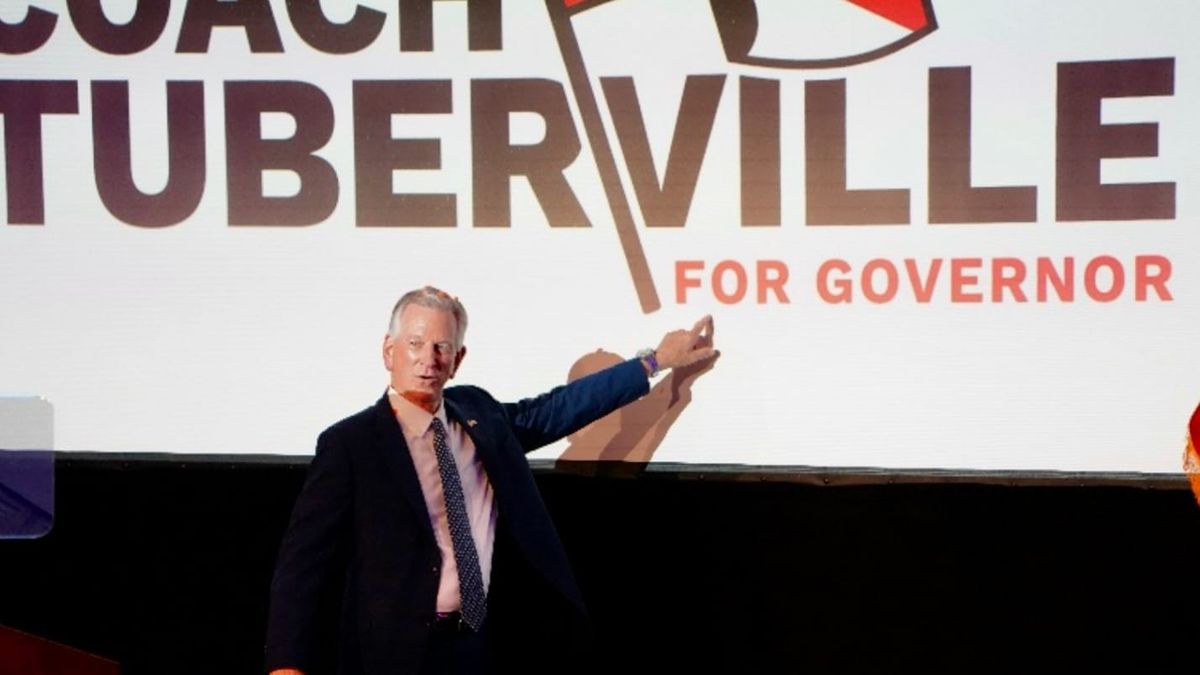
This is where Coach Tommy Tuberville enters the picture. He is arriving in Montgomery at a moment that demands far more than ordinary political leadership. With a Republican supermajority in the Legislature, he has the opportunity to build a coordinated economic strategy around energy abundance, industrial recruitment, workforce development, education reform, lower taxes, and efficient government. He does not have to spend four years negotiating every major initiative with an opposition party determined to defeat him. The political capacity to act exists. The challenge is whether Alabama's leaders will use it.
Coach has already offered something that too many politicians never bother to produce: a playbook. The priorities have been laid out. Now comes execution. The Legislature should work with the incoming administration to identify the statutory reforms, infrastructure priorities, and workforce initiatives necessary to make Alabama the most attractive state in America for the next generation of industrial investment. Our universities, community colleges, economic development organizations, utilities, and business leaders should be part of a coordinated effort to turn opportunity into results. This cannot become another series of conferences where politicians congratulate themselves for discussing problems that everyone already understands.
There is a lesson here from the great industrial transformations of American history. States and communities that welcomed railroads prospered while those that resisted connections were left behind. Regions that embraced electrification and modern manufacturing became centers of economic activity. The interstate highway system changed the commercial geography of the entire nation. Each generation has its defining infrastructure, and the communities that recognize its importance early gain advantages that can last for decades. The defining infrastructure of this generation is the combination of abundant electricity, digital computing capacity, and artificial intelligence. Alabama should be determined to lead that transformation.
There is a remarkable irony in all of this. The same Election Day that strengthened the political left nationally also created an extraordinary opening for a Republican-led Alabama. While the Democratic Socialists celebrate their growing influence in Washington and anti-data-center politicians celebrate election victories elsewhere, Alabama has the opportunity to become the place where the next great American industrial expansion takes root. The greater the obstacles other states place in front of investment, the more important it becomes for Alabama to offer a dependable alternative.
November 3, 2026, may be remembered as the beginning of a difficult chapter in American political history. But it could also be remembered as the day Alabama received the economic opportunity of a lifetime. History has a way of rewarding those who recognize its turning points and punishing those who fail to act. Coach Tuberville has the playbook. The Republican Legislature has the votes. Alabama has the resources, the workforce potential, and the opportunity to become a national leader in the industries that will define the next century.
Other states can debate whether they want the future. Alabama should be too busy building it, powering it, and prospering from it to join that debate.
Perry O. Hooper Jr. is a longtime Alabama Republican figure, former Alabama Legislator and Montgomery businessman. He served as Co-Chair of “Alabama Trump Victory” in 2016, and served as an at-large delegate to the Republican National Convention. He is a noted civic leader in Montgomery with deep family roots in Alabama’s legal and political history.
Opinions do not reflect the views and opinions of ALPolitics.com. ALPolitics.com makes no claims nor assumes any responsibility for the information and opinions expressed above.