
Jones Calls for Suspension of Gas Tax
Says 60 - 90 days suspension could put $100 million back in Alabamian’s pockets — but it’s doubtful the Governor or Legislature will go along
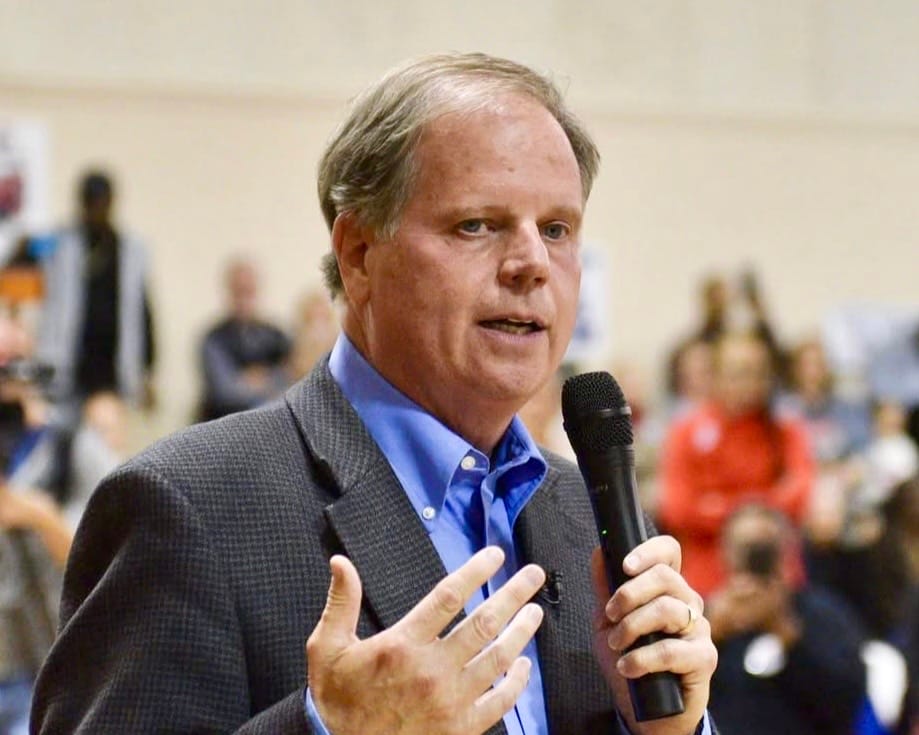
On Sunday, Democratic Toro candidate Doug Jones took to Facebook to call on Governor Kay Ivey and the Alabama legislature to enact a temporary suspension of the State's gas tax.
In the post, Jones said:
“I am calling on Governor Ivey and the Alabama Legislature to act now and pass a 60 to 90 day suspension of Alabama's gas tax, similar to the action taken in Georgia this past week.
“Alabama families were already struggling to make ends meet before being hit with the dramatic escalating costs at the gas pump that we are seeing now. This is one area where State leaders can make an immediate difference in people's lives as travel plans are increasing for spring break and Easter.
“Suspending the State's $0.30 gas tax and $0.31 diesel fuel tax for just 60 days would put over $100 million back into the pockets of hardworking Alabamians. If Georgia can act to give its citizens relief, Alabama can too.
“Governor Ivey and the legislature should act immediately.”
In March 2019, Alabama lawmakers passed in only five days what would become one of the State’s most consequential infrastructure laws in decades. The Rebuild Alabama Act, often referred to simply as the “gas tax,” created a new, dedicated stream of funding for roads, bridges, and transportation projects across the State.
Signed into law by Governor Kay Ivey on March 12, 2019, the legislation raised the State’s fuel tax for the first time in more than 25 years. Supporters framed the move as long overdue, pointing to years of deferred maintenance and growing strain on Alabama’s transportation network.
“However, in this time, our infrastructure has lagged behind and everyone agreed that something needed to be done,” said then-Senate President Pro Tem Del Marsh following passage of the bill.
The law implemented a 10-cent-per-gallon increase on gasoline and diesel, rolled out over three years. The first 6-cent increase took effect in September 2019, followed by two additional 2-cent increases in 2020 and 2021.
Before the law, Alabama’s gasoline tax stood at 16 cents per gallon. The phased approach was designed to ease the burden on drivers while still generating new revenue.
Funds are distributed through a set formula: roughly two-thirds to the State, with the remainder going to counties and municipalities for local projects.
The Act also introduced new fees on electric and hybrid vehicles, ensuring drivers who use little or no gasoline still contribute to road maintenance.
Revenue from the gas tax is earmarked strictly for infrastructure. Projects funded under the law include road resurfacing, bridge repairs, and expansions to improve traffic flow and safety.
A portion of the funds also supports the Alabama Department of Transportation’s grant program, which helps local governments tackle priority projects. These investments have been promoted by State leaders as essential to economic growth and public safety.
While the initial tax hikes were clearly defined, one of the most debated features of the law lies in what comes next.
Beginning in 2023, the Rebuild Alabama Act tied fuel tax rates to the National Highway Construction Cost Index. Under this system, the tax is adjusted every two years based on construction costs, with changes capped at one cent per gallon per adjustment.
In practice, this means the gas tax can continue to rise indefinitely—so long as construction costs increase—without requiring another vote from the Legislature.
Supporters argue the indexing protects the purchasing power of infrastructure dollars over time. Without it, inflation could erode the value of the tax and stall projects.
Critics of the gas tax, however, see it differently.
From the start, the Rebuild Alabama Act faced opposition from lawmakers and taxpayers wary of raising fuel taxes. Concerns centered on the speed of its passage, the financial burden on working families, and the lack of future legislative oversight on increases.
The indexing provision has remained a focal point of that criticism. Opponents argue it effectively creates automatic tax hikes “in perpetuity,” removing accountability from elected officials.
Others have questioned whether all funds are being spent as intended, calling for greater transparency and oversight of projects funded through the program.
At the time of its passing, some business and local leaders — including then-BCA President and CEO Katie Boyd Britt — defended the law, noting that Alabama had long underfunded infrastructure compared to neighboring States.
More than five years after its passage, the Rebuild Alabama Act continues to shape the State’s transportation landscape—and its political debates.
For supporters, it represents a necessary investment in Alabama’s future. For critics, it stands as a cautionary example of how tax policy can expand beyond its original scope.
With the ongoing turmoil in the Middle East causing significant increases in gas prices, Alabama’s drivers are facing an additional squeeze at the pump. Despite Jones’ call for relief, it’s doubtful that either the Governor or the Legislature will act on this matter.