Katherine Robertson Talks Hemp/THC at Eagle Forum Event
Discussed HB445, effects of closing the hemp loophole, possible future changes to the law
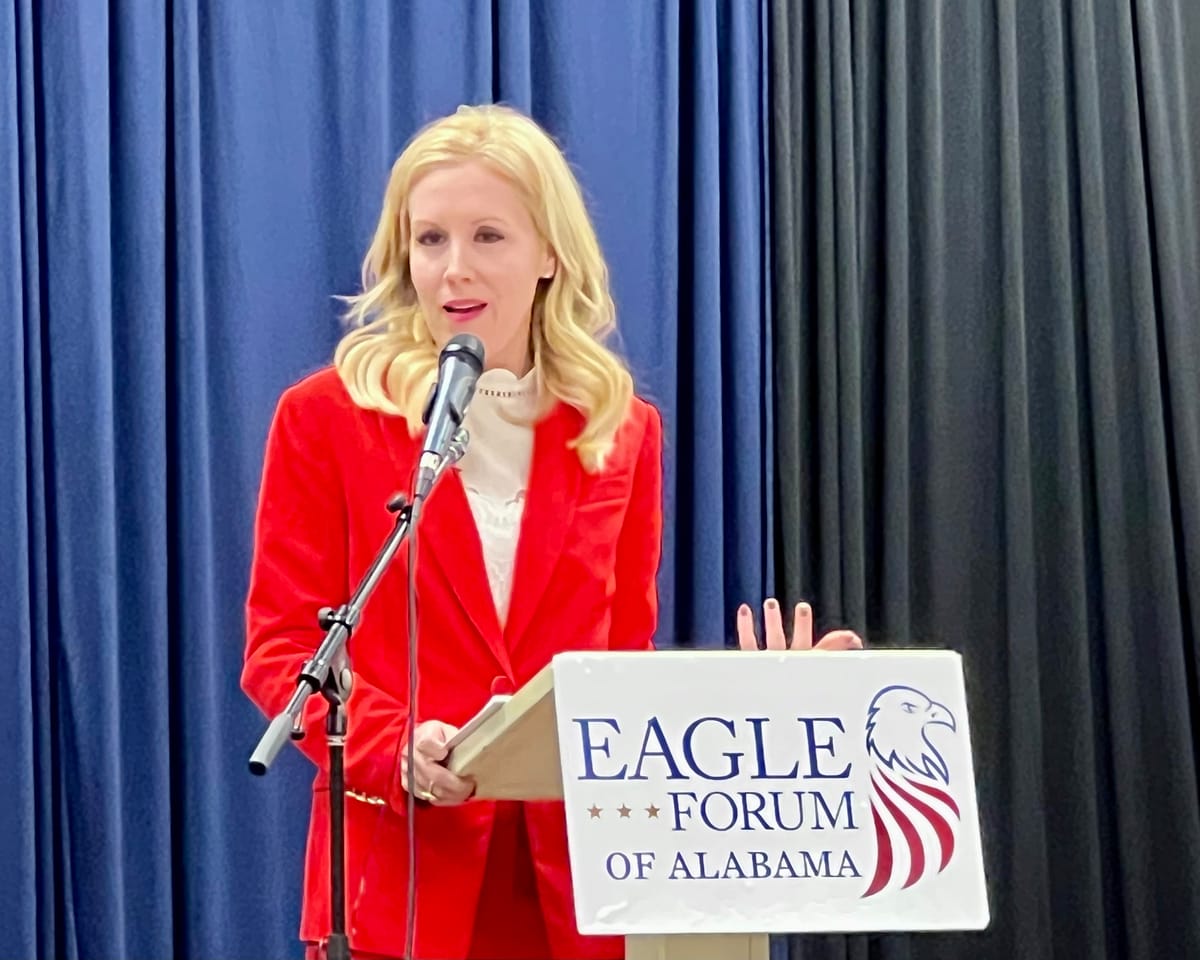
Katherine Robertson spoke at Friday’s Eagle Forum 2026 Policy Conference on Alabama’s new hemp and THC product rules, as well as the recent closing of the “hemp loophole.”
Robertson, who currently serves as Chief Counsel in the Alabama Attorney General’s office, began saying that she has “been on the enforcement side” of the AG’s office for ten years under AG Steve Marshall.
Robertson reminded the audience that the 2018 Farm Bill “legalized hemp and hemp products” but was “silent on delta-8 and delta 10” forms of THC, which led to a wide range of “gas station drugs” being available with little effective regulation.
The recent Continuing Resolution (CR) that was passed to reopen the government contained an amendment by Senator Mitch McConnell (R-KY) that closed the so-called “hemp loophole,” effectively banning 95% of hemp production as of November 13, 2026.
Alabama’s HB445, which was passed in the last legislative session, imposed limits on hemp-derived products that were much more stringent than the federal laws, and “we (Governor Ivey and AG Marshall) were sued right after it passed.”
The plaintiffs in that suit argued that HB445 violated the federal 2018 Farm Bill, which legalized hemp and hemp-derived products nationwide so long as Delta-9 THC concentration remained below 0.3 percent on a dry weight basis. While the federal law prohibited States from blocking the shipment or transport of legal hemp, it did allow them to regulate production. The hemp companies who brought the suit contended that HB445 crossed that line by criminalizing products that are otherwise permitted under federal law. The complaint alleged that HB445’s definitions were “unconstitutionally vague,” leaving both businesses and law enforcement unable to clearly determine which products are illegal.
Robertson said on Friday that many of the free-standing stores selling help products “were starting to adjust” to the provisions of HB445–bans on smokable and synthetic hemp products, over-21 only, stringent restrictions on THC content—but would now have to adjust to the possibility of even more restrictions under the CR.
Robertson acknowledged that there was a significant degree of uncertainty in this area because of the possibility the hemp loophole could be reopened during federal budget negotiations after the first of the year, as well as the possibility that the Trump administration may reschedule marijuana in the near future. She mentioned that Alabama’s medical cannabis program had yet to begin, and during the question period, acknowledged that SB1 was yet another factor that might need to be considered in upcoming months.
SB1, pre-filed by State Sen. April Weaver, would classify all psychoactive products derived from hemp as Schedule I substances, effectively banning them completely. It would also require all CBD products be sold only through licensed pharmacies.
As a pre-filed bill, the fate of SB1 is unknown, and will depend on the Legislature’s actions when the session begins.
Robertson pointed out that “none of these (products) have been FDA improved,” in concluding her remarks.
Robertson is a candidate for Alabama Attorney General in the Republican primary on May 19, 2026. For more information about Katherine Robertson’s campaign, visit www.KatherineForAG.com.
For more information on Eagle Forum of Alabama, visit https://alabamaeagle.org.