Let’s Talk About What We’re Actually Talking About
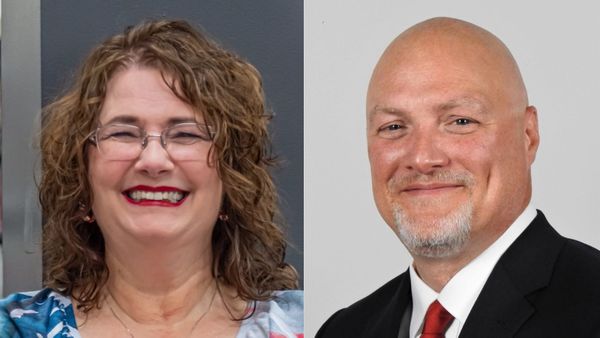
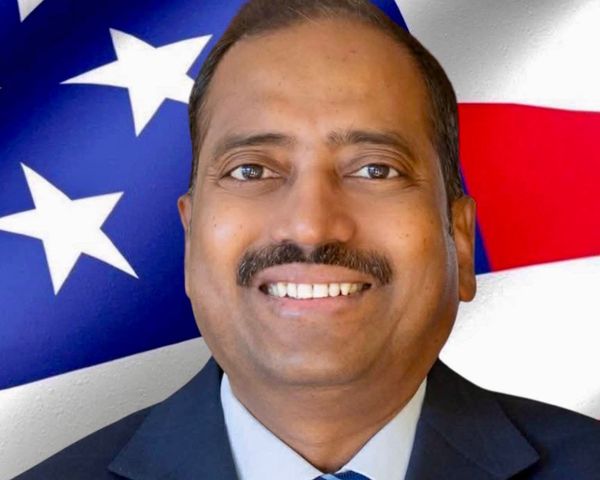
Response to Perry Hooper Jr. by Tanveer Patel

Guest Opinion by Tanveer Patel—a response to Perry O. Hooper Jr.’s recent OpEd on ALpolitics.com
Perry Hooper Jr.‘s response (to an opinion piece on this site) reveals the core problem: we’re using the same word to mean completely different things.
Two Meanings, One Word
When Mr. Hooper writes about Sharia, he means medieval legal codes as implemented by some foreign governments’ religious courts, unequal inheritance laws, male-dominated governance. He’s right that such systems are incompatible with American constitutional law. I agree completely.
When I write about Sharia, I mean something entirely different: the personal religious framework guiding my daily life. My prayers. My fasting. My commitment to charity and honesty in business. The ethical principles shaping how I treat others.
This is what Sharia means for the overwhelming majority of American Muslims personal spiritual practice, not political agenda. It’s no different from Christians following Biblical teachings or Jews observing Shabbat—personal faith lived under the full authority of U.S. law.
But Here’s the Problem
I never claimed Sharia law as a legal system produces equality. I explicitly stated that for American Muslims, Sharia means “personal faith and ethical conduct under the U.S. Constitution. Not a political system. Not foreign law.”
Mr. Hooper responded to an argument I didn’t make. And in doing so, he avoided the questions I actually asked.
What Muslim Americans Actually Want
Most Muslim Americans don’t want the legal systems Mr. Hooper describes either. We chose America specifically for the freedoms this constitutional system provides.
What we bring are values completely compatible with American life: community service, education, economic contribution. The Islamic principle of Zakat—charitable giving—isn’t about imposing religious law. It’s about taking care of people who need help.
That’s why Muslim communities across Alabama run food banks, free health clinics, and support programs serving everyone regardless of faith. The Red Crescent Clinic of Alabama, which I co-founded, provides free healthcare to underserved Alabamians because that’s what our faith calls us to do and what being good Americans means.
The Economic Reality
Muslim Americans have among the highest educational attainment rates 58% hold bachelor’s degrees. Muslim-owned businesses contribute over $150 billion annually to the U.S. economy. Muslim physicians serve underserved areas at rates significantly higher than the national average.
In Alabama, Muslim Americans own businesses, employ Alabamians, pay taxes, and invest in communities. We’re creating jobs, providing services, and strengthening the economy. We’re not threats to Alabama. We’re assets.
What He Didn’t Address
Notice what’s missing from Mr. Hooper’s response: the evidence.
He didn’t produce Senator Tuberville’s “intelligence” about Islamic school threats. He didn’t explain why 200+ Islamic schools successfully educate 50,000 students with zero evidence of problems. He didn’t acknowledge Muslim Americans’ contributions.
Instead, he pivoted to a debate about foreign legal systems entirely irrelevant to whether American Muslim children should attend schools in Alabama.
We Actually Agree—So What’s the Problem?
Mr. Hooper writes: “She is not proof that Sharia produces equality. She is proof that Sharia has no legal authority in the United States.”
Exactly. That’s precisely my point.
Sharia has no legal authority in the United States. It never has. It never will. The U.S. Constitution is supreme law. I’ve said this explicitly, repeatedly.
So if we agree on this fundamental fact, why are politicians like Senator Tuberville treating Muslim schools as threats? Why the inflammatory rhetoric about “Sharia law” taking over Alabama? Why are Muslim children being made to feel unwelcome in their own state?
If Sharia has no legal authority here—and we both agree it doesn’t—then what exactly is the threat Senator Tuberville claims to have intelligence about?
What I’m Still Asking For
My challenge stands: Where is the evidence that Islamic schools pose a threat to Alabama?
Senator Tuberville claims he’s “seen the intelligence.” I asked for it to be made public. Instead of evidence, I got a lecture about legal systems in other countries.
We’re not talking about Afghanistan. We’re talking about Hoover, Alabama. We’re talking about American Muslim children who want the same educational opportunities that Christian and Jewish schools provide.
If there were a systemic problem with 200+ Islamic schools educating 50,000+ students nationwide, where is the evidence?
An Invitation
Mr. Hooper has decades of Alabama public service. I respect that, and this conversation matters.
So I’m extending an invitation: Let’s sit down together. Visit Muslim-owned businesses. Meet Muslim families. Tour an Islamic school. Visit the Red Crescent Clinic. Have a real conversation.
We’re both Alabamians who believe in constitutional governance, economic opportunity, and religious freedom. The difference is that some of our children are being told their faith makes them suspect, based on a definition of “Sharia” that doesn’t reflect how we actually live.
The Real Question
Can we distinguish between opposing a foreign legal system (which I also oppose) and protecting American Muslims’ constitutional right to practice our faith?
Can we separate legitimate security concerns from blanket suspicion of an entire religious community?
Can we recognize that when Muslim Americans pray, give to charity, build businesses, and serve neighbors, we’re exercising the same freedoms the Constitution guarantees to all?
Because if we can’t make those distinctions, we’re not defending the Constitution. We’re undermining it.
Moving Forward
I wrote my original piece because Muslim children in Alabama are being made to feel unsafe based on inflammatory rhetoric about threats no one can substantiate.
Muslim Americans aren’t asking for special treatment. We’re asking for equal treatment. We’re asking to be judged by our contributions, not by fear-mongering stereotypes.
Mr. Hooper, my invitation stands. Let’s talk really talk as fellow Alabamians who want the best for our state and all its people.
I think we might surprise ourselves with how much we agree on.
Tanveer Patel is a Hoover, Alabama-based entrepreneur and community leader. An Indian immigrant and naturalized citizen who has called Hoover home for over two decades, she co-founded and led several tech and health-tech companies, including ConcertIDC. Patel helped launch the Alabama Angel Network to support startup growth statewide and co-founded the Red Crescent Clinic of Alabama, a nonprofit providing free health care to underserved residents. She serves on multiple civic and business boards and was named one of the nation’s top 100 entrepreneurs by Upstart Business Journal.
Opinions do not reflect the views and opinions of ALPolitics.com. ALPolitics.com makes no claims nor assumes any responsibility for the information and opinions expressed above.