Moore Backs Farm Bill Advancing in House Committee
Rep. Barry Moore praised House Agriculture Committee passage of the 2026 Farm Bill, citing stronger safety nets and rural investment
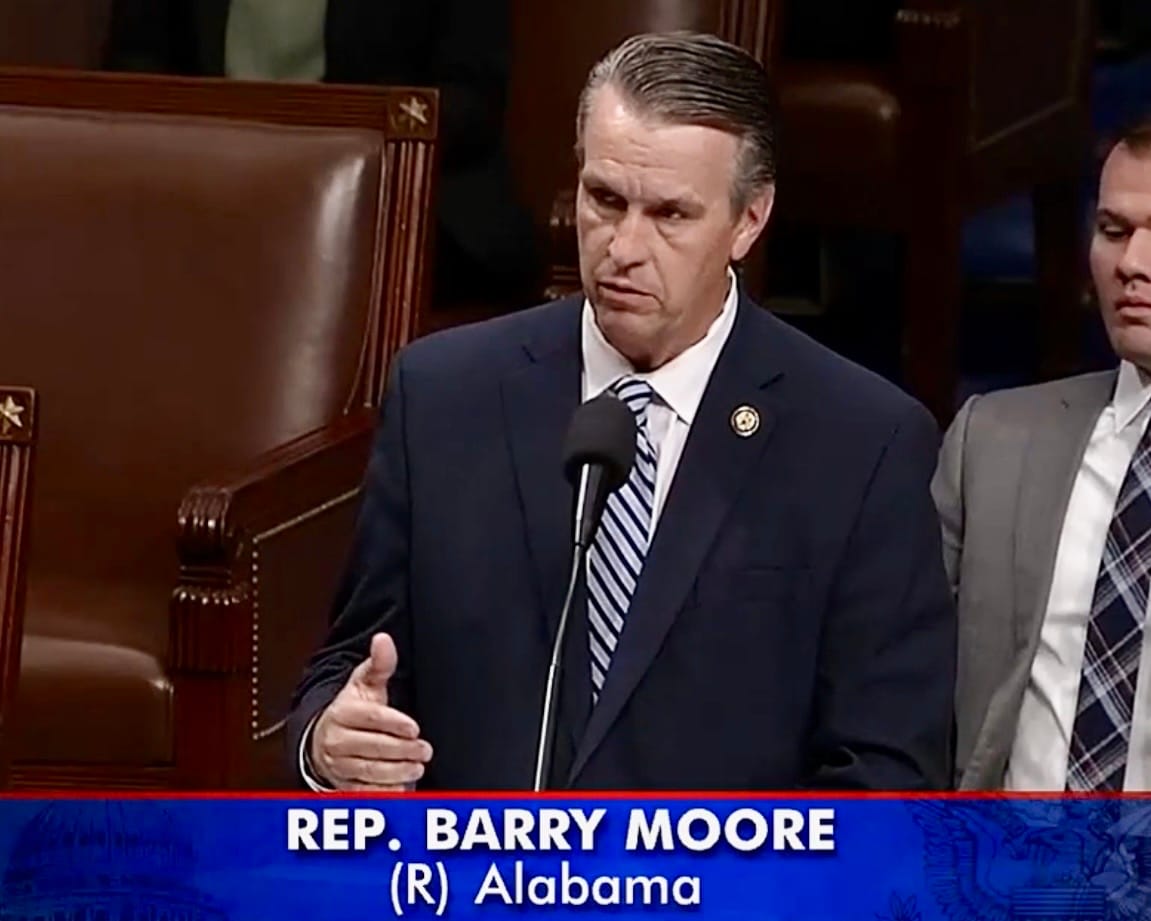
U.S. Representative Barry Moore (R-AL-01) praised the House Agriculture Committee this week after it advanced a sweeping new farm bill aimed at strengthening American agriculture and rural communities.
The legislation, known as the Farm, Food, and National Security Act of 2026, was approved by the Committee March 4 with bipartisan support and now heads to the U.S. House for further consideration.
Moore, who serves on the Committee, said the bill includes key updates for farmers and rural communities across the State.
“Alabama’s farmers deserve a modernized Farm Bill that strengthens their safety net, expands market opportunities, and provides the certainty they need to plan for the future,” said Rep. Barry Moore. “The Farm, Food, and National Security Act of 2026 delivers meaningful improvements to Price Loss Coverage and Agriculture Risk Coverage programs, expands crop insurance options for specialty crops, and protects key commodities like cotton and peanuts that are vital to our state’s economy. It invests in rural broadband and small-town infrastructure, strengthens disaster assistance for producers facing hurricanes and drought, expands trade opportunities to keep American agriculture competitive, and modernizes the National Agricultural Statistics Service to ensure farmers and policymakers have accurate, timely data to make sound decisions. I’m proud to support this legislation as it moves forward and will continue working to secure a strong, commonsense Farm Bill for Alabama’s producers and rural communities.”
The measure is one of Congress’s most significant agriculture packages, renewing federal farm and food programs through 2031. The bill was introduced by Agriculture Committee Chairman Glenn 'GT' Thompson and covers a wide range of policies, including farm support programs, nutrition assistance, rural development, and agricultural trade.
Moore said the legislation also incorporates his framework to modernize the National Agricultural Statistics Service (NASS), a federal agency that collects and reports agricultural data used by producers and policymakers.
According to Moore, the update would improve both the accuracy and speed of the data farmers rely on when making planting, pricing, and investment decisions. More reliable data, he said, would help ensure federal agriculture programs reflect real-world market conditions.
The Committee-approved bill includes several policy areas central to the nation’s farm economy:
Commodity and risk management programs
The legislation updates the federal Price Loss Coverage and Agriculture Risk Coverage programs and expands crop insurance options, including new flexibility for specialty crops. It also includes protections for key commodities such as cotton and peanuts.
Rural development and infrastructure
The measure increases support for rural broadband expansion, water systems, and infrastructure improvements in small communities. It also expands loan and grant programs designed to help rural businesses and family farms.
Specialty crops and local food systems
Funding would support research and promotion programs for crops including peanuts, cotton, and horticultural products, along with farm-to-school programs and local food marketing initiatives.
Disaster assistance and preparedness
The bill strengthens federal assistance for farmers affected by hurricanes, droughts, floods, and other extreme weather, while also promoting disaster prevention and resilience planning.
Trade and market expansion
New initiatives are aimed at helping American farmers export products and compete in both domestic and global markets.
Nutrition and food security
The legislation maintains the efficiency of the Supplemental Nutrition Assistance Program (SNAP) while promoting access to healthy foods for schools and communities.
The farm bill cleared the House Agriculture Committee by a 34–17 vote and now awaits consideration by the full House of Representatives.