
Moore Files Bill Targeting Sharia-Based Discrimination
Alabama Congressman Barry Moore says measure reinforces civil rights law, blocks use of foreign legal codes in U.S. discrimination cases
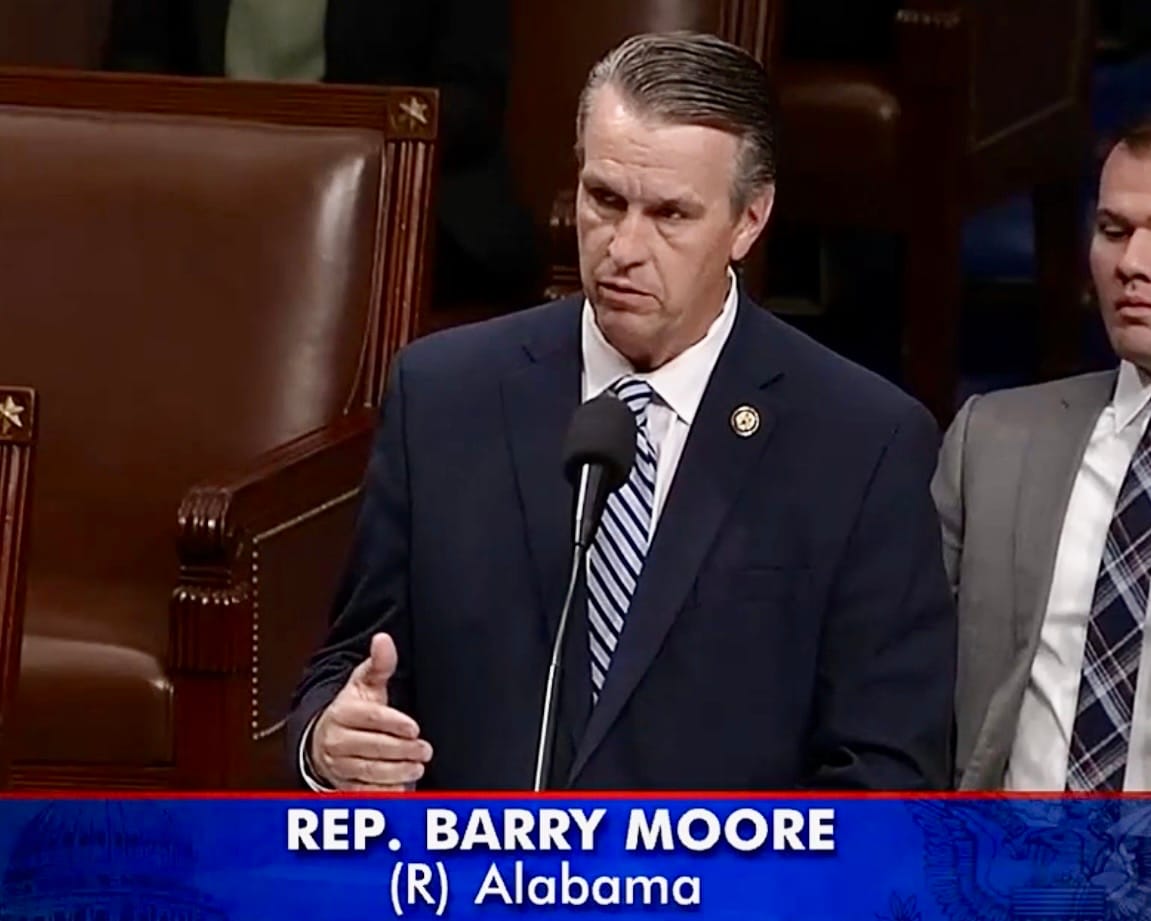
U.S. Representative Barry Moore (R-AL-01) has introduced legislation he says will strengthen federal civil rights protections by addressing discrimination tied to the use of Sharia law in the United States.
The measure, titled the Defeat Sharia Law in America Act, seeks to clarify that practices rooted in Sharia law that result in discrimination would violate the Civil Rights Act of 1964.
The bill is being led in the Senate by Tommy Tuberville (R-AL) and John Cornyn (R-TX).
“Our Constitution and the rule of law must always come first in this country,” Moore said. “The Defeat Sharia Law in America Act makes clear that using Sharia law as a basis to discriminate against Americans violates the Civil Rights Act, and it ensures that foreign legal doctrines cannot undermine the freedoms and equal protections guaranteed by our Constitution. Radical ideologies that reject American values pose a real threat to our communities and our young people. Congress has a responsibility to ensure that the Constitution, not any foreign or religious legal code, remains the highest law of the land.”
According to Moore’s office, the legislation focuses on how federal civil rights law applies in cases where religious legal frameworks are cited in public accommodations or services.
Key provisions include:
- Clarifying that entities covered under Section 201(a) of the Civil Rights Act may not deny goods, services, or access by applying Sharia law
- Stating that such actions would qualify as unlawful discrimination or segregation under federal law
- Adding language to prevent what the bill describes as “private, unconstitutional implementation” of Sharia law in the United States
The proposal centers on public accommodations—businesses and services already subject to federal non-discrimination rules.
The Civil Rights Act of 1964 prohibits discrimination based on race, color, religion, or national origin in places of public accommodation. Moore’s bill does not create a new protected class but instead aims to define certain conduct as a violation under existing law.
Supporters say the measure reinforces constitutional protections and ensures a single legal standard. Critics of similar past proposals have argued such legislation can be redundant or raise concerns about targeting specific religious traditions.
The bill has been introduced in the House and awaits further consideration. A timeline for committee review has not been announced.