Open Courtrooms Restore Public Confidence
Guest Opinion by Perry Hooper, Jr.
Guest Opinion by Perry Hooper, Jr.
The American people deserve transparency, especially in a case that has captured national attention and raised serious questions about political violence, public safety, and the integrity of our justice system. The judge’s decision to allow cameras in the courtroom during the trial of the man accused of murdering Charlie Kirk is the right call and should be commended.
President Donald Trump called the assassination of Charlie Kirk “a dark moment for America,” saying Kirk “inspired millions” and devoted his life to “the cause of open debate and the country that he loved so much, the United States of America.” Trump added that Kirk was “a martyr for truth and freedom” and warned that “violence and murder are the tragic consequence of demonizing those with whom you disagree day after day, year after year.”
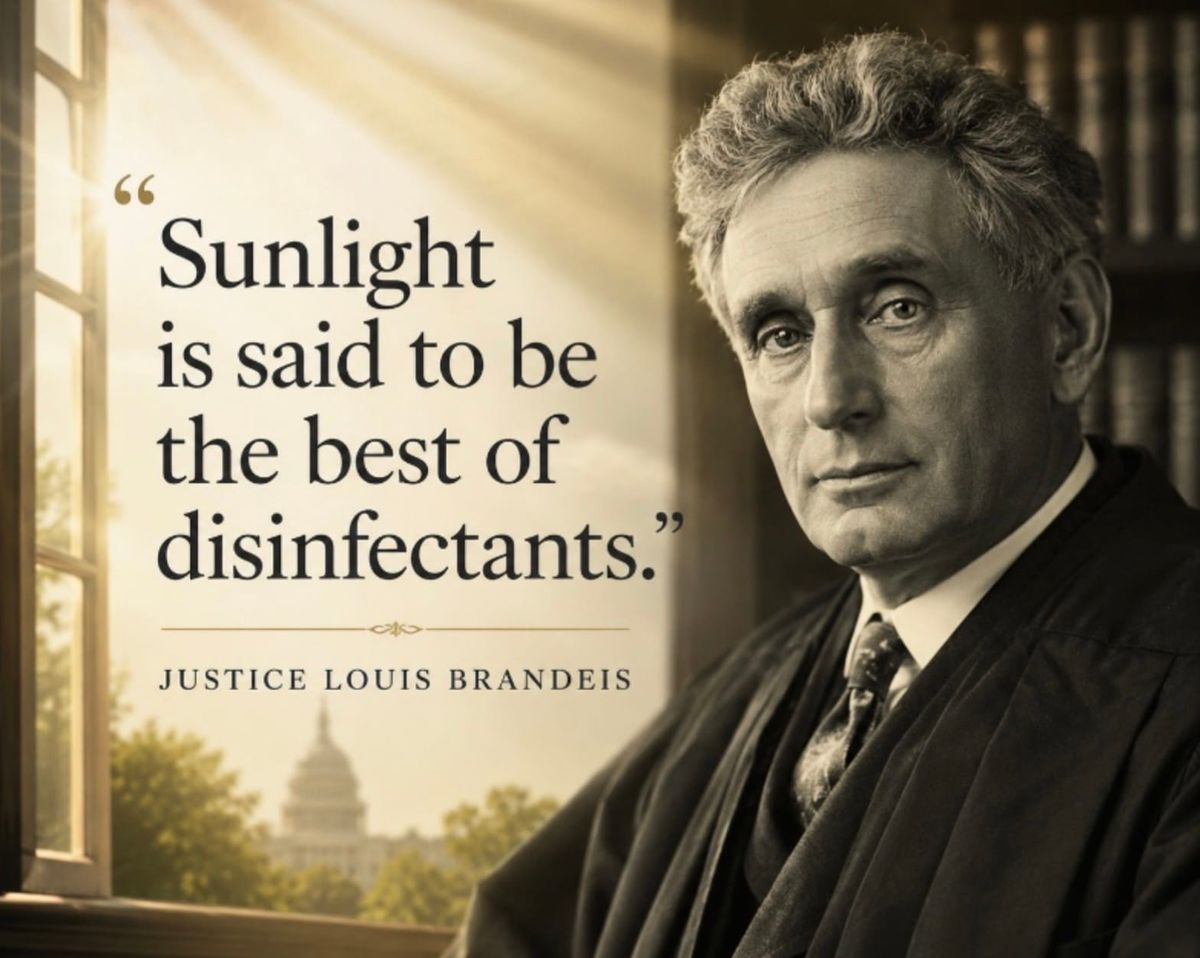
As Justice Louis Brandeis famously observed, “Sunlight is said to be the best of disinfectants.” That principle applies not only to government bureaucracy and politics, but also to the judicial system itself. Public confidence grows when citizens can witness justice being carried out openly rather than being asked simply to trust institutions behind closed doors.

For too long, many Americans have lost confidence in institutions because they believe critical proceedings are hidden from public view, filtered through selective media coverage, or shaped by partisan narratives. Allowing cameras into the courtroom helps restore trust by letting citizens see the process unfold for themselves, in real time, with their own eyes.
Transparency is not the enemy of justice. In fact, openness often strengthens it. A courtroom is not supposed to operate in darkness when the stakes are this high. The public has a legitimate interest in seeing how evidence is presented, how attorneys conduct themselves, and how the judicial process works in one of the most significant criminal trials in the country.
Americans have seen what happens when the public is effectively shut out of major proceedings. The federal trial surrounding Ghislaine Maxwell generated worldwide interest because of its connections to powerful elites, yet cameras were prohibited and the public was forced to rely almost entirely on courtroom sketches and filtered media summaries. Whether intentional or not, that lack of direct public access fueled suspicion, conspiracy theories, and declining trust in the system itself.
By contrast, even the Supreme Court of the United States has steadily moved toward greater openness. While the Court still does not permit television cameras during oral arguments, it now releases audio recordings and written transcripts to the public, and during major cases it has provided live audio access so Americans can hear proceedings directly for themselves. The highest court in the land understands that public confidence requires visibility into the judicial process.
This is not entertainment. It is accountability.
The judge in this case understood that sunlight remains one of the best disinfectants in a constitutional republic. Americans should not have to rely solely on edited clips, secondhand interpretations, or social media spin to understand what happens inside that courtroom. Cameras provide a direct window into the process and reinforce confidence that justice is being carried out fairly and professionally.
At a time when trust in government institutions continues to decline, this judge chose transparency over secrecy. That decision deserves praise, regardless of political affiliation.
Perry O. Hooper Jr. is a longtime Alabama Republican figure, former Alabama Legislator and Montgomery businessman. He served as Co-Chair of “Alabama Trump Victory” in 2016, and served as an at-large delegate to the Republican National Convention. He is a noted civic leader in Montgomery with deep family roots in Alabama’s legal and political history.
Opinions do not reflect the views and opinions of ALPolitics.com. ALPolitics.com makes no claims nor assumes any responsibility for the information and opinions expressed above.