Palmer Backs Trump’s Iran Action
Rep. Gary Palmer defends Iran strikes, votes “no” on War Powers Resolution
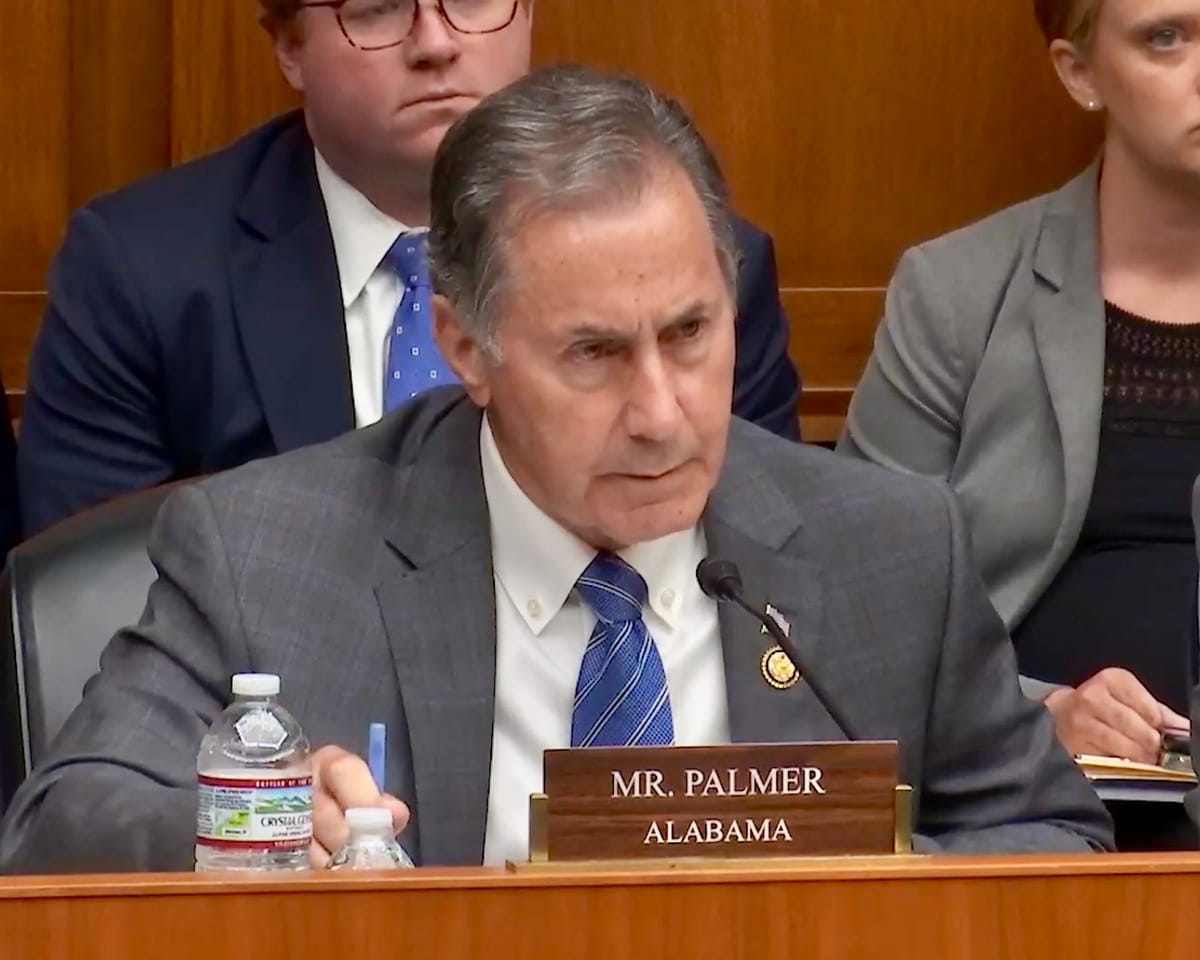
On Thursday, the U.S. House of Representatives voted against a War Powers Resolution that would have required President Donald Trump to seek congressional approval for ongoing military actions in Iran. The measure failed 219–212 as Republicans held firm behind the White House.
Among those opposing the resolution was Representative Gary Palmer (R-AL-06) who released a statement defending the President’s recent strikes and urging congressional support for continued action.
Palmer framed the conflict in historical terms. He cited decades of past attacks by Iran against Americans, including embassy assaults and deadly strikes on U.S. service members. “For 46 years, Iran has conducted kidnappings, murders, bombings, rocket and drone attacks that have killed and injured Americans, both civilian and military,” Palmer said.
He pointed to some of the most infamous episodes in U.S.‑Iran history: Iran’s role in the Marine barracks bombing in Beirut, the attack on Khobar Towers, and the supply of roadside bombs that killed hundreds of U.S. troops during the global war on terror. “When you consider this history of attacks against Americans … it should be glaringly apparent that President Trump is doing the right thing,” Palmer said.
Palmer also referenced the recent turmoil inside Iran, saying the regime there “just slaughtered over 30,000 of their own people,” an assertion that is being discussed widely in coverage of the conflict.
He praised Operation Epic Fury, the name the administration has given to the current campaign against Iran, saying the President acted as Commander in Chief to “protect our nation, neutralize this threat, and hold Iran accountable for their decades of attacks against America.”
The House vote comes as the conflict between the United States and Iran continues to escalate. The military operation, conducted alongside Israeli forces, has drawn both applause and criticism across Congress over its legal authority and long‑term goals.
Supporters of the administration argue that the President has acted within his authority under the 1973 War Powers Resolution and in defense of national security.
Critics counter that Congress’s constitutional role in declaring war has been sidestepped and that the nation has not been given a clear strategy or endgame for the engagement.
The House’s decision to reject the resolution was mirrored in the Senate, where a similar resolution failed by a vote of 47-53. These votes ensure the administration can continue its current operations without immediate congressional constraints, although debate over oversight and authority will continue in both chambers.