Restoring Trust in The Alabama GOP
It Is Time for the Next Generation to Take the Lead—Guest Opinion by Jonathan Hoffman
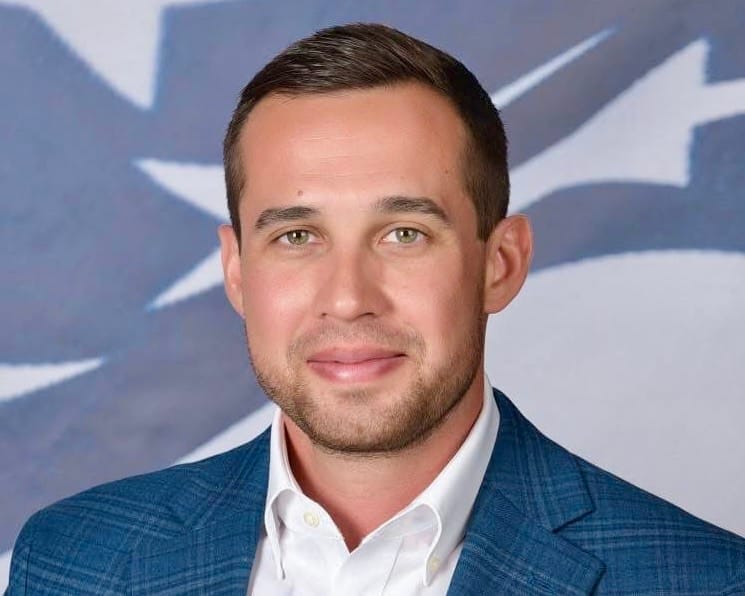
Guest Opinion by Jonathan Hoffman, CEO and President of Southern Freedom Society
For decades, Alabama’s conservative movement was carried by men and women who believed they were defending faith, family, and freedom. They organized. They funded. They built institutions. They shaped the Republican Party into what it is today.
We should honor that.
But we also have to be honest.
The political battlefield has changed, and too many of our leaders are still fighting the last war.
This is not an attack on their character. It is an acknowledgment of reality. The tools have changed. The culture has shifted. The speed of information has accelerated beyond anything previous generations ever had to navigate.
And if the next generation does not step up and take charge, we will continue to lose ground while insisting we are winning.
A Party Divided by Economics and Influence
In Alabama’s Republican landscape, there is a divide driven by both economics and influence.
On one side, you have an elite donor class with the time and financial freedom to stay deeply involved in politics. They fund their candidates. They fund political action committees. They fund media outlets that promote their preferred narratives. Establishment funded media ensures that establishment voices dominate the conversation.
On the other side, you have everyday conservatives. The grassroots. The silent majority.
They believe in faith centered values, election integrity, limited government, and fiscal responsibility. But they are working long hours, running small businesses, raising children, and trying to make ends meet. Political involvement is often a luxury they simply cannot afford.
The grassroots outnumber the elite.
But they do not outspend them.
And in modern politics, narrative plus funding equals power.
If we want to see change, the next generation must understand this reality and respond strategically.
The Battlefield Is Digital
The older generation fought bravely using the tools available to them.
They wrote letters.
They attended rallies.
They voted and waited for reform.
But today’s war is fought on screens.
Narratives are shaped in real time. Algorithms determine visibility. Perception can override policy. Influence is built through podcasts, short form video, digital networks, and strategic storytelling.
This is a war of narrative dominance.
The next generation is uniquely positioned to lead here. We remember life before social media, but we also understand how powerful it has become. We adapted. We learned the platforms. We understand how quickly truth can be buried and how quickly a narrative can spread.
Yet too often, leadership decisions are still being made through outdated assumptions about how influence works.
We cannot wait for permission to modernize the movement.
We must build the infrastructure ourselves.
When Leadership Protects Power Instead of Principle
There is another reality that must be addressed directly.
Many longtime power brokers who remain firmly in control of the Alabama GOP are operating from a mindset that prioritizes control over reform. Whether intentional or not, the result has been the same. Decisions made behind closed doors have left many voters questioning whether the party still belongs to the people or to a small circle of insiders.
When party leadership removes or disqualifies candidates who are widely viewed as grassroots driven or reform minded, it does more than affect one race. It sends a message.
It tells voters that outcomes may be managed.
It tells volunteers that energy can be dismissed.
It tells everyday conservatives that their voice has limits.
Regardless of the justification offered in any individual case, the perception of gatekeeping has consequences. Trust, once shaken, is difficult to rebuild.
And trust is the foundation of any political movement.
If voters begin to believe that the process is tilted, that rules are selectively enforced, or that insiders protect insiders while reformers are sidelined, confidence erodes. When confidence erodes, participation declines. When participation declines, movements weaken.
A party cannot claim to represent the people while simultaneously appearing to narrow the field of who is allowed to represent them.
This is not about personalities. It is about credibility.
If the Alabama Republican Party is to remain strong, it must demonstrate transparency, fairness, and equal application of its rules. It must welcome competitive ideas rather than appear threatened by them. It must allow voters to decide outcomes whenever possible instead of appearing to pre decide them.
When internal decisions create the impression that grassroots candidates are being pushed aside, it does not just harm those candidates. It damages the broader conservative brand.
Voters begin to ask hard questions.
If this is how we handle our own, how different are we from the systems we criticize?
Restoring trust requires more than slogans about unity. It requires structural humility. It requires leadership that is willing to open the process, not tighten it.
Conservatism in Alabama will not be preserved by maintaining control at all costs. It will be preserved by earning and re earning the confidence of the voters who make up the base.
That means allowing competition.
That means embracing transparency.
That means proving that the party belongs to its people, not merely to its gatekeepers.
If trust is rebuilt, enthusiasm returns.
If enthusiasm returns, the movement strengthens.
But if voters continue to feel sidelined or dismissed, the long term damage will not be theoretical. It will be measurable.
And no party, regardless of history or dominance, is immune to that.
The Risk of Creating a New Generation of Gatekeepers
There is another pattern we have to confront honestly.
Too often, when a younger individual steps into leadership, it is not a true transfer of reform minded vision. It is simply the inheritance of the same system.
They are welcomed in. Elevated. Given access.
But access comes with expectations.
Instead of challenging the structure, they are gradually shaped by it. They learn which conversations are acceptable. Which alliances are protected. Which fights are not worth picking. They are told how the process works and why it cannot be changed too quickly.
Before long, the incentives become clear.
The system is personally rewarding. It offers influence. Recognition. Stability. Opportunity.
When that happens, the priority subtly shifts from reforming the structure to preserving it.
So instead of meaningful change, what we get is continuity. A new face. A new voice. But the same gatekeeping mentality.
There is also an uncomfortable reality beneath this pattern.
When we see certain younger individuals step into the “fight,” it is often not an outsider rising from the grassroots. Many times, even among college age activists, their pathway into influence was inherited.
Their parents are current politicians. Former officeholders. Major donors. Longtime insiders. From the beginning, they are connected to the very system many voters believe needs serious reform.
They understand its language. They benefit from its networks. They move comfortably within its circles because those circles helped shape them.
This is not about attacking families or ambition. It is about structural truth.
When leadership pipelines are dominated by legacy relationships and donor networks, reform becomes unlikely. The incentives are aligned with preservation, not transformation.
So what appears to be generational change often becomes something else entirely.
We do not get reformers.
We get successors.
Meanwhile, the silent majority, everyday conservatives who believe they truly own the party, remain outside the inner circles of decision making.
If the system drastically needs change, it cannot be changed solely by those raised within it, trained by it, and rewarded by it.
Otherwise, we simply produce a younger class of gatekeepers.
The Danger of Being Stuck
There is a mindset that still lingers in certain corners of conservative politics.
Politics does not work like you think.
You have to compromise.
You have to support whoever has the best chance of winning.
Do not rock the boat.
But what if the boat is drifting off course?
What if compromise has quietly turned into surrender?
The next generation sees the cracks in the system because we are living with the consequences of decades of incremental concessions.
We are not reckless. We are not naive. We are simply unwilling to accept that the only path forward is the same path that created the current mess.
Respecting elders does not require adopting every strategy they insist upon.
Leadership transitions are rarely comfortable. But necessary ones rarely are.
The Awakening That Must Happen
The grassroots are not weak.
They are under activated.
There are regular people in Alabama with the means to help fund truth telling media and reform minded candidates. They exist. But many have disengaged, frustrated and convinced that nothing changes.
The next generation must become the bridge.
We must build media that fights for the people. We must support candidates who reflect conviction rather than calculation. We must return ownership of the party to the silent majority.
The Alabama Republican Party does not belong to legacy families. It does not belong to elite donor networks. It does not belong to insiders who rotate influence among themselves.
It belongs to the people.
Real change happens when resources align with reform. And that alignment will not happen accidentally.
The Window Is Open, But Not Forever
We are living in an unprecedented moment.
Technology allows direct communication without institutional gatekeepers. Independent media can rival legacy outlets. Grassroots energy can be mobilized faster than ever before.
But this window will not remain open indefinitely.
If the next generation hesitates, waiting for the old guard to step aside gracefully, the opportunity will pass.
This is not about disrespecting those who came before us.
It is about recognizing that stewardship requires adaptation.
A Call to Step Forward
To the next generation of conservative leaders who are well informed and quietly frustrated:
Stop waiting.
Stop assuming someone else will fix it.
Stop believing that leadership will be handed to you.
The time is right.
Build the media.
Fund the truth.
Support principled candidates.
Engage your communities.
Bypass the old bottlenecks.
Honor the past. But do not be confined by it.
If Alabama’s conservative future is going to look different, it will not be because the older generation suddenly changes course.
It will be because the next generation stepped forward, took responsibility, and led.
Jonathan Hoffman is an Alabama entrepreneur and political campaign consultant who became involved in grassroots activism through local civic issues in his community. He is the founder and CEO of Southern Freedom Society, a citizen-funded media organization focused on public engagement and political awareness. He works with local candidates and volunteers across the state on communication and outreach efforts.
Opinions do not reflect the views and opinions of ALPolitics.com. ALPolitics.com makes no claims nor assumes any responsibility for the information and opinions expressed above.