Rodney Walker urges caution on Covington CO₂ storage plan
U.S. Senate candidate Walker calls for pause on Pine Hills carbon dioxide (CO2) storage project, backs full review of safety, transparency, local impact
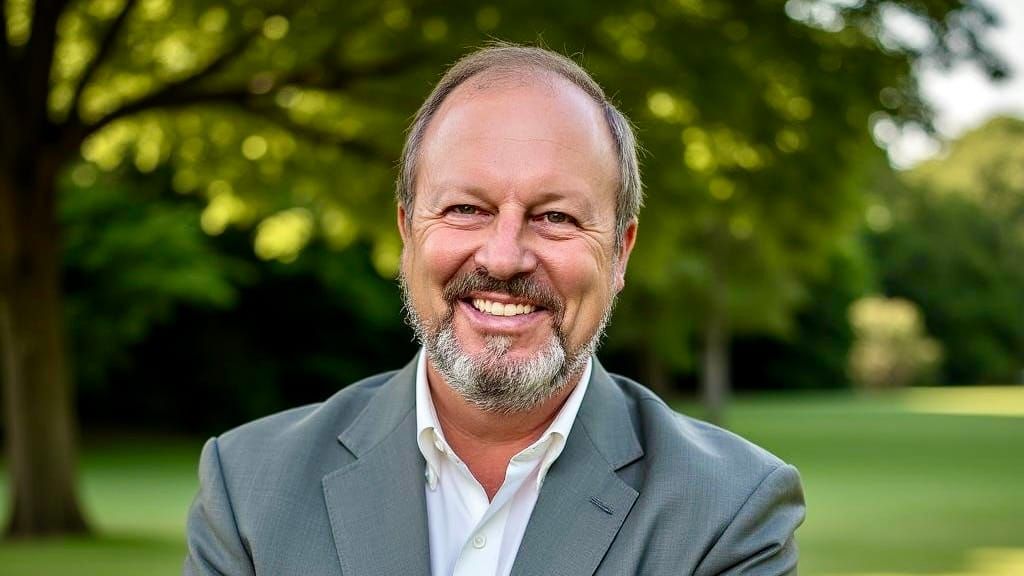
Republican U.S. Senate candidate Rodney Walker is urging State and federal officials, and residents, to rethink a proposed carbon dioxide (CO₂) storage project in Covington County. Walker said Alabama must pursue responsible solutions that protect communities while addressing emissions without risking public safety or property rights.
Walker’s comments come amid growing opposition to the Pine Hills Storage Hub — a plan by Reliant Carbon Capture & Storage to inject millions of tons of captured CO₂ deep underground in southern Covington County. Supporters of the project describe it as a safe way to reduce emissions and support industry. Critics, including some local leaders, worry about safety and transparency.
“This is not about ignoring environmental challenges,” Walker said in a campaign statement. “It is about finding solutions that make sense for Alabama. We can address emissions without turning Covington County into a dumping ground or putting our communities at risk.”
Walker said he stands with State Representative Matthew Hammett (R-Andalusia) and State Senator Josh Carnley (R-Ino) in calling for a pause on the proposal and a full evaluation of its safety, long-term impacts, and transparency.
Rep. Hammett has pre-filed House Bill 61 (HB61) that would give Covington County voters a say on whether to allow carbon storage wells in the county’s constitution. Opponents say the measure is needed to protect local land and water supplies, WTVY has reported.
Supporters of the Pine Hills project argue that carbon capture and underground storage can play a role in reducing emissions while preserving jobs and energy reliability. Project planners say the CO₂ would be injected more than 3,000 feet underground under layers of rock and that strict federal and State oversight will protect drinking water and land.
Walker is raising questions about whether Covington County’s geology is suitable for permanent storage. He noted scientific descriptions of local subsurface rock types differ from storage sites in places like Iceland, where volcanic formations help trap CO₂.
“In simple terms, there is no solid volcanic rock formation beneath Covington County capable of permanently containing this carbon dioxide,” Walker said. “Under pressure, it can migrate through sediment, into groundwater, or toward the Gulf of Mexico.”
Walker is also raising transparency concerns, noting that he personally reached out to Bestor Ward, the owner of Reliant CCS, to discuss the project.
“For a project of this magnitude, I believe direct engagement with company leadership is appropriate,” Walker said. “Transparency and accountability should be non-negotiable when Alabama communities are being asked to accept this level of risk.”
Public safety is a central issue cited by opponents of the project. CO₂ is a colorless, odorless gas that can displace oxygen and pose risks if released at ground level. Previous CO₂ pipeline ruptures in other States have caused evacuations and hospitalizations, highlighting regulatory and emergency response gaps for such infrastructure.
The Pine Hills Storage Hub project is still early in the permitting process. A similar carbon storage permit application elsewhere in Covington County was rejected by the U.S. Environmental Protection Agency for being incomplete, underscoring regulatory scrutiny and public information gaps, according to WAKA 8.
Walker said this pause in the process should be used to pursue safer, proven alternatives that capture CO₂ at the source rather than transporting it across the State for underground disposal.
“As your next United States Senator, I will work to bring real solutions to the table,” Walker said. “Solutions that protect people, property, and communities while allowing innovation to move forward responsibly.”
In the interest of full disclosure and transparency, in his statement Walker cited strong personal and business ties to the region. His wife was born in Andalusia, and they have family members living throughout Covington County and surrounding areas. He and his wife are also franchisors of a business located in Opp, Alabama.
Additionally, Walker noted that he owns:
- A granite quarry in Wedowee, Alabama.
- A 3,000-acre cattle farm in Clay County that participates in voluntary carbon credit programs through natural sequestration.
In the statement, Walker emphasized that none of his operations receive carbon dioxide through pipelines or underground injection.
Walker is one of several candidates vying for the Republican nomination for U.S. Senate in the May 19 primary election.
For more information or to contact the campaign, visit walkerforalabama.com or follow Rodney Walker on social media.