Saving the Game: Senator Tuberville and the Fight for College Football’s Future
Guest Opinion by Perry O. Hooper, Jr.
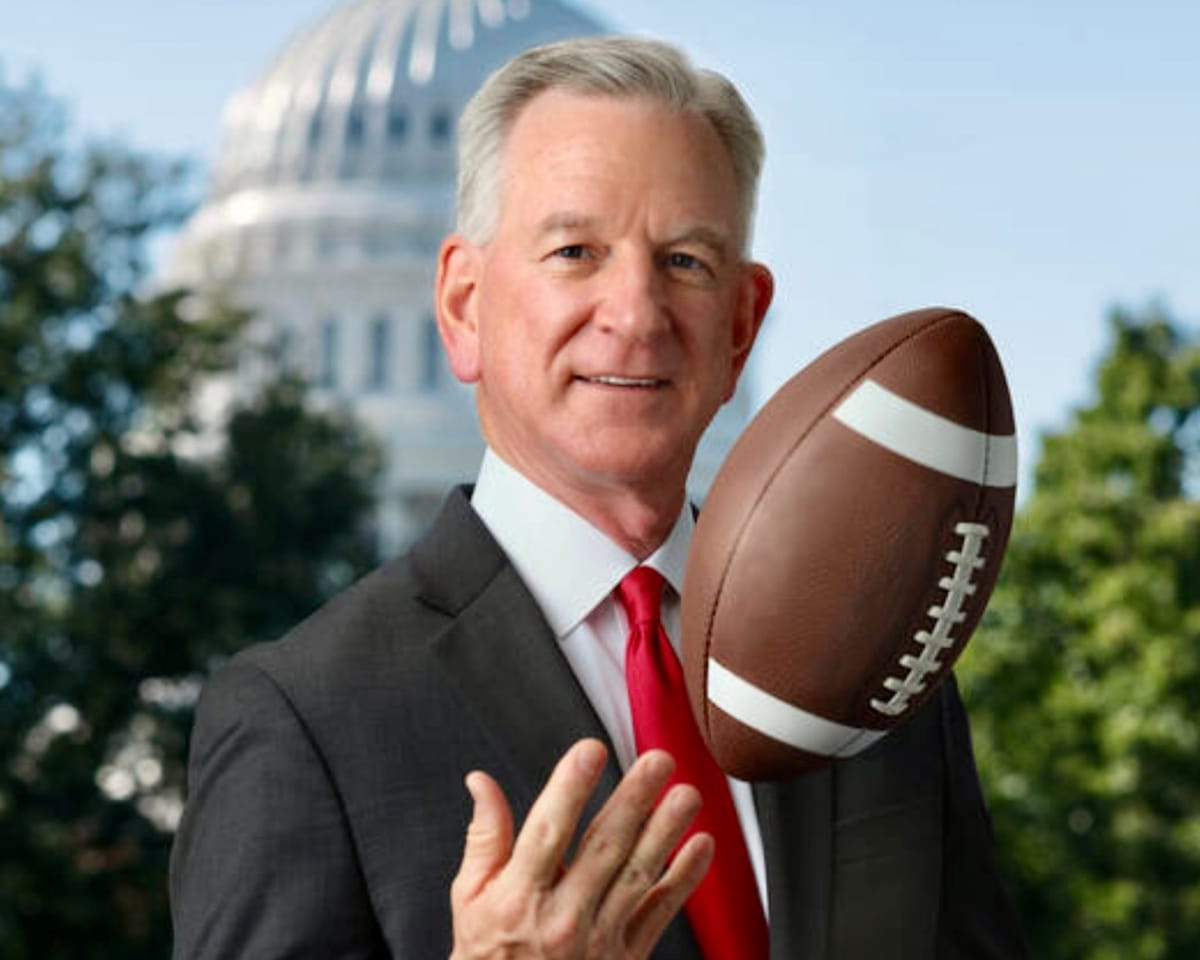
Guest Opinion by Perry O. Hooper, Jr.
College football is on the brink of losing what made it great. Fans know it, coaches are saying it, and even the players are starting to feel it. What was once built on loyalty, development, and tradition has been replaced by uncertainty, short-term decisions, and a system that rewards chaos over commitment.
At a time when college athletics is drifting further away from its core mission, Senator Tommy Tuberville is doing what leaders are supposed to do. He is stepping in, calling out the chaos, and offering a real solution.
His proposed Student-Athlete Act is not just another piece of legislation. It is a long-overdue effort to restore structure, fairness, and integrity to a system that has been turned upside down by an unchecked transfer portal and a patchwork of rules that change by the week.
Anyone who has followed college football over the last several years knows exactly what Senator Tuberville is talking about. What used to be a disciplined system built on commitment and development has become a revolving door. Athletes jump from program to program with little restriction. Coaches are forced to re-recruit their own rosters every offseason. Fans struggle to even recognize their teams from one year to the next.
This is not stability. This is not competition. This is chaos.
Senator and former Division I Coach Tuberville understands this better than anyone because he has lived it. He has recruited young men, built programs, and mentored athletes who depended on structure, accountability, and long-term development. He knows that success in college athletics has always been about more than just talent. It is about commitment, teamwork, and growth over time.
President Donald Trump has not just acknowledged the problem, he has called for solutions. He has encouraged leaders like Coach Tuberville and respected voices like Nick Saban to help chart a path forward, one that restores order, protects athletes, and preserves the competitive integrity of college sports. That kind of top-down leadership is exactly what this moment requires.
The Student-Athlete Act is about putting structure back where it belongs. It is about setting clear transfer guidelines, creating consistency across conferences, and ensuring that student-athletes are making decisions within a framework that promotes long-term success rather than short-term instability.
The Student-Athlete Act does not just identify the problem, it lays out a path forward grounded in fairness and stability.
It would establish clear national standards for the transfer portal, ending the current free-for-all and replacing it with defined windows and reasonable limitations that protect both players and programs. No more year-round uncertainty. No more constant roster upheaval.
It brings much-needed consistency to NIL by creating a uniform framework, ensuring that opportunities for student-athletes remain strong while preventing the system from turning into an unregulated bidding war that undermines team cohesion and competitive balance.
It reinforces the principle that student-athletes are students first by encouraging academic continuity and discouraging impulsive transfers that can derail long-term educational goals.
It also provides protections for programs that invest time and resources into developing players, ensuring that schools are not simply turned into farm systems for the highest bidder.
Most importantly, it restores accountability. It replaces confusion with clarity and chaos with structure, giving coaches, players, and universities a system they can rely on.
This is not about limiting opportunity. It is about protecting the integrity of the game while ensuring that opportunity exists within a system that actually works.
The Student-Athlete Act represents a return to common sense. It recognizes that freedom without guardrails leads to disorder. It acknowledges that the current system benefits a handful of high-profile programs and athletes while leaving the rest scrambling to keep up. And it aims to create a level playing field where rules are clear, consistent, and enforced.
What we are witnessing is not evolution. It is erosion.
This is exactly the kind of leadership we should expect from someone who has spent his life in the arena.
Too many in Washington are content to sit on the sidelines while institutions unravel. They hold hearings, issue statements, and then move on to the next headline. Coach Tuberville is taking action. He is using his experience to fix a problem that others either do not understand or are unwilling to confront.
This is also about something bigger than sports.
It is about whether we still believe in structure, accountability, and fairness in American institutions. It is about whether we allow systems to descend into chaos simply because it is easier than doing the hard work of reform. And it is about whether leaders are willing to step up and make tough decisions when the moment calls for it.
Coach Tuberville has answered that question.
He is not chasing headlines. He is not playing politics. He is doing what he has always done. He is identifying a problem, building a plan, and going to work to fix it.
That is what leadership looks like.
College athletics is at a crossroads. We can continue down the current path, where chaos becomes the norm and tradition fades into memory, or we can restore order, protect the integrity of the game, and give future generations something worth believing in.
Coach Tuberville has chosen to lead.
Perry O. Hooper Jr. is a longtime Alabama Republican figure, former Alabama Legislator and Montgomery businessman. He served as Co-Chair of “Alabama Trump Victory” in 2016, and served as an at-large delegate to the Republican National Convention. He is a noted civic leader in Montgomery with deep family roots in Alabama’s legal and political history.
Opinions do not reflect the views and opinions of ALPolitics.com. ALPolitics.com makes no claims nor assumes any responsibility for the information and opinions expressed above.