SCOTUS Blocks State Transgender Student Privacy Policy
High Court pauses California rules, emphasizing parents’ rights over student’s desire to transition secretly
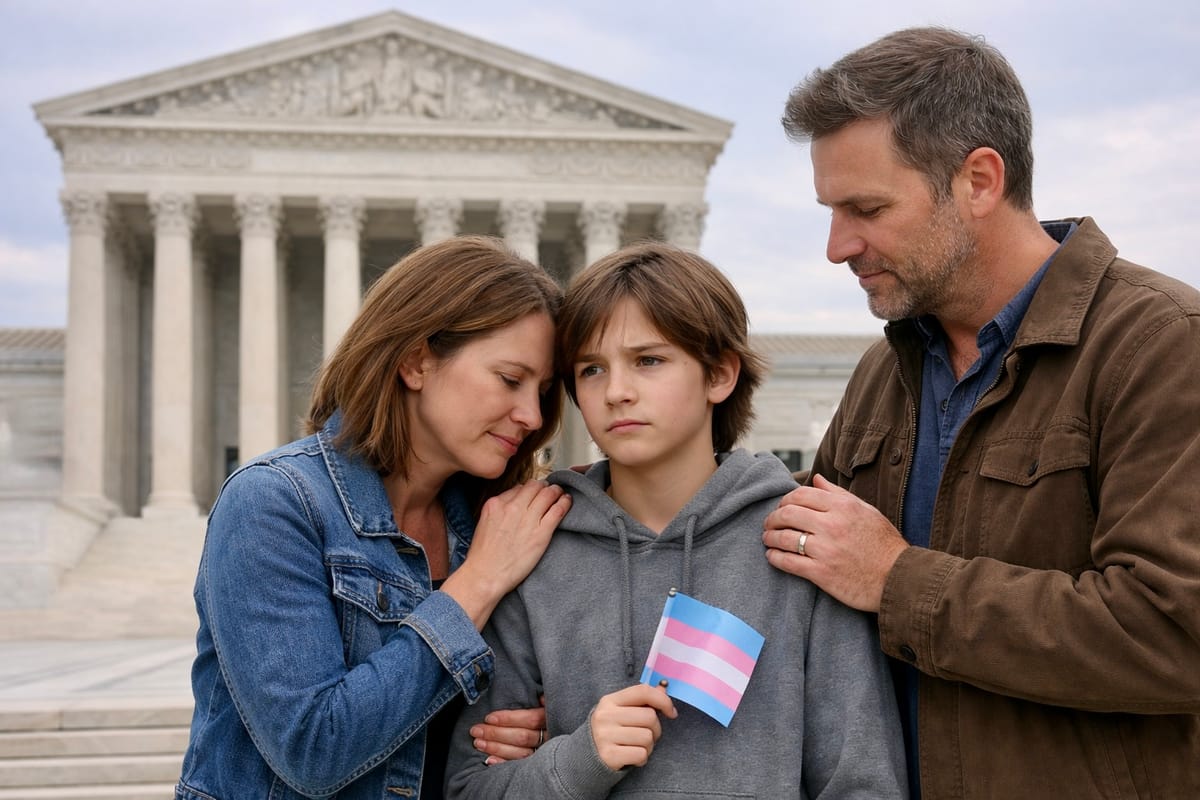
On Monday, the U.S. Supreme Court delivered a major ruling that pauses California policies aimed at protecting transgender students’ privacy at school by restricting teacher disclosure of information about a student’s gender transition without the student’s consent. In a per curiam order in Mirabelli v. Bonta, the justices granted an emergency request from parents and teachers challenging State rules they say infringe on parental authority and constitutional rights.
In its 18-page opinion, the Court said the policies likely violate both the Free Exercise Clause of the First Amendment and the Due Process Clause of the Fourteenth Amendment because they restrict parents’ ability to know and make decisions about their children’s schooling and mental health. The ruling restores a lower court’s judgment stopping California from keeping parents in the dark about a child’s gender transition at school and reversing how schools handle preferred names and pronouns against parents’ directions.
The Court noted that these policies “substantially interfere with the right of parents to guide the religious development of their children” and that parents — not the State — have “primary authority with respect to the upbringing and education of children.” The decision relied on longstanding Supreme Court precedents affirming parental rights.
Supporters of the ruling say it reinforces the role of families in making key decisions about their children’s lives. The parents who brought the case described being shut out of important conversations about their children’s gender identity and school experience, even when they felt it affected their children’s mental health.
Liberal justices dissented from the emergency order, arguing that the case presents complex issues better suited for full briefing and that the interim action may overstep by addressing the merits without full review.
This ruling echoes debates playing out in Alabama, where lawmakers passed the Vulnerable Child Compassion and Protection Act, which prohibits medical procedures like puberty blockers and cross-sex hormones for minors and requires schools to notify parents of students seeking to change their gender or pronouns at school. Legal challenges to Alabama’s law were withdrawn in 2025, leaving the statute firmly in place. Supporters say the Supreme Court decision supports the same principle of affirming parental involvement in children’s medical and educational decisions.
A growing number of Alabama leaders and political candidates have signed the Moms for Liberty Parent’s Pledge, committing to uphold parents’ rights in education and child-rearing decisions. Signers include Lt. Governor Will Ainsworth and U.S. Senate candidates Barry Moore and Jared Hudson, and numerous others.
The pledge underscores a broader movement among conservative parents and policymakers who argue that government should not override family authority on issues affecting children’s upbringing.
The Supreme Court’s order does not permanently resolve the dispute. It preserves the lower court’s injunction while the case continues through the Courts. However, the ruling signals the Court’s willingness to protect parents’ role in decisions about their children’s education and wellbeing, especially when State policies restrict information flow between schools and families.
If you are running for office in Alabama, or a parent, and would like to sign the Parent Pledge, please email moms4libertymadisonal@gmail.com. For more information, follow Moms for Liberty — Alabama on Facebook.
Editor’s note: candidates who sign the Parents Pledge are welcome to send an announcement and picture to News@ALPolitics.com for publication.