Sen. Tommy Tuberville Defends Girls Sports at SCOTUS
Spoke as Court heard two cases banning trans athletes from women’s sports with direct implications for Alabama’s similar laws
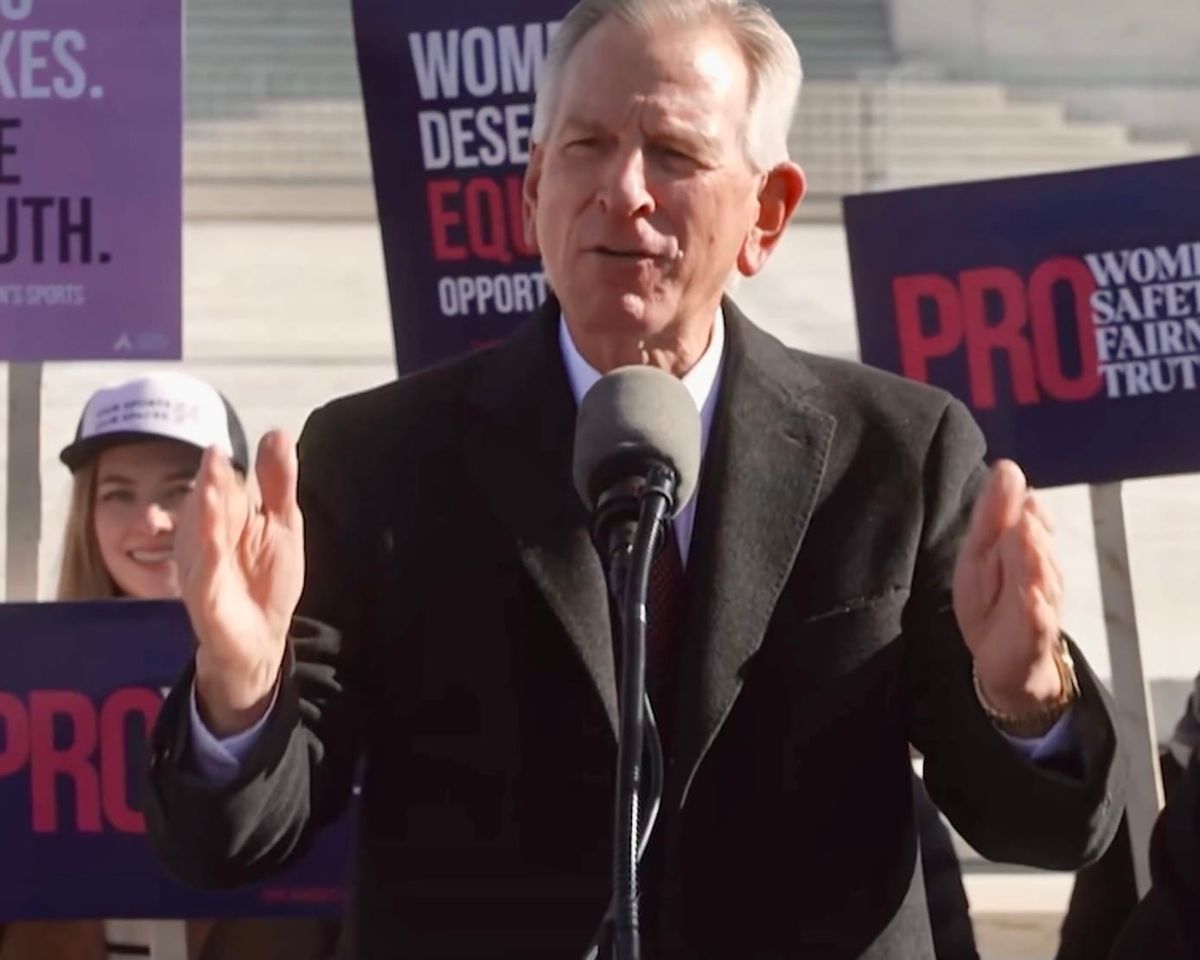
Last week, Alabama Senator Tommy Tuberville spoke at a rally in from of the Supreme Court building as the Court heard arguments in two cases regarding bans on trans athletes participating in women’s sports. Sen. Tuberville spoke in favor of the bans passed by Idaho and West Virginia, and his office released the following update with a link to his remarks:
From the Office of Senator Tommy Tuberville:
Coach Tuberville here…
“Title IX is one of — if not the — greatest piece of legislation to ever come out of Washington, D.C. As a former coach, I witnessed firsthand the impact that Title IX has had on women’s sports. For the first time, girls had the opportunity for equal facilities, to have the same number of coaches as the boys’ teams, the same number of sports, and the ability to receive a scholarship and go to college.
“But in recent years, Title IX has been under attack by the Left. The Biden administration tried to erase Title IX protections by allowing men in women’s sports, locker rooms, and showers. Thankfully, with President Trump back in office, protections have been restored for the time being. But action must be taken to permanently protect Title IX.
“Earlier this week, the Supreme Court began hearing oral arguments to decide if states are allowed to ban biological males from competing in girls’ sports. I’m proud to have joined many other advocates for women’s sports in a rally on the Supreme Court’s steps. My full remarks can be watched below, or found here.
“Last year, I welcomed my first granddaughter, Rosie Grace, and I have never been more fired up to fight for Title IX. I won’t be silent, and I know thousands of Americans feel the same way. We have to keep fighting every day to save Title IX.”
Source: ADFlegal, @ADFlegal
On Jan. 13, SCOTUS heard back-to-back arguments in two major challenges to State laws that bar transgender girls and women from competing on female sports teams. The cases, Little v. Hecox and West Virginia v. B.P.J., strike at the heart of how sex and gender are treated under federal law and State athletic policy.
In the Idaho case, Little v. Hecox, the law at issue is the State’s 2020 Fairness in Women’s Sports Act, the first of its kind in the nation. It limits girls’ and women’s athletics to students classified as female based on biological sex at birth, and was challenged by Lindsay Hecox after she was barred from trying out for women’s sports at Boise State University.
The West Virginia case, West Virginia v. B.P.J., centers on the State’s “Save Women’s Sports Act.” That law similarly restricts participation on female athletics teams to those whose sex at birth was designated female. A 15-year-old student, identified as B.P.J., argued the law violates the Constitution’s Equal Protection Clause and Title IX, the landmark federal education law that bars sex discrimination in schools.
During more than three hours of questioning, conservative justices pressed defenses of the State bans as consistent with longstanding Title IX policy and fairness in sports, while the court’s liberal bloc warned that the laws amount to discrimination against transgender students. Early public coverage suggests a majority of the Court’s conservative justices may be inclined to uphold the bans, though a final ruling is still months away.
Alabama already has laws on the books that limit transgender participation in sports and define sex in restrictive terms:
- Transgender athlete ban: In 2023, Alabama enacted House Bill 261, which bars individuals from competing on sports teams that differ from the sex they were assigned at birth, even if they have undergone hormone therapy. That law applies to public K-12 schools and colleges Statewide.
- “What is a Woman” law: In 2025, the Legislature passed Senate Bill 79, popularly called the What is a Woman Act. This law defines “male” and “female” throughout State law based on reproductive biology at birth and allows public entities to make sex-segregated spaces accordingly. It took effect on Oct. 1, 2025.
Together, those statutes reflect a broader trend among Republican-led States to assert a strict biological definition of sex and regulate gender identity in law and policy. Opponents, including civil rights groups, argue these measures strip transgender Alabamians of dignity and equal access to public life.
A Supreme Court ruling upholding the Idaho and West Virginia bans would strengthen the legal footing for State restrictions on transgender athletes and could validate similar provisions in Alabama’s laws. If the Court decides that Title IX and the Constitution allow States wide latitude to limit sports to biological definitions of sex, Alabama’s HB 261 and related policies could face fewer federal challenges.
Conversely, if the Court finds that blanket exclusions of transgender athletes violate federal civil rights protections, Alabama’s sports ban and broader gender definitions could be exposed to legal challenges. Plaintiffs might argue that those laws discriminate against transgender students under the Equal Protection Clause or Title IX if federal law is interpreted to include gender identity. Either outcome will likely shape future legislative and legal battles in Alabama and across the nation.