Senate Advances “Power to the People Act”
SB360 expands the PSC, freezes power rate hikes, and creates a new state Energy Secretary as lawmakers target rising utility costs
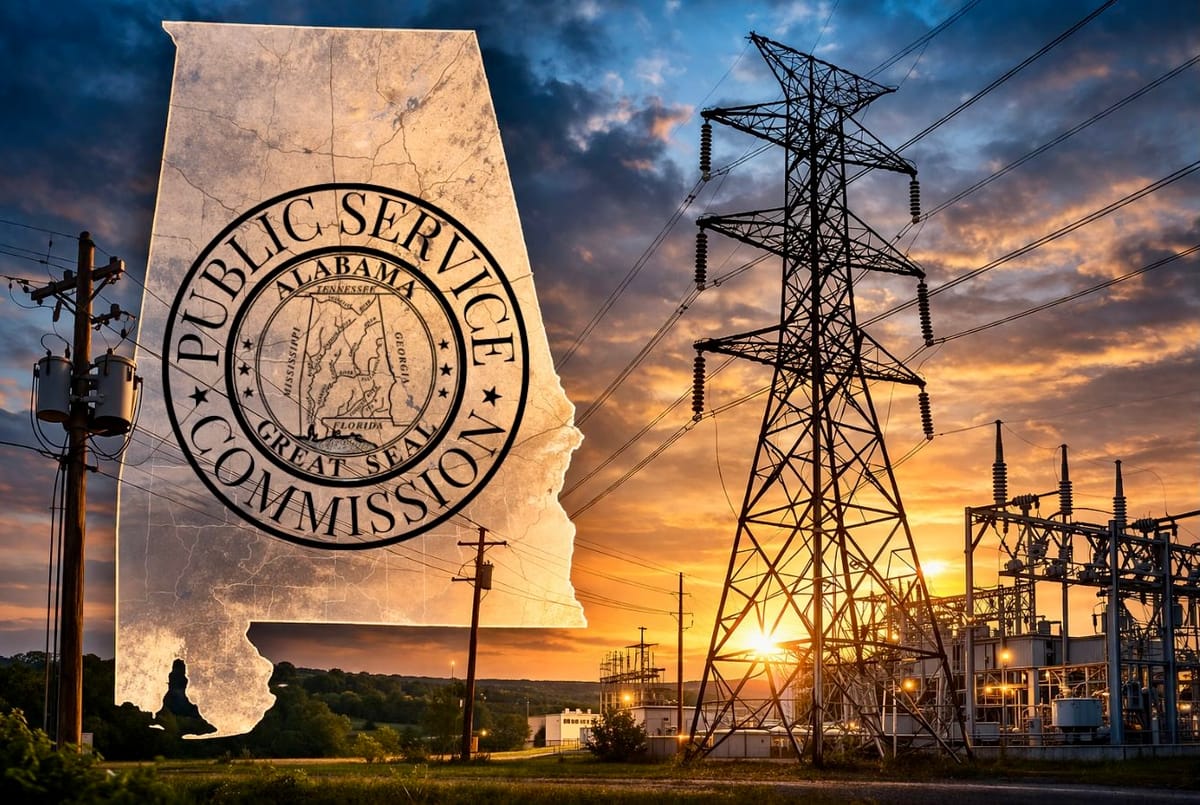
The Alabama Senate has approved sweeping legislation to reshape how utilities are regulated in Alabama. Senate Bill 360 (SB360), dubbed the “Power to the People Act,” would expand the Alabama Public Service Commission from three members to seven and freeze base electric rate increases until June 2029. Sponsored by Senator Clyde Chambliss (R-Prattville) and lauded by Senate President Pro Tem Garlan Gudger (R-Cullman), the bill passed just two days after being introduced and now moves to the House.
On Thursday, SB360 passed the Senate with a unanimous vote of 32 Yeas and zero Nos, with no abstentions. The day before, Wednesday, it passed out of Senate committee on a unanimous vote after being introduced on Tuesday.
Under current law, the PSC consists of a President and two Commissioners elected Statewide. SB360 would expand the Commission to seven members, each elected from a congressional district rather than at large.
To transition to the new system, the Governor would appoint four additional Commissioners by July 2026. Two of those appointees would serve two-year terms and two would serve four-year terms, after which the seats would be filled through elections beginning in 2028. Commissioners elected after June 1, 2026, would serve six-year terms.
The legislation would also create a new cabinet-level position, Secretary of Energy, appointed by the Governor to oversee the commission’s administrative operations and set its agenda.
Supporters say the measure responds to rising electricity costs. Chambliss told lawmakers, “We are getting to the point where we are getting close to the states that are typically high-energy states. We are headed in the wrong direction. This increase in rates has, no doubt, cost the citizens of Alabama hundreds of millions, maybe even billions of dollars, in the last 20 years or so.”
“The Power To The People Act entrusts Alabamians with the power to elect seven seats on the Public Service Commission rather than three, and it prohibits regulated utilities from engaging in the campaign process” Gudger said. “By giving Alabama citizens even more power and a louder voice in the operations of the Public Service Commission, we can make energy rates more affordable and ensure that a conservative, pro-Trump, Republican majority controls the PSC for years to come.”
Opposition to SB360 has come from both grassroots conservative activists and energy policy advocates, who argue the proposal would shift power away from voters while failing to address the underlying causes of high electric bills.
The Alabama Republican Assembly (ALRA) formally adopted a resolution urging lawmakers to reject the bill, warning that it represents a “radical and disruptive overhaul” of the Alabama Public Service Commission. The group argued that replacing Statewide elections with district-based seats could fragment oversight of utilities and inject regional politics into what has traditionally been a Statewide regulatory body. The resolution also criticized the bill’s phased implementation, including the Governor’s appointment of four initial commissioners, saying it could create “years of instability” and weaken the commission’s ability to provide consistent oversight of utilities.
Environmental and consumer advocacy group Energy Alabama raised separate concerns about the bill’s governance structure. In a public statement, the organization argued the measure concentrates authority in a new cabinet-level Secretary of Energy who would set the agenda for PSC meetings and manage Commission staff. According to the group, that arrangement could allow “a cabinet official answering to no one but the Governor” to effectively control the Commission’s work. Energy Alabama also contends SB360 would not meaningfully lower power bills, arguing that deeper reforms—such as mandatory rate reviews and limits on utility profit margins—are needed to address rising electricity costs.
It is likely that both supporters and opponents of SB360 will continue to rally their forces in advance of the bill’s presentation in the House next week.
SB360 is sponsored by Senators Chambliss, Coleman-Madison, Givhan, Gudger, Roberts, Livingston, Shelnutt, Sessions, Weaver, Waggoner, Butler, Williams, Chesteen, Allen, Kitchens, Bell, Woods, Hovey, Elliott, Price, Kelley, Stutts, Carnley, Jones, Melson, Albritton, Orr, Barfoot, Singleton, Smitherman, Figures, Beasley, Stewart, Hatcher, and Coleman.
The full text of SB360 as engrossed is available at THIS LINK.