
Supreme Court Weighs Deadline for Mail Ballots
Justices to decide if ballots must arrive by Election Day, a ruling that could reshape voting rules nationwide before 2026
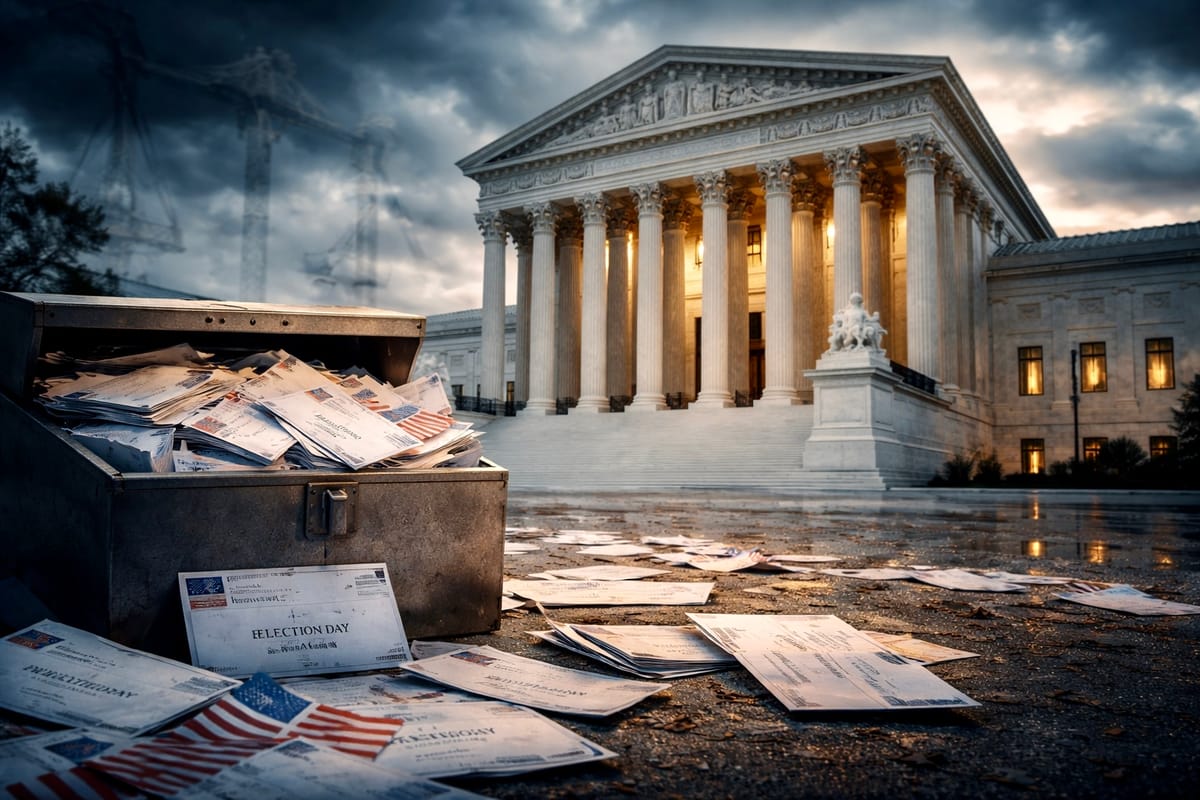
The U.S. Supreme Court will hear arguments on Monday, March 23 in a major election law case that could determine when mail-in ballots must be received to be counted.
At the center of the dispute is whether federal Election Day laws require ballots to be in hand by Election Day, or if States may continue counting ballots that arrive days later, so long as they are postmarked on time.
The case, Watson v. Republican National Committee, stems from a Mississippi law allowing mail-in ballots to be counted up to five days after Election Day. A federal appeals court struck down that law, finding it conflicts with federal statutes setting a uniform Election Day.
Judicial Watch, which brought a related challenge on behalf of the Libertarian Party of Mississippi, has called the case a “landmark election integrity case” focused on whether “federal Election Day laws prohibit the counting of mail-in ballots that arrive after Election Day.”
The case has been consolidated with challenges from the Republican National Committee and others, and former U.S. Solicitor General Paul Clement is expected to argue before the court.
According to SCOTUSblog, the dispute began in 2024 when Republican groups and a Mississippi voter challenged the State’s ballot deadline, arguing that federal law requires all votes to be finalized on Election Day.
A ruling could have sweeping national impact. At least 20 States and Washington, D.C., currently allow some ballots to be counted after Election Day if they are mailed on time.
Legal analysts say the decision may shape election procedures ahead of the 2026 midterms, with some warning that hundreds of thousands of ballots could be affected depending on how the court rules.
Supporters of stricter deadlines argue that extending ballot receipt windows risks undermining confidence in elections, while opponents say such limits could disenfranchise voters, including military personnel and those in rural areas who rely on mail delivery.
The case stands as a pivotal moment for election integrity, emphasizing concerns among some conservatives that late-arriving ballots create opportunities for fraud or administrative abuse.
The debate over mail-in voting has intensified since the 2020 election, when expanded absentee voting drew heightened scrutiny. Reports and analyses from multiple sources have cited past instances of voter fraud tied to mail ballots, including ballot harvesting schemes, forged signatures, and improper handling of absentee votes.
A 2020 review by the Crime Prevention Research Center documented numerous historical cases involving absentee ballot fraud across several States, noting that such systems can be more vulnerable due to reduced oversight.
Similarly, a New York Post report from that year described how mail-in voting “is the easiest way to commit voter fraud,” according to a political operative cited in the article, pointing to weaknesses in verification and chain of custody.
Other commentary and investigative pieces have continued to raise questions about election procedures in 2020, particularly in battleground States, though claims of widespread fraud — including a report by Rasmussen that 1 in 5 mail-in voters committed some type of fraud — remain disputed and subject to ongoing public debate.
The Supreme Court is expected to issue its decision by mid-2026, a timeline that could directly affect how States administer federal elections in the upcoming cycle.