The Grassroots vs. the Country Club GOP
A grassroots perspective on money, power, and participation inside the Alabama GOP—Guest Opinion by Jonathan Hoffman
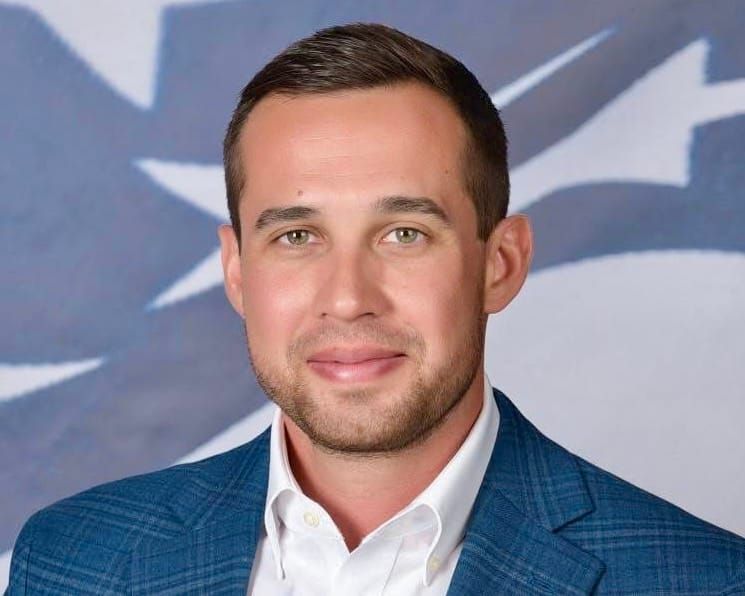
Guest Opinion by Jonathan Hoffman, CEO and President of Southern Freedom Society
I did not enter politics because I had a lifelong interest in government.
In fact, before 2020 I knew almost nothing about it. I did not follow it closely. I did not grow up around it. I had no family involved in campaigns, no relatives serving on committees, no donors in my circle, and no one pulling me aside to explain, “son, this is how politics really works.” It was simply something that existed somewhere else — in Montgomery, in Washington, on television — far removed from everyday life.
Looking back, that turned out to be a blessing.
Because I had no political upbringing, no inherited loyalties, and no expectations about how things were supposed to function, I had to learn everything by experience. I wasn’t interpreting events through a party lens or a consultant’s perspective. I was simply watching, asking questions, and drawing conclusions on my own. That gave me an organic understanding of politics — not how it is described, but how it actually operates.
Then one day it showed up in my home.
My son was told he had to wear a mask to attend school. On the surface that sounds small — a policy dispute among thousands during a chaotic time — but parents understand moments like that differently. It was not the fabric. It was the realization that decisions affecting my child were being made by people who did not know him, would never meet him, and would never answer to him.
So I began asking questions.
Questions led to meetings.
Meetings led to organizing.
Organizing led to conflict.
And conflict led me into the internal machinery of politics.
What I discovered was something most citizens never see:
There are two Republican Parties.
One exists in speeches and campaign ads — the party of freedom, family values, and limited government.
The other exists behind closed doors.
And that is where I first heard a phrase I had never known existed before entering politics: Country Club Republicans.
At first it sounded like a joke. It wasn’t. It described a political culture — not necessarily about wealth alone, but about mindset. A professional political class where relationships, influence, and internal hierarchy often mattered more than representation.
I had always assumed money influenced politics. Most people do. But witnessing it firsthand changed my understanding completely. It was not merely donations shaping elections. It was access shaping decisions. Conversations changed depending on who was in the room. Opinions shifted depending on who was listening.
Power was not loud.
It was quiet.
And it operated through relationships.
Once you see that, you cannot unsee it.
At times the experience was discouraging enough that I even stopped to ask myself a question I never expected to ask: am I really a Republican?
I saw behavior that felt disconnected from the values I thought defined the party — self-interest over service, positioning over principle, protecting influence over representing voters. It became difficult to reconcile the label with the reality I was witnessing.
Eventually I realized the problem was not the ideals that drew me in, but the culture that had grown around them. The core beliefs — limited government, accountability, individual responsibility, and representation — had not changed. What had changed was how loosely those principles were sometimes held inside the political structure itself.
In other words, the conflict wasn’t between me and conservatism.
It was between conservatism and a political class that had learned to operate without it.
That realization didn’t push me out of the party — it clarified why I stepped into the fight in the first place.
How Leadership Reproduces Itself
The system sustains itself by shaping its future leadership early.
Young activists — often college students — are brought in, mentored, and elevated quickly. Not because they’ve lived long enough to understand the consequences of policy, but because they are impressionable enough to learn the system exactly as it wants to be learned.
Many of them are bright, motivated, and looking for purpose. For the first time in their lives they are given attention, access, and status. They are placed in rooms with donors and political figures and suddenly feel important. They are told they are the future of the party.
And from that moment forward, the system does not have to persuade them to defend it.
They were formed inside it.
They learn a version of politics where loyalty equals wisdom and questioning equals disloyalty. They are handed microphones, encouraged to start podcasts, run for internal positions, and speak with authority — all before they have ever experienced politics from the perspective of the people actually affected by it.
By the time they reach leadership, they genuinely believe they are protecting the party — when in reality they are protecting the internal hierarchy of the party.
That is how a political structure stops renewing itself and starts cloning itself.
The Donor Class and the Lost Spirit of the Party
This is where the spirit of the party was taken.
The Alabama GOP increasingly reflects the priorities of a very small percentage of wealthy donors rather than the silent majority of conservative voters.
A small donor class funds establishment candidates.
Those candidates win.
Those elected officials maintain relationships with the same donor class.
And the cycle repeats.
The party begins to represent the people financing it rather than the people voting in it.
Meanwhile grassroots “we the people” candidates fail — not because voters reject them, but because campaigns require resources. And “we the people” candidates require “we the people” funding to win.
When that funding never materializes, the same political class remains in place and calls it voter preference.
It is not preference.
It is imbalance.
A small percentage of people fund the system, so a small percentage of people are represented by the system.
That is how the spirit of a grassroots political party is replaced with a managed political organization.
The Resource Problem
Grassroots movements today do not lack support. They lack backing.
Across Alabama there are countless true conservatives who stepped away from politics years ago because they believed it could not be fixed. But in the past five years — especially after the pandemic — something changed. People began paying attention. They saw how decisions were made and how little influence ordinary citizens actually had.
There has been a political awakening.
More candidates are stepping forward than ever before. But sustaining a movement requires resources — and those resources still overwhelmingly flow to the same political class.
Grassroots candidates need grassroots funding, but so does grassroots media. Independent outlets exist because they are willing to say what institutional structures will not. Once media depends on establishment funding, its boundaries are defined by the people financing it.
Eventually you are not told what not to say — you learn.
At that point you are no longer informing the public. You are managing it.
The Call to Action
The future of the Alabama Republican Party will not be decided in donor receptions or private meetings. It will be decided by whether ordinary conservatives choose participation over frustration.
The party belongs to the voters — but only if they exercise ownership.
Show up.
Run for local committees.
Support candidates who answer to voters instead of networks.
Fund candidates and media that represent the silent majority.
The moment ordinary Republicans decide the party is theirs again, it will be.
Jonathan Hoffman is an Alabama entrepreneur and political campaign consultant who became involved in grassroots activism through local civic issues in his community. He is the founder and CEO of Southern Freedom Society, a citizen-funded media organization focused on public engagement and political awareness. He works with local candidates and volunteers across the state on communication and outreach efforts.
Opinions do not reflect the views and opinions of ALPolitics.com. ALPolitics.com makes no claims nor assumes any responsibility for the information and opinions expressed above.