The Map Was Supposed to Deliver. The Voters Did Not.
Guest Opinion by Murray Edwards
Guest Opinion by Murray Edwards
Alabama Republicans spent years litigating, redistricting, and assuring their base that Congressional District 2 could be engineered into a reliable Republican seat. After the Supreme Court’s Louisiana v. Callais decision cleared the way, the legislature moved quickly in a special session. The resulting map reduced the Black Voting Age Population in CD2 from roughly 47-48% to about 40% and was projected as a Trump +14 district. President Trump endorsed State Rep. Rhett Marques of Enterprise. National and state Republican groups spent millions. The race was widely treated as a pickup.
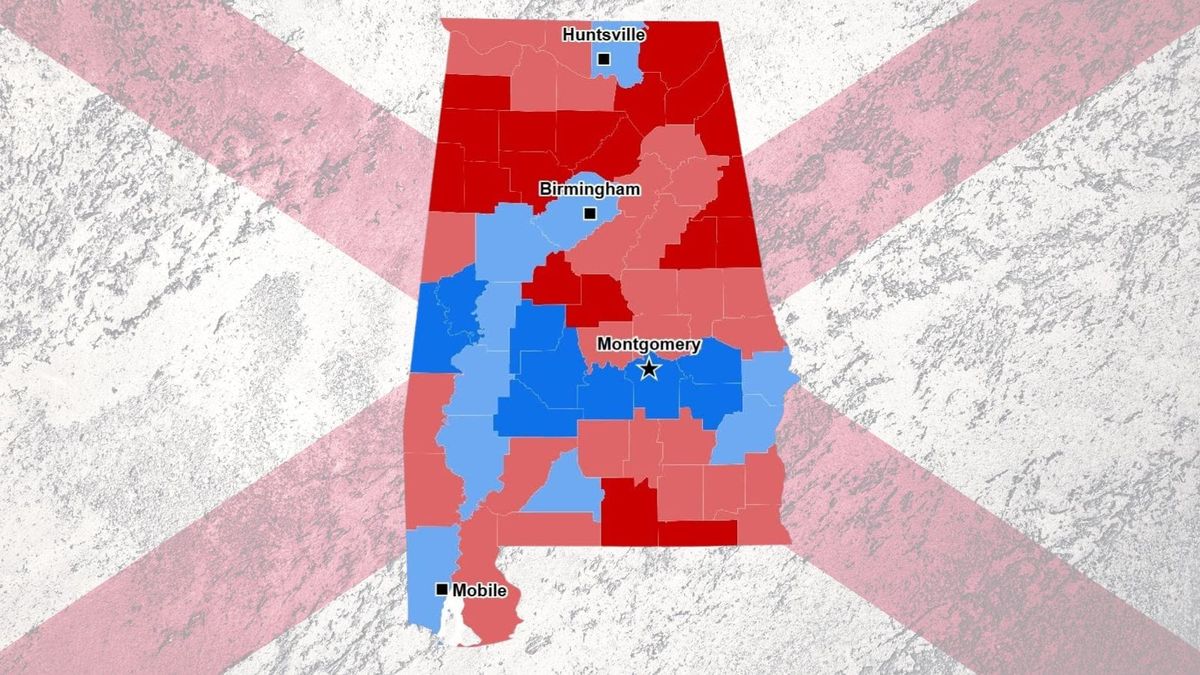
It was not. On November 3, 2026, Democratic incumbent Shomari Figures held the seat 53.7% to 46.2% (124,422 to 107,049 votes). The margin was about 17,000 votes. Montgomery County alone delivered roughly 60,000 votes for Figures at a 75-25 split. Rural Wiregrass counties performed as expected for Marques, but volume in Montgomery proved decisive.
The same selective approach showed up elsewhere. In the 7th Congressional District, Republican nominee Ammie Akin, a Birmingham educator and nonprofit leader, mounted a challenge to longtime Democratic incumbent Terri Sewell. Akin raised roughly $270,000, more than a third of it from a personal loan and received almost no PAC support. The ALGOP hosted a single “Red, White & Rally” event for her in Moundville in late September.
Beyond that, there was little visible statewide or national investment, no high-profile endorsements, and no sustained ground effort. Sewell won by nearly 39 points, 69.4% to 30.6%. CD7 has long been the state’s most Democratic seat; the redraw after Callais did not change its fundamental character. Yet the contrast is instructive: the party poured resources into a district it had redesigned as a flip while offering only token assistance to a candidate trying to expand the map in another direction.
This result does more than expose a failed flip in CD2. It underscores a broader reality that the ALGOP and many national observers still treat as an inconvenience: Alabama is not a uniform conservative stronghold. It is a state with large, high-turnout Democratic pockets in its cities and the Black Belt that regularly blunt statewide Republican margins and can dominate individual congressional districts when mobilized.
Statewide results the same night make the pattern clear. Tommy Tuberville defeated Doug Jones for governor by only about 4 points (51.8% to 47.9%). Barry Moore won the open Senate seat by roughly 9.5 points (54.7% to 45.2%). These are Republican wins, but they are far narrower than the 20- to 30-point presidential margins Alabama has produced in recent cycles.
Democratic turnout rose sharply from 2022. In Montgomery County, turnout reached 50.3% with more than 80,000 Democratic votes, an increase of about 39% over the prior midterm. Jefferson County (Birmingham) remained solidly Democratic. Madison County (Huntsville), which has been an area long viewed as Purple, saw Democratic votes more than double from 2022 levels and carried several statewide Democratic candidates while flipping two Alabama Republican legislative seats, one being taken by the first ever trans individual elected to the Alabama Legislature
These are not isolated anomalies. Birmingham, Montgomery, and parts of Mobile have long functioned as Democratic anchors. The Black Belt counties continue to deliver large Democratic margins. More recently, areas with higher educational attainment and growing professional populations, Madison County being the clearest example, have moved leftward relative to the rest of the state. Alabama’s overall Republican lean is real and durable at the presidential level, but it depends on rural and small-town turnout dominating urban and suburban Democratic strength. When that urban turnout surges, as it did in 2026, the margin compresses and engineered districts become competitive or Democratically held.
The ALGOP’s approach in CD2 treated the map and the Trump endorsement as sufficient. Marques nationalized the race (“craziness versus common sense”), refused debates, and relied on outside spending and rural base mobilization. Democrats focused on affordability, attacked Marques’ state legislative record (including the 2019 gas-tax increase), and maximized Montgomery turnout. The structural advantage the legislature spent years securing was not enough. The minimal support given to Akin in CD7 reinforces the pattern: resources and attention went where the map was supposed to make victory easy, while harder terrain received little more than a rally and a name on the ballot.
None of this means Alabama is on the verge of becoming a swing state in presidential elections. It does mean that treating the state as a lock for conservative outcomes at every level, especially in districts that still contain major population centers, is a strategic error.
The CD2 result is the clearest recent demonstration. A map drawn to produce a Republican seat, a Trump-endorsed candidate, and millions in supportive advertising still produced a Democratic hold driven by the very urban concentration Republicans have long tried to dilute. The limited investment in CD7 shows the same calculation applied in reverse.
Alabama’s political geography is more complicated than the statewide presidential numbers suggest. Urban and Black Belt voters remain capable of delivering decisive margins. When parties design maps and campaign around the assumption that those affected voters will stay home or stay quiet continue to be surprised when they do not.
The 2026 results in CD2, the thin effort behind Akin in CD7, and the narrower-than-expected statewide margins elsewhere are the latest reminder.
The question that needs to be asked, does the ALGOP truly understand its voter base or will they continue to “handpick” candidates at the state and local level and act as if they are surprised when the results are not what they expected?
Originally published on The Newscasters’ Studio, reprinted here by permission.
Opinions do not reflect the views and opinions of ALPolitics.com. ALPolitics.com makes no claims nor assumes any responsibility for the information and opinions expressed above.