The Vindication of a Patriot: General Michael Flynn and the American Spirit
Guest Opinion by Perry O. Hooper, Jr.
Guest Opinion by Perry O. Hooper, Jr.
He had spent a lifetime serving his country, rising through the ranks of the United States military, leading men in war, advising presidents in peace, and carrying the weight of national security on his shoulders. From his vantage point, the mission had always been clear: defend the Constitution, protect the American people, and stand firm against threats foreign and domestic. Yet what unfolded next was something no battlefield had prepared him for. Instead of facing an enemy abroad, General Michael Flynn found himself facing investigations, accusations, and a process that appeared designed not simply to question him, but to dismantle his reputation, drain his resources, and pressure his family. Through it all, he maintained that he had done nothing wrong, holding to the belief that the truth would eventually come to light.
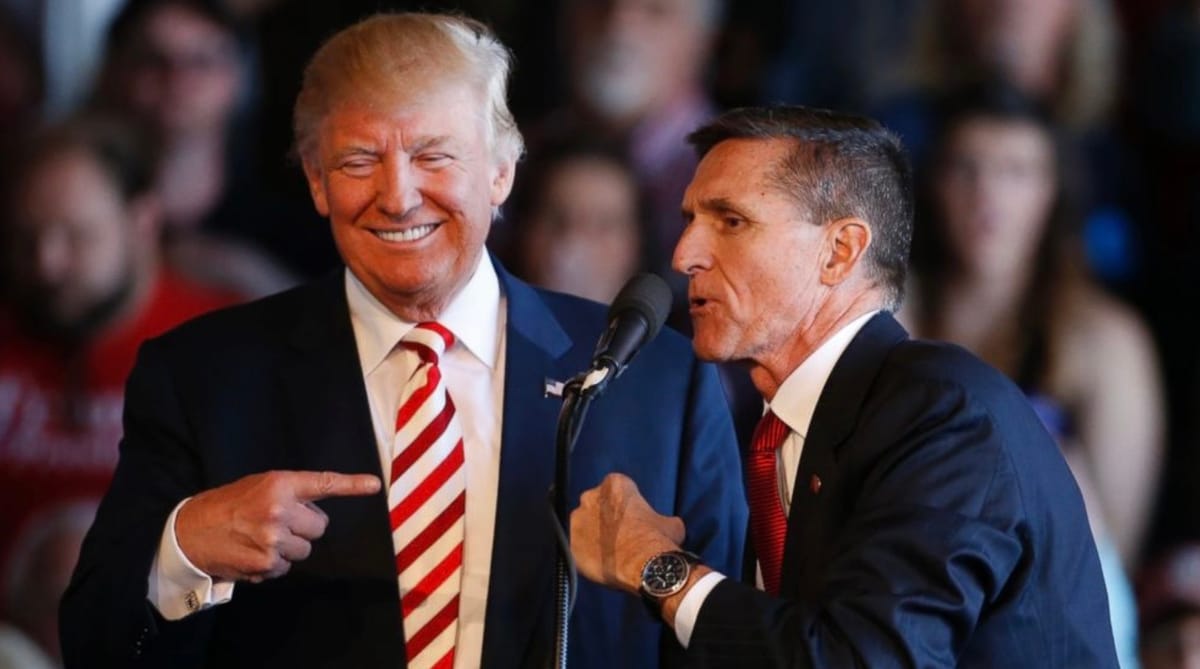
What unfolded was not just a personal ordeal, it was a warning. As Donald Trump said plainly, “What happened to General Flynn should never happen again in this country.” Those words are not rhetorical, they are a line drawn in defense of every American who still believes in equal justice under the law. An essential truth must also be said plainly: General Flynn is an honorable man, and he believed the Department of Justice was honorable as well. That, perhaps, was his only mistake. He approached a system he had spent his life defending with the same integrity he carried on the battlefield, expecting fairness, expecting truth to matter, and expecting justice to be blind. Instead, he encountered something very different, and the country is still grappling with what that means.
There are moments in American history when the truth does not simply emerge, it breaks through. It cuts through years of noise, distortion, and deliberate attempts to bury it. The news that the Department of Justice has settled the lawsuit brought by General Flynn is one of those moments.
The Department of Justice could not just quietly move on. It settled the lawsuit brought by General Flynn. That matters. It matters more than headlines, more than spin, and more than the years of accusations that preceded it. Because when the very institution that pursued him chooses to settle rather than defend its actions in open court, it speaks volumes. It is, in every practical sense, the silver bullet in this long and painful chapter.
This is not just a legal development. It is a moral reckoning.
General Flynn is not merely a man who served his country; he is a man who dedicated his life to it. A decorated three-star general, a battlefield-tested leader, and a former National Security Advisor, he stood at the highest levels of responsibility defending the United States against its enemies. Yet, despite that service, he became the target of one of the most troubling episodes in modern American political history.
For years, many Americans watched in disbelief as a man who had worn the uniform with honor was dragged through a process that appeared less about justice and more about destruction. The machinery of government, which is supposed to protect the innocent and pursue the guilty, seemed instead to be turned against one of its own. It raised a fundamental question that still echoes today: if it can happen to him, can it happen to anyone?
The answer, painfully, is yes. And that is why this moment matters so much.
General Flynn endured a witch hunt that would have broken most men. The financial strain, the public attacks, the endless legal battles, the toll on his family, all of it was designed to wear himout. Yet he stood firm. He did not retreat. He did not surrender. He fought, not just for himself, but for the principle that no American, no matter how powerful the forces aligned against them, should be denied fairness under the law.
That kind of resolve is not manufactured. It is rooted in something deeper. It is rooted in faith, in conviction, and in a belief that right will ultimately prevail over wrong.
That is why so many Americans see this outcome as more than a personal victory for one man. It is a victory for those who still believe in this country, who still believe in its founding ideals, and who refuse to accept that those ideals can be casually discarded when they become inconvenient.
I will say this personally and without hesitation: I am proud to call General Flynn a friend. In a time when so many bend, break, or simply stay silent, he stood firm. That matters. It matters more than politics, more than headlines, and more than the noise that so often drowns out the truth.
This moment should serve as a reminder to every institution in this country that trust is not guaranteed. It must be earned. And once lost, it is not easily regained.
For those like me who stood by General Flynn, who prayed for him, who believed in his innocence when it was not fashionable or convenient to do so, this is a moment of affirmation. It is proof that standing firm in the face of overwhelming pressure is not in vain. For those who doubted, it is a moment to reflect.
For the country as a whole, it is an opportunity, perhaps a rare one, to step back and remember what truly matters. America was not built on perfection. It was built on the idea that truth, justice, and individual liberty are worth fighting for, even when the fight is difficult, even when the odds are long, and even when the outcome is uncertain.
General Flynn’s story is now firmly part of that larger American story. It is a story of service, of sacrifice, of persecution, and ultimately, of perseverance.
In the end, it is a story of vindication. That matters, not just for him, not just for his family, but for every American who still believes that this country, despite all its flaws and challenges, remains a place where truth can prevail and justice can still be done.
That belief is worth defending.
And today, it feels just a little bit stronger.
Perry O. Hooper Jr. is a longtime Alabama Republican figure, former Alabama Legislator and Montgomery businessman. He served as Co-Chair of “Alabama Trump Victory” in 2016, and served as an at-large delegate to the Republican National Convention. He is a noted civic leader in Montgomery with deep family roots in Alabama’s legal and political history.
Opinions do not reflect the views and opinions of ALPolitics.com. ALPolitics.com makes no claims nor assumes any responsibility for the information and opinions expressed above.