Today’s Political Divide is No Longer Republican vs Democrat…
…If It Ever Was — Guest Opinion by Samuel Barrett
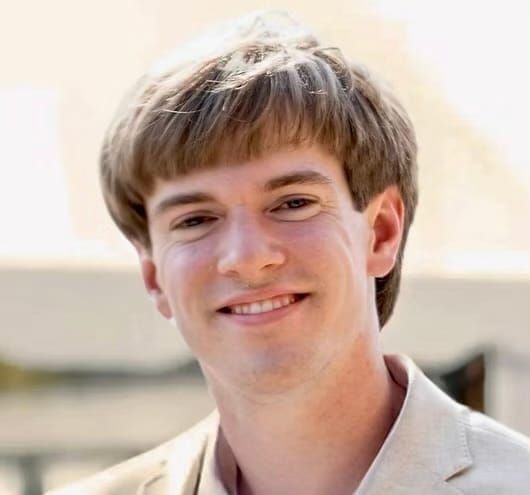
Guest Opinion by Samuel Barrett
It seems that no matter where you look or who you listen to, there are people on the “right” chastising those who hold ideologies on the “left,” and vice versa. This has long been considered the conventional divide in America’s political discourse, with Alabama being no exception. After all, during elections, ballots list specific “Republican” and “Democrat” candidates.
But what if this separation is merely a political façade rather than a true ideological divide, and the real split lies elsewhere?
Not only could that be true, but more people are beginning to recognize it with each passing year.
This is more than just another “the left and the right are the same and neither care about the people” rant. While that may loosely summarize the premise, the truth runs much deeper.
The original intent of our system of representative government was for regular citizens who feel called to lead to run for office, convince their peers they are the best choice, and, once elected, use their platform to champion causes that benefit their constituents. Simple.
So how did government become a behemoth of self-indulgence, where elected officials benefit while the people are neglected?
Somewhere along the way, special interest groups, political action committees (PACs), and even congressional committees began valuing money over the voices of citizens. These groups experimented with offering financial incentives to elected officials in exchange for favorable policies — often without regard for whether those policies benefited the people those officials were elected to serve.
Unfortunately, the experiment worked. Now, it is mainstream.
If an outsider enters office with good intentions, they are often quickly swayed by the sheer size of the financial incentives offered.
If the official refuses, the pressure may intensify—whether through larger offers, threats, or other forms of coercion. Resisting becomes increasingly difficult.
This criticism is not solely directed at the individuals who accept such arrangements, but rather at the system that allowed it to begin and persist.
Those responsible are difficult to identify. The individuals and institutions with the most influence often operate behind the scenes, using government as a shield. Meanwhile, the Republican vs. Democrat divide serves as a convenient distraction.
If you are reading this and thinking, “That applies to the other party, not mine,” then the argument suggests the distraction is working.
Before going further, it helps to define who “they” are.
Terms such as “establishment,” “deep state,” “uni-party,” and “globalists” are often used interchangeably to describe powerful interests that exert significant influence over government and policy. They will be used interchangeably throughout the rest of this piece.
When you heard Vivek Ramaswamy say in Tuscaloosa during the fourth Republican primary debate in December 2023 that “The real enemy is not Donald Trump. It’s not even Joe Biden. It is the deep state that Donald Trump at least attempted to take on”, this is what he was talking about.

Some examples of what the deep state has done, with no political party in mind, because lest you think that this is a one-party problem:
Support needless wars
Issue stay-at-home orders and mask mandates in 2020
Anoint or choose candidates without votes from the people
Allow massive illegal immigration and used softer language to make it sound okay
Promote or allowed the promotion of widespread delivery services to keep people at home
Keep gasoline prices high to keep people at home
Pass the Patriot Act to usurp liberty in the aftermath of 9/11
Neglect cracking down on school safety so more shootings will spark gun control debates
Replace civics and history in schools with promotion of victimhood
Refuse to teach students virtues and practical skills
Cede Congressional authority to print money to wealthy business interests
Promote mundane distractions (Reality TV, Hollywood, sports, drugs, sexual perversion) to shield the people from learning the truth
Inject our food and people with harmful chemicals
Limit free speech rights by claiming to only be against “hate speech”
Use thought-terminating cliches to shut down anyone who disagrees with them doing any of this
There are more too. Those were the most recent or most noteworthy.
If we dwell for a moment on one of those, though, we can further define what the establishment really is and who might be in it.
Cede Congressional authority to print money to wealthy business interests
The Federal Reserve Act of 1913 gave the power to coin money in the United States to seven people, and that power has been kept by those seven families. This was an unconstitutional move by Congress as Article I, Section 8, point 5 of the Constitution of the United States gives Congress the authority to coin money. These families print money for themselves, but only when the U.S. needs to borrow money. Rather than wait until they need money, so they conjure reasons to need money, among them war, illegal immigration, and reckless entitlements. Those things will always necessitate needing more money, so the U.S. will borrow new money from these families when they happen, not giving much thought to the interest that comes with that money. The country borrows brand-new, almost fake money out of thin air, but then must repay that debt with real, hard-earned money.
That is why the national debt will never be paid off if the deep state is not done away with. It is not a matter of electing someone with and R or a D beside one’s name.
Large financial institutions such as BlackRock, Vanguard, and State Street are often mentioned in discussions about concentrated economic influence. It is notable that the founder of Vanguard, John C. Bogle, explicitly spoke out against a concentration of power between those three companies, saying “I do not believe that such a concentration would serve the national interest.”
He was absolutely right. Those three companies, which are almost one huge company since they own and trade each other’s stocks, own 95% of all publicly trades stocks in America today, and over 60% of all single-family homes in America today.
Owning a home, along with feeding yourself and speaking freely, is a cornerstone of freedom. Freedom of the people means less power for the establishment.
So how does the uni-party have power in Alabama?
Never mind the fact that prominent news source AL.com is owned by a firm based in New York. That is blatant enough as it is.
But we can see the influence in our governor’s race this year.
Last May, Alabama’s current senior U.S. Senator Tommy Tuberville told Fox News that “I will be the future governor of the Great State of Alabama.” He did not announce that he was running, or that he hoped to be the next governor or that he would work to become the next governor. He said he will be.
He knew those big donors, such as those three donor groups from earlier, were there. He has received over $20 million from these special interests, yet he seeks to convince Alabama that he will work for us, the people.
Of course, Tuberville has not even proved that he lives in Alabama and is qualified to become governor. His flight records and a CarFax report show more activity in and around Destin, FL, where he owns a large beachside property.
Despite the concern, the Alabama Republican Party refused to hear a ballot challenge by fellow Republican candidate Ken McFeeters in January over Tuberville’s residency. As we prepare to select the successor for the highest-ranking position in the state, the state GOP will not ensure that the frontrunner fits the basic qualifications to run.
When said frontrunner has already received millions in donations and the endorsement of the President, who likely did not even look at the rest of the challengers and who endorsed a candidate for lieutenant governor who was not even in the race at the time (John Wahl), you can get away with bending or even breaking the rules. The deep state will back you up. Just as they will if the recent lawsuit against Tuberville and the GOP advances quickly enough. The problem with that is if a slew of lawyers come to Tuberville’s defense, it will show Alabama that he does not live here, and he is trying to get away with it via technicality. If the deep state has their way, he will.
The only way Tuberville will win the Republican primary in May, let alone the general election in November, is if the establishment shields him from justice.
Alabama deserves better than that.
The Democrats in Alabama are not much better. Gubernatorial candidates Will Boyd, Chad “Chig” Martin, JaMel Brown, and 2022 Democrat nominee Yolanda Flowers had been in the race for months when former U.S. Senator Doug Jones entered in December, and he received a similar welcome to Tuberville: lots of large donations from people who want something from him. If a candidate has lots of money, he has lots of political debt as well. If elected, that candidate will immediately get to work fulfilling the requests of the big donors. Maybe it will help you, maybe it will not, but you will not be the priority.
Both Tuberville and Jones have shown that in each of their terms as U.S. Senator. During the same speech he gave on Fox News when he announced his anointment as governor, Tuberville celebrated going back to Washington D.C. to pass the Big, Beautiful Bill. In that bill is funding of Palantir software, which will be used to take control of data centers and used as surveillance of the people. This technology that was designed for use against enemies of the U.S. will be turned onto the American people, and Tuberville not only allowed for it, but bragged about it on national TV. He also joined Alabama’s junior Senator Katie Britt in voting against releasing the Epstein files, preventing transparency and justice. So much for Alabama Republicans being for law and order.
As for Doug Jones, leading up to the confirmation hearing and vote for Supreme Court Justice Amy Coney Barrett, he said publicly that he would vote along party lines, and he did so. Jones played into the fake R vs D divide and neglected that the majority of people in Alabama wanted Barrett confirmed. She was, but when Senate Minority Leader Chuck Schumer spoke in threatening terms to the Republicans who confirmed her, Jones did not denounce his remarks. If he had, that would crack the R vs D distraction, and the uni-party cannot have that.
This is a lot, especially for anyone reading this who has never thought about the political divide in any other way other than R vs D.
All of this raises two key questions: First, if the divide is not between Democrats and Republicans, then who is it between? And what can we do to shut down the establishment that has gone against the founding values of America?
To answer them in order, who says there must be a divide? One possible answer is that the divide is not among the people at all.
Most citizens — regardless of background or political affiliation — are good. They share appreciation of Lady Liberty and cherish standing for the National Anthem. However, media narratives often emphasize conflict, highlighting differences rather than common ground.
Major outlets like Fox News, CNN, and MSNBC frequently frame issues in ways that reinforce division, focusing on why the “other side” is wrong.
When that criticism extends beyond public figures to everyday citizens, it risks deepening division unnecessarily.
In Article 1, Section 2 of Alabama’s State Constitution, titled “People Source of Power,” it is clear “That all political power is inherent in the people, and all free governments are founded on their authority, and instituted for their benefit; and that, therefore, they have at all times an inalienable and indefeasible right to change their form of government in such manner as they may deem expedient.”
The people are the power. The people use the Constitution to empower the government. The government works for the people.
Therefore, if you denounce your own people, who are the power, you denounce the power in your society.
It is not the people who are divided. The government has merely taken power that we have not given it, and the government has used that unconstitutional power against us.
So, what can be done?
Change is unlikely to come from a single individual. President Trump tried to in his first term, but as far away from the establishment as he was, even he could not fully drain the swamp.
It requires awareness, conversation, and participation—whether through voting, engaging in discussion, contacting representatives, or even running for office.
The first step is understanding the issue. From there, individuals can decide how they can best contribute.
To the Alabama Republican and Democrat parties, if you want to calm this divide:
- Make Tuberville prove his residency or drop him from the race.
- Make Wahl prove his residency or drop him from the race.
- Make Republican gubernatorial candidate Will Santivasci remove his nickname, which is illegal, from the ballot, or drop him from the race.
- Ensure that Jones’ residency is indeed in Alabama and not Washington D.C. or drop him from the race.
- Give equal attention and respect to candidates who are not frontrunners.
These should not be hard to do, because we the people have given you the power to do them.
Unless you abide by the establishment to keep the R vs D farce alive. In which case, both parties are the problem.
Samuel Barrett is 25 years old and has written two baseball books but is now turning his attention to state politics and matters he feels important in his home state of Alabama. He joined Ken McFeeters at his aforementioned press conference to distribute materials to media members as well as capture photos and video. He was born in Northport on November 3, 2000, so he will be celebrating his 26th birthday this year by voting and encouraging others to vote on Election Day. After short stints in Fayette and Decatur, he has resided in Phenix City since 2005. Barrett can be reached at rsbarrett00@gmail.com.
Opinions do not reflect the views and opinions of ALPolitics.com. ALPolitics.com makes no claims nor assumes any responsibility for the information and opinions expressed above.