Trump Announces Drug Price Deal With Nine Drugmakers
New agreements will lower prescription costs for Medicaid patients and uninsured Americans through international price benchmarks
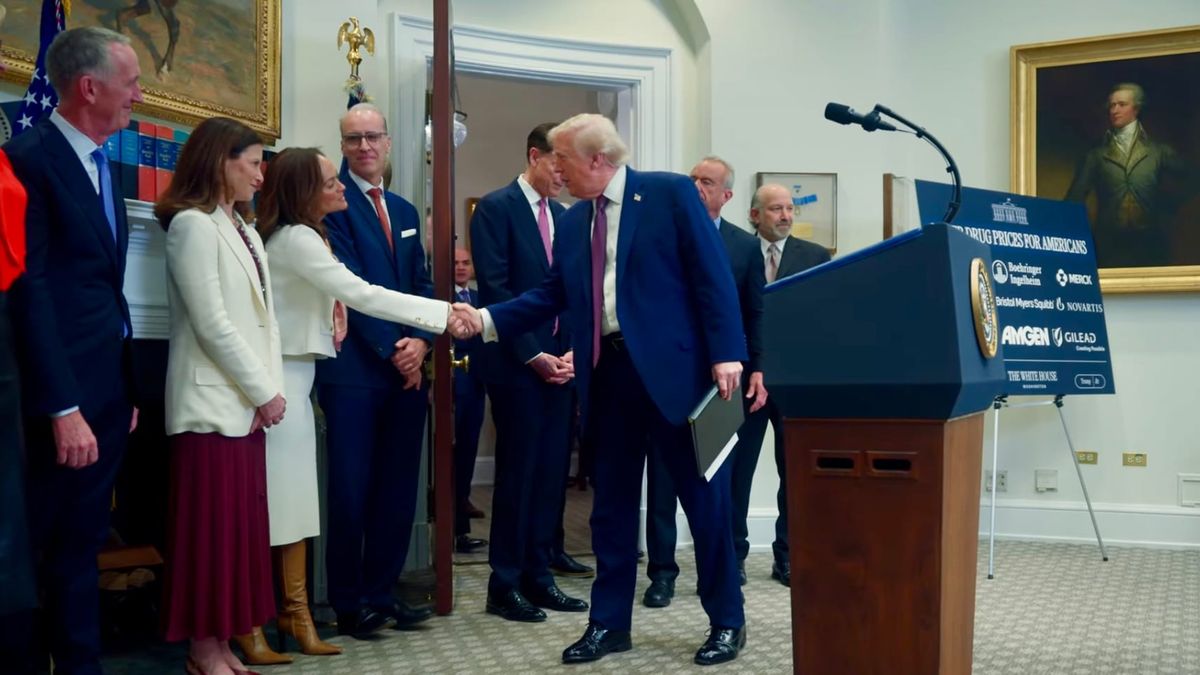
President Donald Trump announced on Friday that he has secured agreements with nine major pharmaceutical companies aimed at lowering the cost of prescription medicines for American patients, particularly those on Medicaid and uninsured individuals.
Under the new deals, companies including Amgen, Bristol Myers Squibb, Boehringer Ingelheim, Genentech, Gilead Sciences, GSK, Merck, Novartis and Sanofi agreed to reduce the prices of many existing drugs sold in the United States. They also committed to pricing future medicines under a most-favored-nation (MFN) model, which ties U.S. prices to levels charged in other wealthy countries.
President Trump called the agreements an extension of his administration’s broader effort to make prescription drugs more affordable for American families. Officials said the pricing reforms build on earlier deals the administration secured with other major manufacturers this year.
“These companies have agreed to … rein in prices so that American drug costs aren’t the highest in the world,” Trump said during an announcement in the Roosevelt Room of the White House. “Starting next year, American drug prices will come down fast and furious.”
The companies have agreed to lower prices on many drugs for the Medicaid program, which serves low-income Americans. These prices will be aligned with the lowest levels charged in comparable developed nations. In addition, the firms pledged to use MFN pricing for all new drugs they introduce across commercial, Medicare, Medicaid and cash-pay markets.
MFN drug pricing links U.S. prescription costs to the lowest prices paid in other developed countries, reducing the wide gap between domestic and global drug prices. Supporters, including the Trump administration and advocates such as AARP, say it brings fairness to American patients who often pay two to three times more for the same drugs than people abroad and stops the U.S. from “subsidizing” lower prices elsewhere.
Critics, including industry groups like PhRMA and some policy analysts, warn that importing foreign price levels could hurt U.S. drugmakers’ revenue and reduce funds available for research and development. They argue the policy may be hard to implement, face legal challenges, and could even lead companies to raise prices in other countries to offset lower U.S. revenues, potentially weakening global access and innovation.
Additionally, and separate from the MFN agreements, drugmakers will list many medications on TrumpRx.gov, a federal website set to launch in January. The platform is designed to help patients—particularly those who pay cash—find discounted prescription medicines directly from manufacturers.
Several companies agreed to go beyond price cuts. Bristol Myers Squibb said it will provide its widely used blood thinner Eliquis to the Medicaid program at no cost. Others, including Merck and GSK, have pledged to donate active pharmaceutical ingredients for critical medications into a national reserve to help ensure supply during emergencies.
Industry officials described the moves as significant steps toward broader access and affordability. Trump administration representatives also noted that the companies have committed to investing in U.S. research and manufacturing as part of their ongoing partnerships.
Health economists offered cautious praise for the announcements. William Padula, a pharmaceutical and health economics professor at the University of Southern California, said that aligning prices with international benchmarks could ease some costs, especially for uninsured patients. However, he emphasized that the full impact on patient access and national health outcomes won’t be clear for years.
“It can’t be bad,” Padula said. “I don’t see much downside, but it’s hard to judge what the upside is.”
While advocates for lower drug prices welcomed the news, some critics argue that price adjustments alone may not address deeper challenges in the U.S. prescription system. Still, with 14 of the country’s 17 largest drugmakers now participating in pricing agreements, the administration says it is making progress toward more affordable medicines for millions of Americans.
The White House Fact Sheet on the agreements announced Friday may be read HERE.
The White House announcement video may be seen on YouTube and below: