Trump Issues Executive Order to Reclassify Marijuana
Order could shift federal drug policy, ripple through Alabama’s cannabis and hemp policy debate
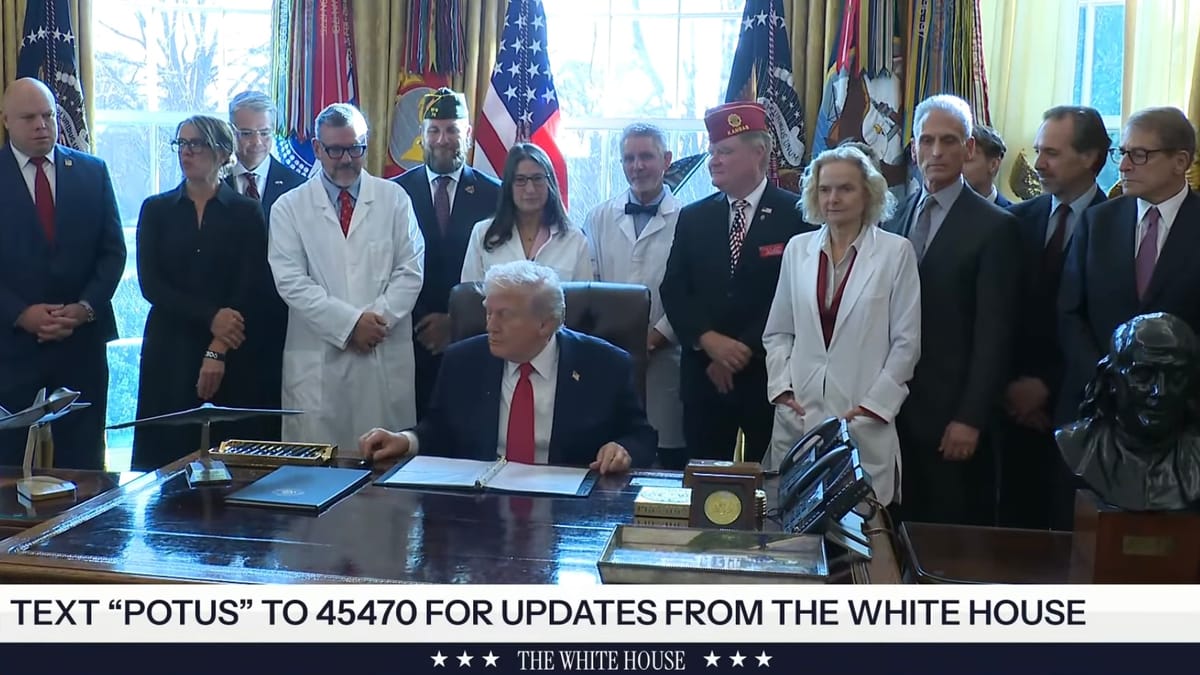
President Donald Trump signed an Executive Order (EO) Thursday that could reshape federal drug policy and reverberate through Alabama’s cannabis and hemp markets. The order directs federal agencies to reclassify marijuana from a Schedule I drug—the strictest classification under the Controlled Substances Act, reserved for substances with no legitimate medical use—to a Schedule III substance, a category that includes drugs with recognized medical uses and lower potential for abuse.
While the change ordered by the EO does not legalize marijuana nationwide, it could loosen regulatory burdens, expand research opportunities, and help businesses, particularly in States with existing medical or recreational cannabis laws.
“The order doesn’t legalize marijuana in any way, shape or form and in no way sanctions its use as a recreational drug,” Trump said, framing the policy shift around its potential medical value and continued emphasis on safety.
Not all lawmakers welcomed the move. Alabama’s Senator Tommy Tuberville was among a group of 22 Republican senators who urged the President not to sign the EO, warning that loosening marijuana’s federal classification could undermine public safety and drug enforcement efforts.
Other members of Alabama’s federal delegation have not issued public Statements specific to the order at the time of writing, but national reports note that many Republican lawmakers expressed concern that rescheduling marijuana could increase use and weaken enforcement.
The federal policy shift arrives amid ongoing developments in Alabama’s medical cannabis landscape. The Alabama Medical Cannabis Commission (AMCC) recently granted three medical cannabis business licenses—a milestone in the State’s slow rollout of cannabis for qualified patients.
These licenses allow integrated facilities to cultivate, process, transport and sell medical cannabis under State law. Federal rescheduling could ease some research barriers and help these nascent businesses access banking, investment and tax benefits currently limited by marijuana’s high-risk federal designation. It could also give doctors greater confidence in prescribing and studying cannabis therapies, especially where Alabama’s program has lagged national trends.
The President’s EO comes against the backdrop of controversial State legislation that has already shaken Alabama’s hemp industry. House Bill 445 (HB445)—signed into law by Governor Kay Ivey in May 2025–overhauled oversight of hemp-derived products and handed regulatory authority to the Alabama Alcoholic Beverage Control Board.
The bill imposes strict rules on hemp-derived products, including:
- Licensing requirements administered by the ABC Board, covering all consumable hemp products that contain psychoactive cannabinoids.
- A ban on smokable hemp products such as flower, pre-rolls and vapes.
- THC potency limits and age-21 sales restrictions for edible and beverage products.
Critics warn HB445’s regulatory framework has upended a previously growing hemp market, forced some businesses to close, and even criminalized possession of certain products once considered legal.
After HB445 was passed by the Legislature but before it was signed by Gov. Ivey, a number of groups urged her not to sign the final bill. However, their opposition to the bill proved fruitless.
Federal rescheduling may not change HB445’s State legal framework, but it could complicate enforcement and market dynamics. With marijuana recognized as having potential medical value at the federal level, advocates argue that Alabama’s strict hemp regime—and its criminal penalties for prohibited products—may look increasingly out of step with broader public policy. Others in the industry hope the EO will help revive local markets by easing federal barriers and encouraging clearer guidance on hemp and cannabis distinctions.
Alabama’s hemp and medical cannabis operators are watching closely. Some local business owners and industry advocates have argued that sweeping State restrictions like HB445 have hurt workers, reduced access to therapeutic products, and pushed consumers to unregulated sources.
Supporters of regulation, including some public health advocates, say HB445 provides needed oversight of psychoactive products. But with federal law potentially loosening restrictions on cannabis research and medical use, Alabama lawmakers may face renewed pressure to revisit how the State defines and regulates cannabis and hemp-derived products.
Even with federal reclassification, marijuana remains illegal under federal law, and full legalization would require congressional action. But the policy shift marks the most significant change in decades to federal cannabis policy.
The EO also tacitly acknowledges the 2017 National Academies of Sciences, Engineering, and Medicine (NASEM) report, “The Health Effects of Cannabis and Cannabinoids: The Current State of Evidence and Recommendations for Research”. This report, which focused exclusively on a comprehensive review of the medical literature since 1999, found “conclusive or substantial evidence” that cannabis or cannabinoids are effective:
- For the treatment for chronic pain in adults (cannabis)
- Antiemetics in the treatment of chemotherapy-induced nausea and vomiting (oral cannabinoids)
- For improving patient-reported multiple sclerosis spasticity symptoms (oral cannabinoids)
In Alabama, where medical cannabis policy continues to evolve and hemp litigation and business closures have stirred debate, Thursday’s EO is likely to foster broader discussions about how best to balance public safety, economic opportunity, and patient access.
The President’s reclassification EO may be found HERE, with the accompanying Fact Sheet HERE.
President Trump’s Oval Office signing ceremony for the reclassification Order may be seen on YouTube and below: