Two Bills by Gary Palmer Move to House Floor for Vote
Lulu’s Law, Air Permitting Improvements Bills pass out of Committee and move to full House for passage
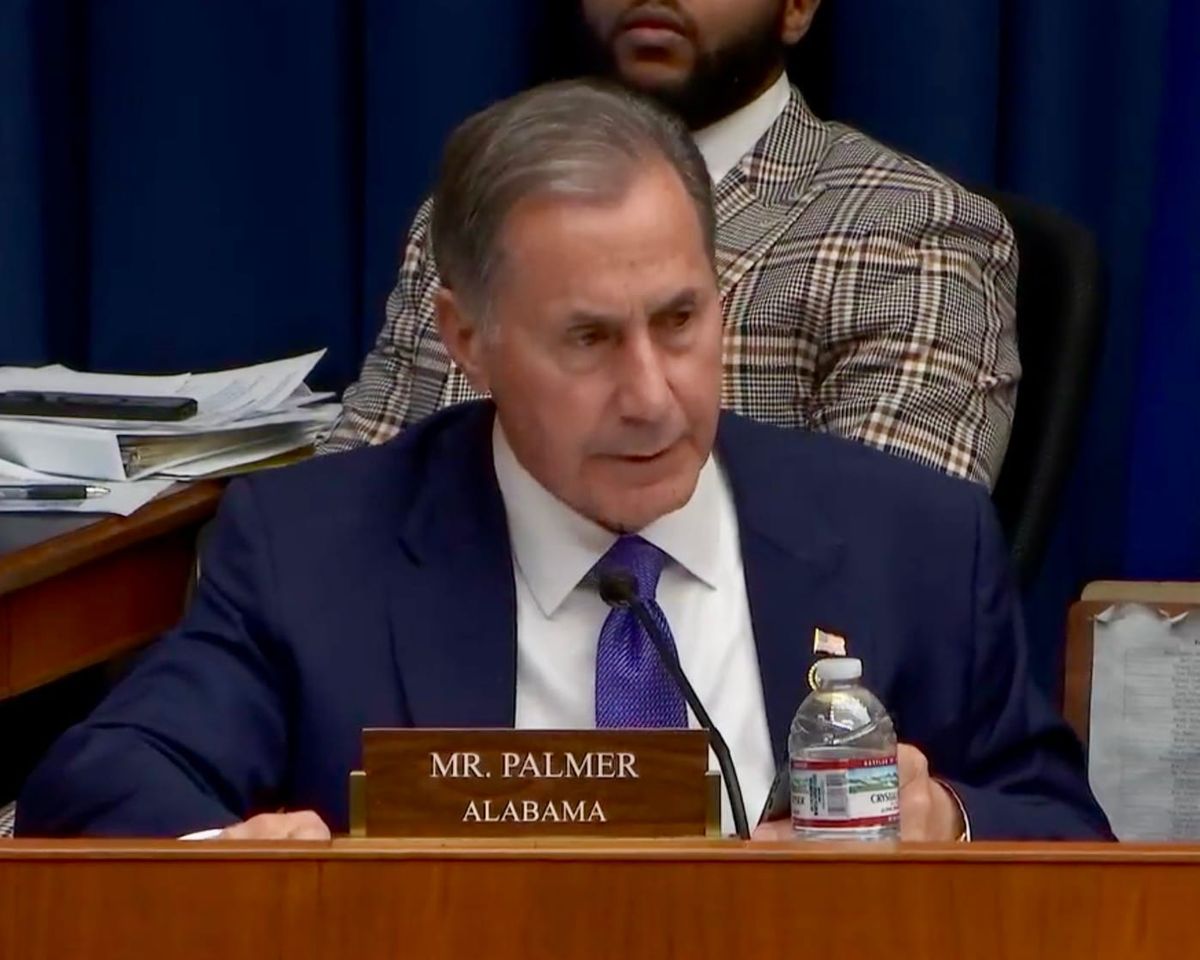
Two pieces of bipartisan legislation by U.S. Representative Gary Palmer (R-AL-06) cleared a major hurdle this week, unanimously passing out of the U.S. House Energy and Commerce Committee on Jan. 22 and moving toward a full House vote.
“Advancing these bills through committee addresses security - family security and our national security. Lulu’s Law is about protecting people from shark attacks, and the Air Permitting Improvements to Protect National Security Act is about making sure America can build the rare earth and critical minerals processing and refining facilities the U.S. needs to eliminate our reliance on China,” said Rep. Palmer. “I’m grateful to see both bills move forward, and I look forward to seeing them advance to the House floor.”
The first measure, Lulu’s Law (H.R. 2076), would direct the Federal Communications Commission to explicitly allow Wireless Emergency Alerts (WEAs) to be sent when a shark attack occurs. The legislation honors 16-year-old Lulu Gribbin of Mountain Brook, who survived a nearly fatal shark encounter in June 2024 and has since become a public advocate for safety measures.
Lulu’s Law seeks to give local, state, tribal and federal authorities a tool to quickly alert beachgoers via mobile phone alerts if an attack occurs nearby.
Sen. Katie Britt (R-Ala.), who led the bill’s passage in the Senate last summer, praised the committee’s action. “I could not be more honored to lead this legislation, and I am thrilled to see it advance to the House floor,” Britt said. “This commonsense bill will protect the lives of beachgoers across our country and honor the courage and resilience of Lulu Gribbin.”
In April 2025, Lulu Gribbin and Sen. Katie Britt personally addressed the Alabama House of Representatives to champion the state-level version of Lulu’s Law, House Bill 437. Gribbin recounted her harrowing June 2024 shark attack and told lawmakers that if an alert had gone out before she and her friend entered the water, “this bill will allow us to help future accidents and future shark attacks.” Britt highlighted how Gribbin’s courage has “united this state behind a cause in a way that very few people can,” and stressed the importance of giving beachgoers timely information to keep families safe. The Alabama companion bill, like its federal counterpart, would expand emergency alerts to include shark attacks or dangerous conditions, empowering authorities to quickly warn the public via wireless emergency alerts.
In addition to Lulu’s Law, the committee advanced H.R. 6373, the Air Permitting Improvements to Protect National Security Act of 2025. Introduced by Rep. Palmer in December, the bill would amend the Clean Air Act to allow the President to waive certain air-pollution offset requirements for advanced manufacturing and critical mineral facilities when doing so serves national security interests.
Proponents say the permitting changes are needed to reduce America’s reliance on foreign sources, especially China, for rare earth elements and other critical minerals used in defense and advanced technologies.
The air permitting proposal has drawn debate, with some environmental groups warning it could weaken longstanding Clean Air Act protections by creating new exemptions for major polluters.
Both bills now await scheduling for consideration by the full House, where supporters hope to secure final approval before sending them to President Trump’s desk.
Rep. Palmer’s remarks on Lulu’s Law are available on YouTube or below:
Palmer’s remarks on the Air Permitting Improvements to Protect National Security Act may be seen on YouTube or here: