Wahl, Ensler Split on Health Care, Guns and Schools
Alabama’s Lieutenant Governor nominees back grocery tax relief but offer different plans for rural hospitals, data centers and education
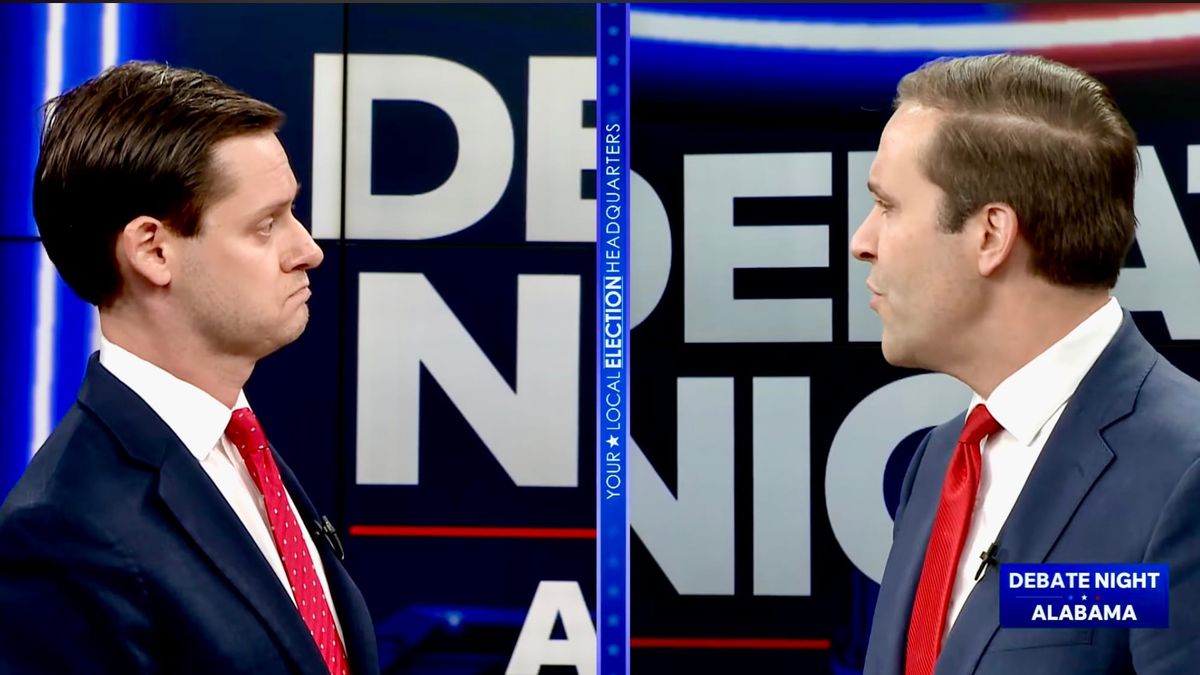
Republican John Wahl and Democrat Phillip Ensler clashed over health care, gun rights and school choice Wednesday night, offering voters sharply different paths for Alabama less than a week before Election Day.
The lieutenant governor nominees met at the WHNT News 19 studios in Huntsville for an hour-long televised debate on Oct. 28. They agreed on ending the State grocery tax and protecting communities from data center costs. They split over how much government should do — and who should pay for it.
Wahl stressed the Republican tax-cutting record, parental rights and private-sector solutions. Ensler pointed to his work in the Legislature and called for Medicaid expansion, a lottery vote and more aid for working families.
The debate also turned personal, with Ensler challenging Wahl’s claim to be an outsider and the candidates disputing each other’s residency and voting histories.
For families facing higher bills, both promised relief.
Wahl said Republican leaders had committed to finishing the grocery tax repeal in the next session. He credited GOP lawmakers with $1.5 billion in tax cuts over four years.
Ensler said Democrats had pushed grocery tax cuts for years. He also called for tax relief on overtime and farm equipment, along with a living wage. He blamed Trump’s tariffs and war overseas for driving up costs for families and farmers.
Wahl argued that the economic problems had built up under years of failed policies. Ensler countered that Republicans had held power in Alabama long enough to bear responsibility for the results.
A State lottery drew another sharp exchange. Ensler said Alabama was losing revenue as residents crossed State lines to buy tickets. He proposed using lottery proceeds for college and trade scholarships, educator pay, retirees and rural hospitals.
“So yes, we need a lottery, and we need to bring that revenue in to help the people of Alabama,” Ensler said.
Wahl disputed the claim that Republicans alone had blocked a vote, noting that GOP lawmakers helped move a proposal through the House. If Alabama creates a lottery, he said, the money should help reduce taxes rather than expand government.
“Because at the end of the day, it's going to take money out of the private economy through the lottery. Let's return it to the people where it belongs,” Wahl said.
Ensler argued that his ties across party lines could help secure the votes needed in the Senate. Wahl questioned how Ensler could deliver as lieutenant governor when his own lottery bill had not received a committee vote.
On data centers, the candidates shared concerns about local costs but offered different responses.
Wahl said the projects need strict safeguards for water supplies and power bills. Companies should pay for their own power needs, he said, and locate in communities that welcome them.
“I want these data centers actually putting money up to make sure that they're paying for their own power. They're not affecting power rates on citizens,” Wahl said.
Ensler defended his call for a moratorium on new construction until the State puts a clear review process in place. He cited concerns from North Mobile County, Lowndes County, Bessemer and Oxmoor Valley about secrecy and projects being forced on residents.
“So I have stood with residents, and this has brought together Democrats and Republicans and independents. It transcends party,” Ensler said.
Rural health care exposed a deeper divide between the two.
Ensler said Medicaid expansion would help keep hospitals open, preserve jobs and give working families access to care. He also called for recruiting more doctors and nurses into rural communities.
“So it is a moral failure. It is wrong and cruel that we have not expanded Medicaid,” Ensler said.
Wahl said the first task was to prevent more rural hospital closures. Where care has already been lost, he proposed partnerships with local doctors, nonprofits and nursing homes to create triage centers that could treat and stabilize patients before transfer to larger hospitals.
“As a small businessman, I don't always think the answer is bigger government,” Wahl said.
Ensler questioned the nursing home proposal and said hospitals need a steady revenue stream. Wahl said he was proposing ways to connect patients with local doctors and nurses through private-sector partnerships.
On public safety, Ensler cited his work with law enforcement to ban Glock switches, support conflict resolution programs and fund State and local police efforts. He defended red flag laws that would use court orders and due process to temporarily remove guns from people who pose a threat.
Wahl defended permitless carry and said restrictions could leave people unable to protect themselves while criminals remain armed.
“Look, I support law enforcement, but I don't support trampling on the rights of the people of this State. I'm always going to stand up for them,” Wahl said.
The topic of immigration also showed the divide between the two men’s positions. Wahl called for a secure border while making legal immigration easier for people who want to work. Ensler said undocumented people who commit violent crimes should be deported. He opposed measures that could split up families who pose no public safety threat, citing travel across State lines for medical care.
Education produced a clear split over the CHOOSE Act.
Ensler said public dollars should stay in public schools, but acknowledged the program was likely to remain. He urged an income cap so State aid would focus on families with the greatest need.
Wahl defended school choice and said education oversight should rest with States and local communities rather than Washington.
“It should be parents, not government bureaucrats, deciding what is best for their children. And I'm a proud supporter of school choice and the CHOOSE Act,” Wahl said.
Wahl also called for removing social agendas from classrooms and focusing on reading, writing, math and job skills. Ensler rejected claims that improper teaching was widespread and urged more support for literacy and math instruction.
The candidates found common ground on parts of prison reform. Ensler called for a review of parole, stronger reentry programs and better health and mental health care. Wahl urged tighter control of construction costs and more job training and treatment for nonviolent offenders.
Both said people leaving prison need a better path back into the workforce.
Alabama voters will choose the next Lieutenant Governor in the Nov. 3 general election.
The full debate may be seen on YouTube and below: