Winning, Momentum, Defeats and Defeatism
“One of the strongest feelings there is, stronger than hope and often stronger than fear, is the dopamine that comes from winning”—Lisa Ward
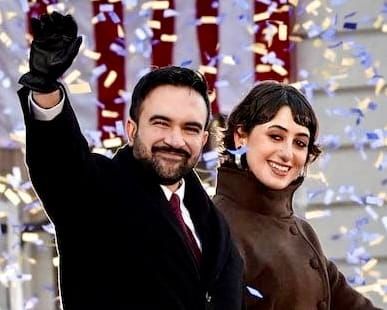
Guest Opinion by Lisa Ward
People love winners. Not potential winners. Not long shots. Not unfinished things. People love sure things.
I learned that long before I ever worked on a political campaign.
Growing up, I was never drawn to the popular crowd or the obvious choice. I gravitated toward the kid who didn’t get picked, the one standing alone when teams were chosen, the one who was overlooked or written off.
If someone wasn’t getting a fair shake, that’s where I planted myself. I would throw everything I had into helping them level up, and when there was nothing left I could give, I moved on.
That instinct never left me. It just followed me into adulthood and eventually into politics.
Campaigns have a way of revealing human nature in its rawest form. They strip away slogans and expose what people really value.
I have worked hundreds of races, and the pattern is always the same. When the road is steep and the work is hard, people disappear. When the clouds part and the odds improve, they come running back like they were there all along. That is not bitterness speaking. It is simply observation.
People do not vote on facts nearly as much as they vote on feelings.
One of the strongest feelings there is, stronger than hope and often stronger than fear, is the dopamine that comes from winning. People want to feel victorious. They want to be associated with success. They want the comfort of backing something that feels inevitable.
Alabama understands this better than most places. We tolerate being at the bottom of the rankings in education, healthcare, and economic mobility because we have never known anything different. You do not miss what you have never had. But let a football team fall in the polls and suddenly the entire state is in emotional distress. Certainty matters here. Winning matters here. That mindset does not stop at sports.
I have watched it play out over and over again with candidates. Unknown names. Long odds. Minimal support. Criticism that feels personal rather than political. Then something shifts. Momentum, visibility, a single catalytic moment. Suddenly the same people who dismissed them cannot get close enough. I saw it with Mamdani. I saw it with AOC. I have seen it with countless others no one remembers — until the day they do.
Zohran Mamdani is one of the clearest examples of this. In the beginning, he was isolated, dismissed, spoken about as an impossibility—one of the longest shots anyone could imagine. Today, people surround him like he is a rock star. Interviews. Attention. Admiration. Zohran never changed. Not his values. Not his message. Not his character. What changed was the heart of the crowd. New York did not suddenly discover who he was. They decided he was safe to believe in.
The same psychology shows up every election cycle in Alabama. When Doug Jones’ name reentered the conversation, supporters of Will Boyd walked away. Not because Will’s policies changed. Not because his vision faltered. Not because he stopped doing the work, work he continued quietly and consistently after his last loss. They left because Doug Jones feels like a winner. A bigger name. A safer bet. A guarantee.
That moment did not surprise me. It confirmed something I have known my entire career. People do not abandon long shots because they lack merit. They abandon them because uncertainty makes us uncomfortable.
To me, that takes the challenge out of the hunt. A hunter does not really hunt if there is a camera tracking the deer’s feeding schedule and a scope guaranteeing the shot. That is not skill. That is not endurance. That is not victory. The real hunt requires patience, sacrifice, timing, and the ability to act decisively when the moment finally comes.
Campaigning should be the same. Manipulating optics, chasing celebrity, or selling inevitability might win elections, but it is not the work. The work is closing the gap, forcing opponents to earn it, shaking people who have grown comfortable, and creating moments that make voters question what they thought they knew.
That is where the rush is for me. There is something deeply entrepreneurial about taking an idea people do not believe in, planting a seed, and watching it grow through discipline and conviction.
Creation does not come from manipulation. It comes from inserting your skills, your integrity, and your labor into something that already exists and shaping it into something better.
What rarely gets celebrated is the strength that shows up after defeat. We love comeback stories, but only once they are complete. While someone is still losing, still grinding, still showing up after the applause has died down, we label it stubbornness or foolishness.
We confuse endurance with weakness because it makes us uncomfortable. There is a difference between defeat and defeatism. Defeat is losing and returning anyway. Defeatism is losing and deciding that loss defines you.
The real story of strength is not the person who wins once and disappears into legacy. It is the person who loses, learns, and comes back again and again.
Every meaningful invention, every successful business, every lasting movement was built by people who failed publicly before they succeeded privately. They were not spared rejection. They were shaped by it. They did not walk away because they were defeated. They refined because they believed.
Politics pretends loss is disqualifying, as if a single defeat is a verdict on someone’s worth or capacity to lead.
In reality, repeated return is one of the clearest indicators of conviction. Anyone can run once. Anyone can try when the timing feels right. It takes a different kind of person to come back when the odds have not improved, when the crowd has not returned, when the outcome is still uncertain.
That is why I do not get behind candidates because they are guaranteed to win. If that were the goal, the work would be easy and mostly meaningless. I get behind candidates because I see something in them that is authentically real—something that cannot be manufactured by polling or focus groups. I align myself with people because I share their vision and because I believe that if they are elevated, life gets better for more people, not just for them.
There is a fundamental difference between leaders who want to be served and leaders who are willing to serve. One sees office as a destination. The other sees it as a responsibility. One chases power. The other accepts accountability.
The leaders I surround myself with are not running to win something for themselves. They step forward because they believe they owe something to their community.
I am loyal to that authenticity. When I see it, I do not let shifting polls, pundit opinions, or sudden celebrity change my mind. I do not abandon people because the road gets harder or because someone else looks more electable in the moment.
Vision does not disappear because it is inconvenient. Integrity does not evaporate because the odds lengthen.
Alabama will not be a better place because it makes history after 207 years. It will be better because people decide to believe in each other, and because they choose vision over inevitability and courage over comfort.
Will Boyd is not the story. He is a byproduct of a moment and a mirror of a state ready for more. The real story has always been the people willing to insert their time, their skills, and their belief into building something without guarantees.
History does not belong to the people who show up at the finish line. It belongs to the ones who were there when the ground was still being broken.
I speak from my own experience with my H2O Energy US company. I WILL find the people that believe in my vision for rural Alabama, too.
Doug and Will are just more learned lessons. The real challenge is not giving up.
Hank Sanders’ mama used to say every dark cloud has a silver lining. It just depends on where you’re standing to see it. That’s why I move and I shift to find that silver lining. I won’t change dark clouds, because even dark clouds bring something we all need.
Zohran didn’t win because he was a winner. He won because they knew what was at stake and got behind him. I think some of us know too.
Lisa Ward is a former Democratic nominee for the Alabama State Senate, a political leader and advocate with more than three decades of experience advancing justice, equity, and community empowerment. She is known for grassroots organizing and coalition-building across the State, and is committed to policy solutions that uplift marginalized communities and strengthen democracy.
Opinions do not reflect the views and opinions of ALPolitics.com. ALPolitics.com makes no claims nor assumes any responsibility for the information and opinions expressed above.