Alabama is Growing. Our Infrastructure has to Grow With It
Guest Opinion by Spencer Stone, Democratic nominee in AL Senate District 16

Guest Opinion by Spencer Stone
My old Dodge has an air conditioner that works when it feels like it. That means I spend more time than I would like driving Highway 119 and Valleydale Road with the windows down.
You notice things that way.
You notice the traffic. You notice where a road that once made sense for a smaller community now carries far more cars. And on one stretch of Valleydale, you notice a sewage smell strong enough to hit you while driving past at 45 miles an hour.
I do not know what causes that particular odor, and I am not going to pretend that I do. But the traffic is not my imagination.
Since 2020, Alabama's population has grown about 3.3 percent. Shelby County has grown 7 percent — roughly twice as fast. In just over five years, the county has added roughly 15,500 people. Pelham has grown 6.2 percent.
That's good news. People want to live here.
But those 15,500 new neighbors did not arrive without cars, toilets, children, stormwater, emergencies or expectations that the roads would eventually get them home.
Growth is good. Growth also has a bill.
The question is who pays it — and whether we decide that before the bill arrives.
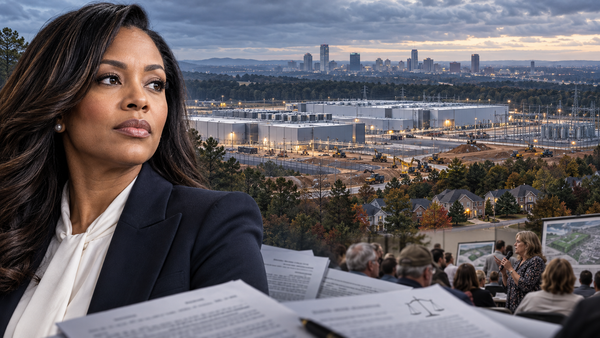
We can see the problem on Valleydale Road. Hoover, Shelby County and ALDOT are working toward widening the road to five lanes between Caldwell Mill Road and Inverness Center Drive. Valleydale is not primarily a story about recent population growth. It is a story about infrastructure lag. Reporting on the project says it has taken roughly 27 years to get from identifying the need to the current utility-relocation stage. Utility relocation is expected to cost about $10 million, followed by an estimated $45 million in construction.
That is what infrastructure lag looks like. Growth happens one subdivision, apartment complex, shopping center or office development at a time. The road bill arrives later, all at once.
The same basic problem exists underground. Pelham is in the middle of a multi-year effort to replace aging water infrastructure. Its 2026 budget includes more than $5 million in water and sewer improvements funded by service fees, including major pump replacements, tank maintenance and pipe rehabilitation. That does not mean Pelham did something wrong. Roads wear out. Pipes age. Pumps have to be replaced. Growing communities have to maintain yesterday's infrastructure while building tomorrow's.
Developers already pay for a substantial amount of the infrastructure associated with their projects. Alabama law allows subdivision regulations to require streets and water, sewer and other utilities before a plat is approved. Local rules can require drainage, sidewalks and other improvements directly associated with a development.
That matters. A serious growth policy cannot begin with the fiction that developers currently pay nothing, and it should never charge them twice for infrastructure they already built.
The harder question starts at the subdivision entrance.
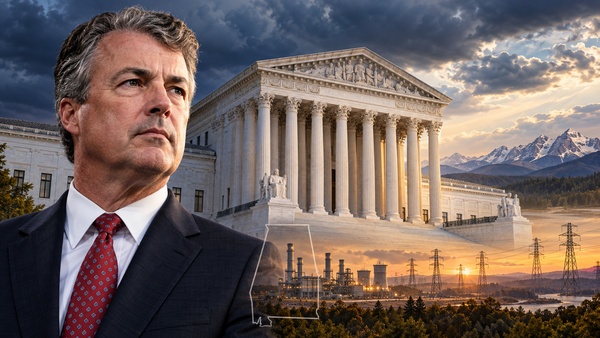
A developer may build every street and pipe inside a new neighborhood while the people who eventually live there still add traffic to an intersection a mile away. Alabama's own Supreme Court has recognized the limits of simply pushing those broader costs back onto one subdivision. In Cottage Hill Land Corp. v. City of Mobile, the Court cautioned that subdivision requirements face constitutional limits when the need for a future street is driven substantially by public traffic rather than the proposed development.
That is the problem. One neighborhood did not create the need for a larger road. Neither did the next one. But after enough growth, the need is real and somebody has to pay for it.
Alabama has confronted versions of this problem before.
In St. Clair County Home Builders Association v. City of Pell City, the Alabama Supreme Court considered charges imposed to help finance water and sewer improvements. Pell City had identified roughly $23 million in needs after engineering studies documented both existing deficiencies and capacity needed for future growth. The Court upheld the charges as service fees because the money was dedicated to the water and sewer systems rather than used as general tax revenue.
The Court did not require Pell City to separate old deficiencies from future growth in the way I am proposing. I think a statewide enabling law should. New growth should not behanded the bill for old problems. Existing deficiencies, deferred maintenance and growth-created demand should be separated as honestly as possible.
Alabama has already gone further in Baldwin County.
In 2006, the Legislature gave Baldwin County and its municipalities the option to impose development impact fees for broader governmental infrastructure attributable to new growth. Current law defines an impact fee as a charge against new development for infrastructure “necessitated by and attributable directly to the new development.” It also distinguishes those broader costs from streets, sidewalks, water lines, wastewater systems and drainage facilities a developer may already be required to build.
Most importantly, Montgomery did not order Baldwin County communities to impose the fees. It gave them the option.
Alabama chose to give Baldwin County's communities that option. Why not let other growing communities make the same choice?
Alabama talks a great deal about local control. Local control should mean more than Montgomery allowing local governments to make decisions only when Montgomery likes the answer.
I believe the Legislature should consider giving growing communities across Alabama a carefully limited version of the same choice.
Baldwin County's law already contains useful guardrails. It requires public notice and a hearing, restricts the money to governmental infrastructure, allows developer credits, and generally requires money not committed within five years to be refunded. I would keep those protections. But I would not simply copy its fee formula statewide. The existing framework caps an impact fee at one percent of a development's completed value, and property value is not necessarily a good measure of infrastructure impact. A $600,000 house does not put twice as much traffic on a road as a $300,000 house. A warehouse, apartment building, grocery store and subdivision do not create the same demands either.
The better rule is simple: show the math.
Before imposing a growth-related infrastructure fee, a local government should have to identify the project, publish its expected cost, separate the portion attributable to existing needs from the portion attributable to new growth, and explain how each development's share was calculated.Developers should receive credit for qualifying infrastructure they build themselves. Money collected for an identified infrastructure need should not quietly become general revenue.
Affordable housing needs protection. Collections and expenditures should be public. And when the growth-related share of the project has been funded, the fee should end.
There is a constitutional reason to be this careful, too. In the 2024 case Sheetz v. County of El Dorado, the U.S. Supreme Court held that development conditions do not escape constitutional scrutiny simply because they were created by legislation. The Court expressly left open how specifically a fee applied to a class of development must be tailored. Justice Brett Kavanaugh, joined by Justices Elena Kagan and Ketanji Brown Jackson, emphasized that the decision did not prohibit impact fees based on reasonable formulas or schedules for classes of development. A California appellate court later upheld the fee on remand, but that opinion was subsequently depublished and cannot be cited as precedent. The methodology remains unsettled. Alabama should put a clear evidentiary standard in the law rather than wait for years of litigation to tell local governments what evidence they need.
Translated out of legal language: government should be able to explain why it is charging someone and why the number is reasonable.
Show the math.
That requirement protects builders and new homeowners. It also protects the people who already live here.
A builder should be able to ask why a fee is $3,000 instead of $6,000 and get an answer better than “because the ordinance says so.” A new homeowner should not pay for decades of deferred maintenance. And someone who has paid taxes in the same community for twenty years should be able to ask why infrastructure needed partly because of new growth is being placed entirely on the existing tax base.
There is no version of this where infrastructure becomes free.
Costs can land on developers, landowners, buyers, renters, existing taxpayers and utility customers. A badly designed impact fee can make housing less affordable. That is a legitimate concern, and any legislation should address it directly.
But refusing to talk about the cost does not make it disappear. If growth creates part of the need for a road, sewer expansion or public-safety facility and new development contributes nothing toward that growth-related share, somebody else pays it.The goal should not be to make developers pay for everything. It should not be to make existing residents pay for everything either.
The goal should be to determine what growth actually requires, what it costs, what share is fairly attributable to new development, and then let local communities decide whether to use the tool.
Montgomery does not know what Pelham needs better than Pelham does. It does not know what Hoover needs better than Hoover does. The Legislature can establish strong rules protecting homeowners, builders and taxpayers without making every local infrastructure decision itself.
That is what local control is supposed to mean.
A local-option law would not require a rural town with little development pressure to adopt a policy designed for a fast-growing suburb. It would not require Pelham or Hoover to adopt one either. It would simply give communities the authority to make that choice after showing the public what they need, what it costs and how they calculated each share.
Alabama has already trusted Baldwin County and its municipalities with that choice for twenty years. I have yet to hear a convincing reason why local officials and voters elsewhere in Alabama should be trusted less.
Shelby County adding 15,500 people is not the problem. It is evidence that people believe this is a place worth choosing.
We should keep building homes. We should keep attracting businesses. We should want families to choose our communities.
But we cannot celebrate growth while pretending the roads, sewers, drainage systems and public services can remain frozen in time.
Growth is good. Growth also has a bill.
The bill always gets paid. Good government means deciding what growth actually requires, dividing the cost fairly and showing the public the math before it arrives.
Spencer Stone is a public school computer science teacher and the Democratic nominee for Alabama Senate District 16, which includes portions of Jefferson and Shelby counties. He lives in Hoover.
For more information: https://stone4senate.com.
Opinions do not reflect the views and opinions of ALPolitics.com. ALPolitics.com makes no claims nor assumes any responsibility for the information and opinions expressed above.