Alabama Lawmaker Indicted in $240K COVID Fraud Case
Federal prosecutors say Rep. Patrick Sellers diverted pandemic relief funds to pay personal debts, mortgage bills and his daughters' college tuition
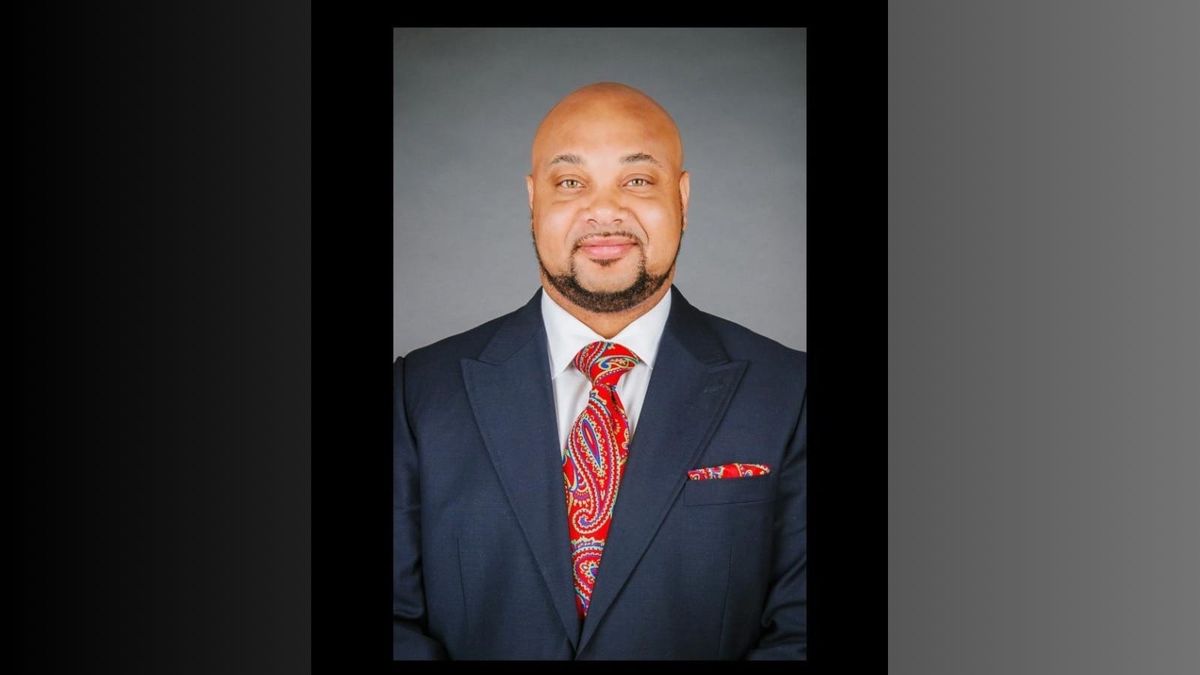
TL;DR: Alabama State Rep. Patrick Sellers, a Jefferson County Democrat and Baptist pastor, faces four federal wire fraud charges. Prosecutors allege he obtained more than $240,000 in COVID-19 relief funds through two nonprofits and a lawn care business, then spent much of the money on personal expenses. The alleged fraud occurred before Sellers took office in 2022. Each count carries a maximum sentence of 20 years in prison.
Alabama State Rep. Patrick Lorn Sellers (D-Pleasant Grove) was arrested Thursday after a federal grand jury indicted him on four counts of wire fraud tied to more than $240,000 in COVID-19 relief funds.
The 53-year-old lawmaker, who also serves as pastor of Mount Zion Missionary Baptist Church in Birmingham, is accused of using federal and State pandemic aid to pay personal debts, mortgage bills, car loans and college tuition for his daughters.
According to the U.S. Department of Justice, the alleged scheme ran from July 2020 through May 2021, before Sellers was elected to the Alabama House.
A federal grand jury returned the indictment on November 17. The 45-page filing was made public Thursday in the U.S. District Court for the Northern District of Alabama.
Sellers represents House District 57 in western Jefferson County. First elected in 2022, he won a second term without opposition in the November 3 general election.
Federal prosecutors allege that Sellers obtained pandemic relief funds through three entities: the Alabama State Missionary Baptist Convention nonprofit, Project Zion Inc., and a business identified as Sellers Lawn Care.
According to the indictment and reporting by WVTM 13, the money came from several programs. They included Small Business Administration disaster loans, Paycheck Protection Program loans, Alabama relief grants and grants from another nonprofit organization.
The alleged proceeds totaled $240,315:
- Alabama State Missionary Baptist Convention nonprofit: $105,000
- Project Zion Inc.: $114,900
- Sellers Lawn Care: $20,415
The indictment alleges that Sellers submitted false information about the organizations, their employees and how the money would be spent.
In one case, prosecutors say he claimed that Sellers Lawn Care earned $98,000 in 2020. He allegedly submitted a tax document to support the claim, although the IRS had no record that the return had been filed.
Prosecutors describe the lawn care business as fictitious.
One of the most serious claims involves the Alabama State Missionary Baptist Convention, a Statewide religious organization.
Sellers previously served as Chief of Staff to the convention's President.
According to AL.com's review of the indictment, Sellers allegedly applied for loans and grants in the convention's name without permission from its leadership.
The indictment states:
“Sellers did not have the authority to solicit grants and loans on behalf of ASMBC and did so without the knowledge of ASMBC’s president and executive board.”
Prosecutors say Sellers established a bank account using the convention nonprofit's name but listed his own Pleasant Grove home as its address. He also allegedly changed the organization's mailing address with the IRS.
The convention's headquarters were in Selma.
In January 2024, the convention's President reportedly contacted the Small Business Administration after learning of a loan obtained in the organization's name.
The President wrote:
“As chief executive officer of the convention, I was not aware of, nor did I approve the application for an economic injury disaster loan.”
The statement raises questions about whether the convention was left with debt from loans its leaders never approved.
Federal prosecutors allege that Sellers spent a large share of the relief money on personal expenses rather than the public needs the programs were designed to address.
The indictment identifies payments that included:
|
Alleged personal expense |
Amount |
|
Mortgage payments |
$26,673.66 |
|
Automobile loan payments |
$26,165.55 |
|
Credit card payments |
$11,286.75 |
|
Home equity loan payments |
$5,654.61 |
|
Daughters' college tuition and fees |
$12,497.13 |
|
Household water bills |
About $1,000 |
The listed payments account for more than $83,000. They do not represent a full accounting of the money prosecutors allege Sellers obtained.
The Justice Department's announcement confirms that the alleged spending included personal credit cards, mortgage and loan payments, household water bills and college tuition.
U.S. Attorney Phillip W. Williams Jr. announced the charges Thursday, joined by federal law enforcement officials.
“Combating fraud and holding public officials accountable are important priorities of this office and the Department of Justice,” Williams said.
Williams said the office would continue to pursue allegations of fraud involving taxpayer money and federal aid programs.
The FBI investigated the case. Assistant U.S. Attorneys Brett A. Janich and Ryan S. Rummage are handling the prosecution.
Each wire fraud count carries a maximum sentence of 20 years in federal prison. If convicted on all four counts, Sellers could face a combined statutory maximum of 80 years if the sentences were imposed back-to-back. Any actual sentence would depend on federal sentencing rules and the court's findings.
The indictment also seeks forfeiture of proceeds linked to the alleged fraud.
Sellers' attorney, Matt Hart, has stressed that the alleged conduct took place before his client became a State lawmaker.
In a Statement reported by WBRC, Hart said:
“It’s notable that none of the allegations against Representative Sellers assert any use or abuse of his official position. However, the Government’s case is still emerging and we will have no comment until we’ve had the opportunity to understand the charges and the evidence.”
The distinction is important, because had Sellers used his position as an Alabama legislator to carry out the alleged fraud, he could potentially face additional federal charges, enhanced sentencing penalties, or separate State criminal charges.
Although federal prosecutors have stressed Sellers' status as an elected official, the indictment does not allege that he used his legislative office to obtain the money.
Sellers has not been convicted of any crime in this case — only indicted.
Notably, the indictment comes after two other Jefferson County Democrats faced federal fraud charges in recent years.
Former State Reps. John Rogers and Fred Plump were involved in a separate scheme tied to the Jefferson County Community Service Fund.
According to WBRC's coverage of that investigation, the case involved public funds meant to support local groups, including youth sports programs. Prosecutors alleged that some of the money was returned to individuals through illegal kickbacks.
Both former lawmakers later pleaded guilty.
The Sellers indictment is unrelated to that case. Unlike the Rogers and Plump investigation, the alleged offenses involving Sellers took place before he entered the Legislature.
Still, the latest charges place another Jefferson County legislator under federal scrutiny.
Another Alabama Democrat, State Rep. Kelvin Lawrence of Hayneville, pleaded guilty to felony forgery on November 4, just one day after winning reelection to House District 69. According to the Montgomery Advertiser, Lawrence was charged in July 2024 with forging or altering a residential builder's license with intent to defraud. He received a 12-month prison sentence that was suspended under a pretrial diversion agreement. Lawrence must complete 300 hours of community service within 12 months, and the charge will be dismissed if he meets the program's terms.
Despite the charges becoming an issue in his reelection campaign, Lawrence defeated Republican challenger Josh Pendergrass. Lawrence told 1819 News that he intends to remain in office, saying, “The diversion program was approved and agreed to by the Attorney General’s office and does not affect my public service.” Unlike Sellers, Rogers and Plump, Lawrence represents a district outside Jefferson County, and his forgery case is unrelated to their federal fraud cases.
While Sellers’ indictment provides a detailed account of how he allegedly obtained and spent the money, several questions remain unanswered.
Among them are whether the Baptist convention was required to repay any unauthorized loans, whether it recovered any funds, and when federal investigators first learned of the alleged scheme.
There is also a question of timing.
The convention's President reportedly raised concerns with the SBA in January 2024. Sellers went on to win another term in November 2026 without opposition.
As far as ALPolitics.com has been able to determine, there is no public evidence that legislative leaders or party officials knew of the investigation before the election.
For now, Sellers remains a sitting member of the Alabama House while facing four federal felony charges.
The case will proceed in federal court, where prosecutors must prove their allegations beyond a reasonable doubt.
As always, an indictment is not a finding of guilt. Sellers is presumed innocent unless and until proven guilty.
The full indictment is below: