
Alabama Tourism Launches New Catfish Trail Featuring 50+ Destinations
New statewide trail celebrates the people, places and traditions that define catfish in Alabama
From the Alabama Tourism Department
June 26, 2026
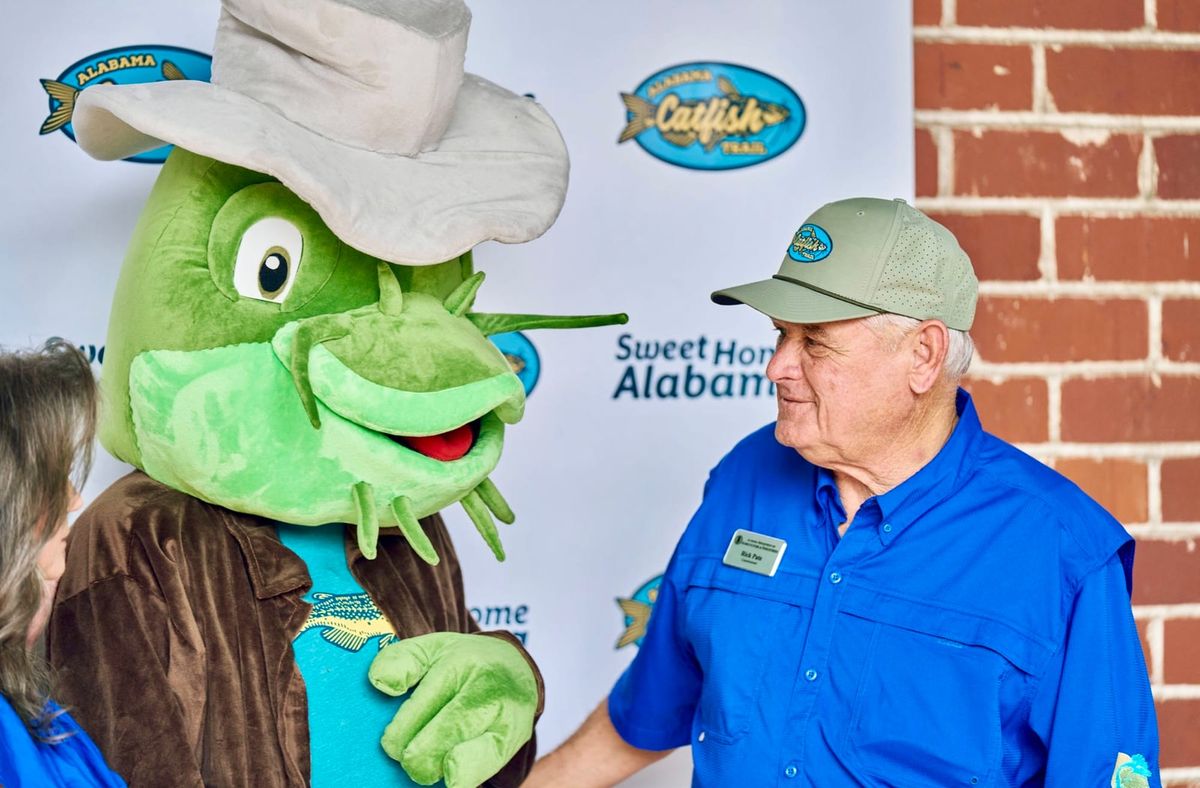
Birmingham, Ala. – In honor of National Catfish Day on June 25, Alabama Tourism Department and Director Lee Sentell unveiled the Alabama Catfish Trail, highlighting the recreation, commercial and culinary significance of the state’s catfish industry. The trail features more than 50 lakes, rivers, restaurants, markets, and experiences where locals and visitors can explore Alabama’s rich catfish culture.
To commemorate the statewide trail, Alabama Tourism was joined by Alabama Department of Conservation and Natural Resources (DCNR), Alabama Department of Agriculture and Industries, Alabama Farmers Federation (ALFA), and Auburn University and the Alabama Cooperative Extension System (ACES), each playing a role in expanding Alabama’s catfish economy and culture.
“Alabama’s catfish culture runs deep,” said Alabama Tourism Director Lee Sentell. “From the Alabama Civil Rights Trail to the Alabama BBQ Trail, we’ve seen how trails can be powerful engines for tourism, creating tangible experiences around shared interests. Our new Catfish Trail invites visitors to experience our beautiful state through its waterways, recipes and cultural traditions.”
The kickoff event featured chef tastings from iconic Alabama catfish institutions including Ezell’s Fish Camp, Old Greenbrier Restaurant, and The Ark. Guests also experienced interactive elements such as the Alabama Catfish Wall of Fame, a live catfish tank display, and the ACES “Biggest Catch” contest with 4-H Club participants.
U.S. Senator Tommy Tuberville, who has deep personal ties to the catfish industry, joined the launch event virtually with a video message expressing his passion and support for the new trail. In 2024, Tuberville played an instrumental role alongside U.S. Senator Roger Wicker of Mississippi in passing a resolution designating August as National Catfish Month.
“There’s nobody, I mean nobody, who loves a plate of Alabama catfish more than I do,” said Tuberville. “As a former catfish restaurant owner, I know how critical the catfish industry is to our great state. The [Alabama] Catfish Trail is a great opportunity to recognize and thank all of our farmers who drive this industry. It’s also a chance to bring people together, to connect with friends and family, and enjoy Alabama’s waterways."
Alabama consistently ranks as the second-largest producer of farm-raised catfish in the United States. The industry supports more than 2,400 jobs across farming, processing, feed production, transportation, and research, serving as a major economic driver,particularly in the Black Belt region.
According to ACES, Alabama generated $113 million and nearly 30 percent of U.S. farm-raised catfish production in 2023. Alabama’s catfish sector contributes nearly $92 million annually to the state's economy.
The majority of the state’s catfish production comes from the Black Belt region, with the bulk of the state’s farms in Hale, Dallas and Greene Counties. Hale County is the largest catfish-producing county in the state, supporting more than one-third of Alabama catfish sales.
The Alabama Catfish Trail will build on the industry’s economic momentum, encouraging locals and visitors to gain a deeper understanding of the industry’s economic value.
“Investing in Alabama’s catfish culture strengthens communities, supports family farms, and keeps a vital agricultural tradition thriving,” said Fran Pearce, a Dallas County resident and fifth-generation owner of Pearce Catfish Farms. “For generations, this industry has created jobs and economic opportunity across the Black Belt, and the Catfish Trail helps tell that story while connecting more people directly to Alabama-grown products and the people behind them.”
The Catfish Trail spans more than 50 locations across the state, from rivers and lakes to restaurants, markets, and unique experiences. Prominent waterways for catfish anglers include Wilson, Pickwick, Wheeler, and Lake Guntersville in North Alabama, along with the Alabama and Tombigbee Rivers flowing through the Black Belt.
“Some of my fondest memories I have as a child are sitting on a johnboat pulling trotlines across the river chasing catfish with my dad,” said Alabama Department of Agriculture and Industries Commissioner Rick Pate. “Catfish runs deep in Alabama’s waters and at our tables, where generations of families like mine have gathered to share meals and traditions.”
Many Alabama restaurants serving catfish today represent multiple generations of family businesses, recipes, and traditions. In the Black Belt region, one of the state’s most prolific Catfish destinations featured on the trail is Ezell’s Fish Camp. Located in Lavaca, Ezell’s operates out of a historic cabin that once served as a Civil War-era trading post supplying packet boats along the Tombigbee River.
Since the 1950s, the family-owned business has grown from a two-room cabin to providing seating for up to 300 patrons.
“In a world that seems to change overnight, Ezell’s has remained rooted in tradition,” said Dalton Green, a cook at Ezell’s Fish Camp. “Our recipes have stayed the same. The focus still being on family gathering around the table. But the most important thing of all: remaining in the family.”
Several Alabama restaurants are also featured prominently on the U.S. Catfish Trail, reinforcing Alabama’s role as a national industry leader. This initiative, launched by The Catfish Institute, aims to support local catfish farmers and provide diners with authentic culinary experiences.
Throughout the summer, a series of events and programs encourage Alabamians and visitors to engage with Alabama’s catfish culture. Alabama Black Belt Adventures is hosting the inaugural 2026 Big Catfish Photo Contest through July 12, with the contest winner receiving a two-person, half-day guided trip with Bama Noodling in 2027.
During National Catfish Month in August, Alabama Wildlife Federation is hosting the Big Cat Fishing Tournament for youth anglers. The event takes place on Saturday, August 29 at the Alabama Nature Center in Millbrook.
To learn more about the Alabama Catfish Trail, visit thetrail’s website or follow Alabama Tourism on social media.
About The Alabama Catfish Trail
The Alabama Catfish Trail is a statewide celebration of the people, places, and traditions that define catfish in Alabama. The new trail is a collection of more than 50 notable lakes, ponds, rivers, restaurants, markets and experiences where locals and visitorscan explore Alabama’s catfish culture through recreational and culinary opportunities. To learn more and experience the trail, visit alabama.travel/alabama-catfish-trail.
Senator Tuberville’s message of support for the Catfish Trail and Alabama’s catfish industry may be seen on YouTube and below: