Brookwood: Why We Need a Six Year Moratorium on Data Centers
Guest Opinion by Amanda Pusczek
Guest Opinion by Amanda Pusczek
Brookwood is a resilient city in eastern Tuscaloosa County, nestled between Birmingham and Tuscaloosa along State Highway 216. Its roots are deep, forged in coal mining. For generations, coal was the economic backbone of the community. But as global energy demands shifted, Brookwood turned its eyes toward manufacturing to secure its future.
That future became the focal point of a tense standoff on August 11, 2026.

That evening, a crowd gathered outside the Brookwood Municipal Complex, filing into a tiny room equipped with just 27 chairs. The seats filled immediately. Attendees lined the walls, backs pressed against the paint, lips pursed, and hands clasped as the meeting was called to order.
On paper, the agenda was purely administrative: recommend whether newly annexed land should be designated for light industrial development, then forward that recommendation to the city council.
Not exactly headline news.
So why was the room standing-room-only on a hot Tuesday night?
Two words: data center.
Permits filed with the Alabama Department of Environmental Management reveal a proposal for a massive, 2-million-square-foot data center.
Dallas-based Applied Digital Corporation has already acquired nearly 1,300 acres in the area. While officials claim it cannot yet be proven that the additional 374 acres up for rezoning are tied to this specific project, residents connected the dots immediately.
Applied Digital is no stranger to public stealth. Just this year, the company broke ground on a similar mega-campus in Louisiana that had previously been described only as a "strategic southern U.S. market" — right up until residents discovered heavy equipment arriving in their town.
At the Brookwood meeting, local residents arrived armed with urgent, sharp questions:
"The area in question is across the street from the middle school. What assurances can you give that students’ health will not be at risk?"
"Hurricane Creek (a local watershed) is at risk from storm runoff. What protections are being put in place ahead of time to protect the local environment and wildlife?"
"We don’t want an AI data center. And we don’t want the cost of our power or water to go up. Can you promise here and today that won’t happen?"
The response from the sitting mayor was, in essence, a dismissive brush-off. The town could approve or reject rezoning, but it lacked the authority to regulate the broader environmental and financial impacts residents worried about. The city could grant permission, but it could offer no guarantees.
The state of Alabama could step in to protect these communities. But what happens when leadership in Montgomery would rather legislate sports regulations than oversee artificial intelligence infrastructure?
The responsibility falls to federal regulation. As a candidate running to represent Alabama’s 4th Congressional District, that is precisely where my focus lies.
An estimated 35% of Americans already live within five miles of a data center. On Tuesday night, Brookwood made it overwhelmingly clear that it does not want to be added to that statistic without a fight.
As a registered nurse, my immediate concern is human health. Data centers generate constant, low-frequency noise pollution. Chronic exposure to environmental noise carries severe health consequences, including sleep disruption, elevated stress responses, increased blood pressure, and cognitive impairment. We have almost no data on what prolonged exposure means for developing young brains sitting in classrooms right across the street.
We urgently need strict federal zoning firewalls preventing hyperscale data centers from being constructed within six miles of any residential zone or municipal boundary. Communities deserve to protect land for small businesses, housing, schools, and parks without heavy industry quietly creeping into their backyards.
Water security is another critical hazard. A single traditional facility can consume millions of gallons of water every single day, threatening municipal supplies and depleting local groundwater tables. To protect clean drinking water and precious natural habitatslike Hurricane Creek, federal standards must require new facilities to utilize advanced closed-loop water recycling systems. Furthermore, the Environmental Protection Agency must be fully funded and empowered to conduct long-term water testing, holding mega-corporations accountable when violations occur.
Then there is the power grid. Everyday Alabamians should not be forced to shoulder higher utility bills or foot the bill for infrastructure upgrades required by massive computing clusters. If a corporate developer demands enormous amounts of electricity, federal policy should mandate that the developer funds the energy infrastructure needed to supply it. Big Tech can afford to pay for its own footprint rather than relying on working families to subsidize its overhead.
Most importantly, we need a six-year national moratorium on new hyperscale data center construction. We need six years to study the human health impacts, six years to draft comprehensive environmental protections, and six years to return power to local communities so they have a genuine voice in shaping their own towns.
When the rezoning vote was finally called in Brookwood, it passed unanimously. The committee recommended to the city council that the 374 acres in question be annexed and designated as "light industrial."
It was not the outcome the crowd had fought for.
We shuffled out into the night with fewer answers than when we walked in, our exit accompanied by a quiet, frustrating chorus of, "Come to the next meeting."
And that is how Big Tech wins.
Not through transparent public debate or dramatic announcements, but through the slow, quiet crawl of local bureaucracy. Through procedural rezoning hearings, line-item annexations, and seemingly small decisions—until one day, the formal announcement is made, ground is broken, and the facility is already halfway built.
And inevitably, when the dust settles, some politician somewhere along the line will point back at the community and ask:
"If you cared so much, why didn’t you go to the meeting?"
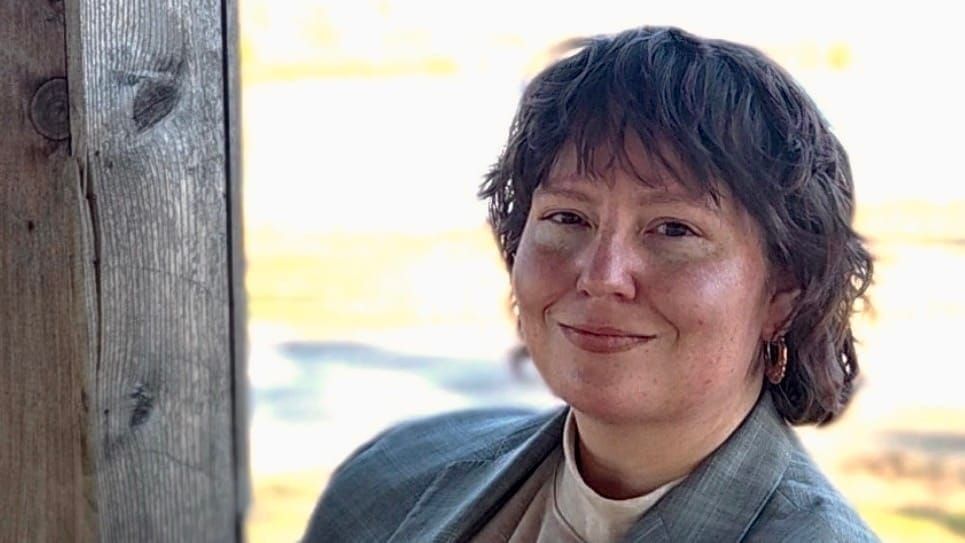
Amanda Pusczek is a seasoned medical professional and lifelong advocate for marginalized and “othered” communities. Her decades of nursing have shown her what policy failures look like in real life — families bankrupted by illness, rural hospitals shuttered, patients turned away. Amanda is running for Congress as a Democrat in Alabama’s 4th District because care should not depend on your ZIP code, income, or job.
For more information, visit https://www.amandaforalabama.com or follow her on social media.
Opinions do not reflect the views and opinions of ALPolitics.com. ALPolitics.com makes no claims nor assumes any responsibility for the information and opinions expressed above.