
Could There Have Been Mercy for Jeffery Lee?
Guest Opinion by Don Siegelman, Governor of Alabama, 1999-2003
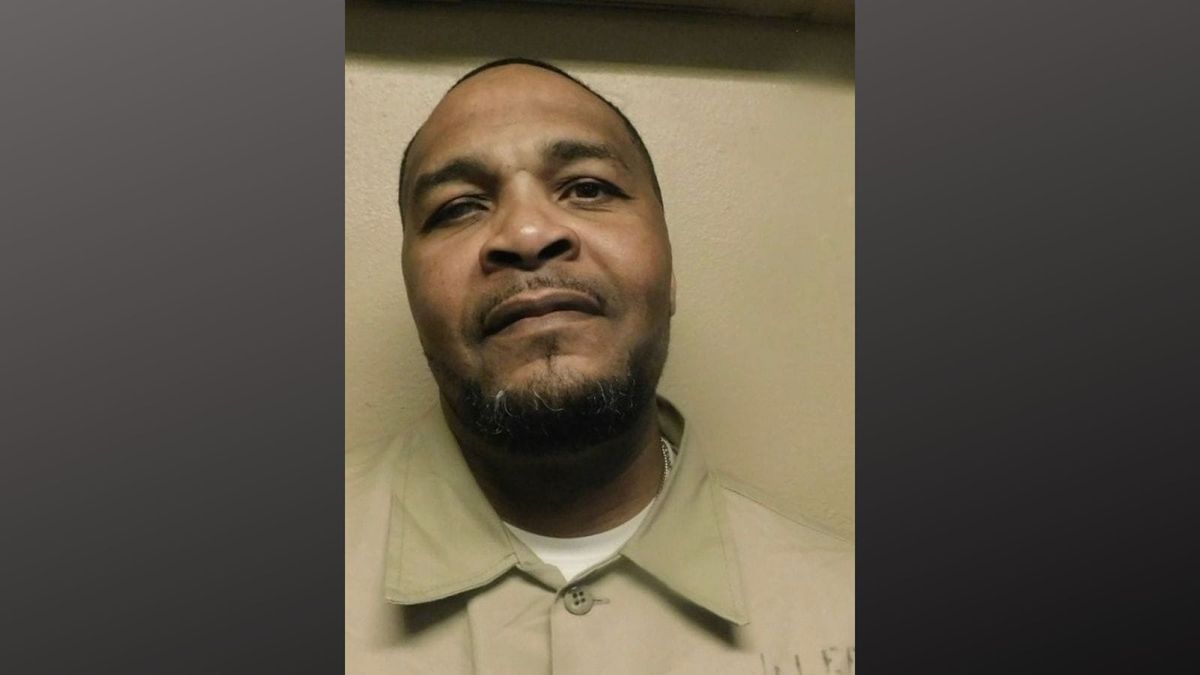
Those who knew Jeffery Lee, even prison guards, knew him as "J-Love", a kind and gentle man. As assistant Chaplin, he spoke words of reconciliation. As a child being terribly abused and surrounded by domestic violence he turned to drugs to escape. While never having a previous encounter with crime, he nonetheless committed a terrible one for which he took responsibility and asked God for forgiveness.
Proverbs 24:11 (KJV):
“If thou forbear to deliver them that are drawn unto death, and those that are ready to be slain.”
Meaning: Rescue those being carried toward death; intervene on behalf of those facing execution or destruction.
Couldn't careful reconsideration still have left room for mercy for Jeffery Lee?
I do not suggest that overriding the jury in Jeffery Lee's case was legally improper at the time. However, I do point out that in 2016 the United States Supreme Court ruled judicial overrides as being unconstitutional — a ruling I raise only for context, not as a legal argument.
However, I do raise a moral one instead.
The spirit of the New Covenant seems to call us away from vengeance. Didn’t Jesus replace "an eye for an eye" with a command for us to reject retaliation, and, not that it’s easy, but rather to love our enemies, and to pray for those who wrong us (Matthew 5:38–44).
Governor George Wallace lived this teaching… after he was shot and permanently paralyzed by Arthur Bremer in 1972. Rather than nursing hatred, Wallace forgave the man who tried to kill him, loved him and prayed for him…and in doing so he pointed back to Paul's words in Romans that vengeance belongs to God, not to us.
If Governor Wallace, a man who paid so dearly, could forgive could not there have been room for mercy for Jeffery Lee?
There is, of course, no comparing Scripture to Shakespeare — but I have always been moved by these lines from
The Merchant of Venice, which may speak to all of us at this moment:
"The quality of mercy is not strain'd.
It droppeth as the gentle rain from heaven
Upon the place beneath. It is twice blessed:
It blesseth him that gives and him that takes.
'Tis mightiest in the mightiest; it becomes
The throned monarch better than his crown....
Mercy is an attribute to God himself;
And earthly power doth then show likest God's
When mercy seasons justice.
Though justice be thy plea, consider this,
That in the course of justice none of us
Should see salvation. We do pray for mercy,
And that same prayer doth teach us all to render
The deeds of mercy."
Could it be that Justice and mercy are not opposites?
Justice is...I believe...at its noblest when tempered by mercy — and the “Good News” teaches that it is never too late for it to be so.
Don Siegelman served as Governor of Alabama from 1999 to 2003 and previously served as Alabama Secretary of State, Attorney General, and Lieutenant Governor. He is the only person in Alabama history elected to the State's top four constitutional offices. He may be contacted through https://linktr.ee/donsiegelman.
Opinions do not reflect the views and opinions of ALPolitics.com. ALPolitics.com makes no claims nor assumes any responsibility for the information and opinions expressed above.
Editor’s note: Alabama executed Jeffery Lee, 49, by lethal injection Thursday evening at William C. Holman Correctional Facility for the 1998 murders of Jimmy Ellis and Elaine Thompson during a pawn shop robbery in Orrville. Lee was pronounced dead at 6:22 p.m. His final Statement was brief: “All is well. I just want to say to my family, I love them. To my brothers on life row, I love them.”
Lee’s execution was notable because the jury that convicted him did not sentence him to death. Jurors voted 7-5 to recommend life in prison without the possibility of parole, but Dallas County Circuit Judge Jack Meigs used Alabama’s then-legal system of judicial override to reject that recommendation and impose a death sentence. Alabama abolished judicial override in 2017, becoming the last State to end the practice, but lawmakers did not make the change retroactive. As a result, Lee remained condemned under a sentencing system Alabama no longer permits.
Lee’s case had become part of a broader fight over the roughly two dozen Alabama death-row prisoners sentenced through judicial override. Between 1976 and 2011, Alabama judges overrode jury sentencing decisions 107 times; in 98 cases, judges imposed death after juries voted for life. Some current cases involve even more striking splits: five prisoners received death sentences despite unanimous 12-0 jury votes for life. Critics across Alabama’s political and legal spectrum have argued that the State should review these old sentences and, where appropriate, restore the life-without-parole sentences originally chosen by juries.