
DEA Accused of Letting Fentanyl Flood New Mexico
Fast and Furious 2.0? AP report and whistleblower claims raise questions DEA allegedly allowed millions of fentanyl pills onto New Mexico streets
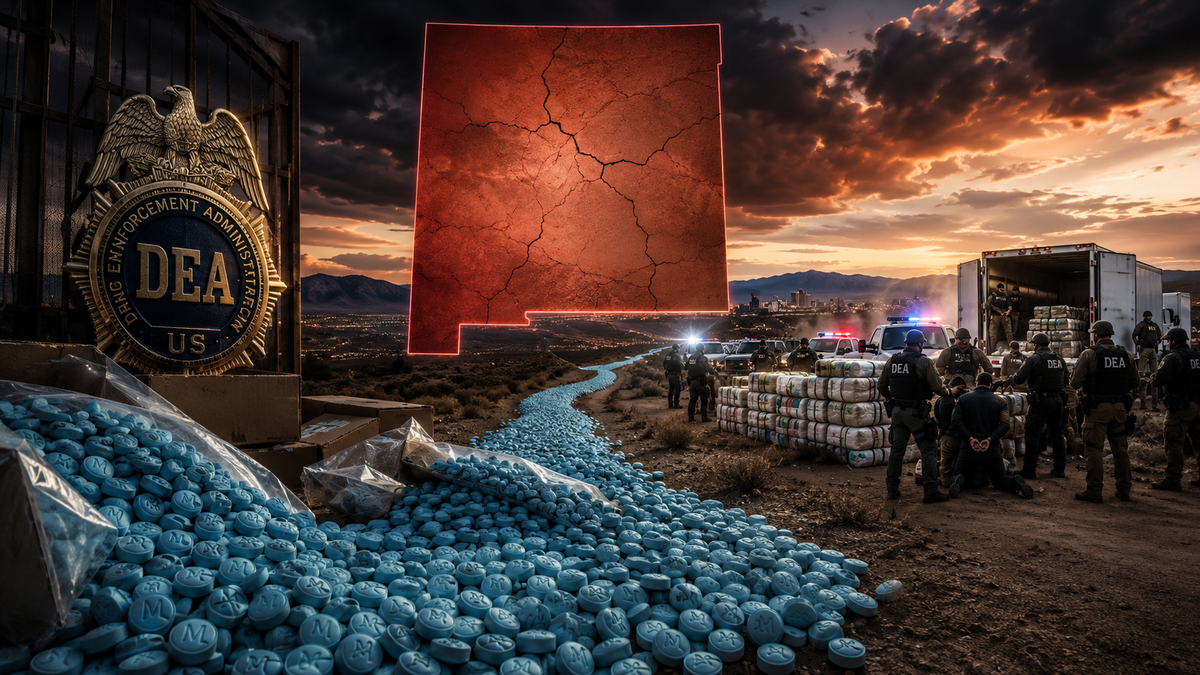
A new investigation by The Associated Press is raising troubling questions about federal drug enforcement tactics after current and former Drug Enforcement Administration agents alleged that the agency allowed massive quantities of fentanyl pills to reach New Mexico communities while building larger criminal cases against drug trafficking organizations.
According to the AP report, DEA agents monitored fentanyl shipments between 2023 and 2025 but frequently chose not to seize the drugs. The agency's goal, prosecutors and investigators said, was to gather intelligence and build broader conspiracy cases against cartel-linked trafficking networks.
The report cites DEA Special Agent David Howell, who became a whistleblower after objecting to the practice.
"We poisoned our community to make cases," Howell told AP. "Through our own willful blindness, we get to say, 'We don't really know what happened to the drugs.' But we 100% got people killed."
Notably, New Mexico saw saw higher fentanyl overdoses than any other State in the country during the two-year period between 2023 and 2025.
AP reporters reviewed internal DEA records and interviewed current and former agents who described a strategy that allowed large quantities of counterfeit fentanyl-laced pills to move through Albuquerque and surrounding areas without intervention. In one case, agents reportedly watched a shipment of 74,000 pills change hands while conducting surveillance on a trafficking network.
The allegations come as fentanyl remains one of the deadliest drugs in the United States. The DEA has long warned Americans that "One Pill Can Kill," emphasizing that even a small amount of fentanyl can be fatal. Federal officials have described the synthetic opioid as a major national security and public health threat.
Former U.S. Attorney Alex Uballez defended the investigative strategy, arguing that limited resources required law enforcement to focus on dismantling major trafficking organizations rather than intercepting every shipment.
"The bigger fish are worth catching," Uballez told AP, adding that pursuing cartel networks would ultimately "save more lives."
The DEA likewise defended its actions.
"The investigative decisions at issue were lawful, reasonable under the circumstances and consistent with Department guidance," DEA spokesperson Amanda Wozniak said in a statement cited by AP. She added that descriptions suggesting agents knowingly allowed fentanyl into communities "are false and fundamentally mischaracterize the facts."
The AP investigation also revealed details of internal Justice Department guidance. A 2017 policy directed agents to "seize or otherwise prevent the distribution" of fentanyl "as soon as practicable" and stated that "protecting public safety is paramount." The department later revised those protocols in 2024, giving investigators greater discretion to weigh public safety concerns against the value of continuing an investigation.
The findings have drawn comparisons from some current and former agents to the Obama-era "Fast and Furious" scandal, in which federal authorities allowed firearms to move into criminal networks in hopes of identifying higher-level traffickers. Critics argue the DEA's alleged handling of fentanyl posed similar risks by allowing deadly narcotics to remain on the street.
The AP report arrives amid renewed scrutiny of DEA operations in New Mexico. In May 2025, federal authorities announced what was described as the largest fentanyl seizure in DEA history, with more than 400 kilograms of fentanyl seized in New Mexico during a major cartel investigation.
The controversy also echoes allegations highlighted by attorney Jason Foster, counsel for DEA whistleblowers, who told Just the News that one of his clients was allegedly sidelined after raising concerns that investigators had permitted more than one million fentanyl pills to circulate without seizure during an ongoing operation.
Whether the allegations ultimately result in congressional inquiries or additional internal reviews remains unclear. What is clear is that the AP investigation has reopened a difficult, long-standing debate: how much risk law enforcement should accept in pursuit of larger criminal organizations when the drug involved can kill with “a single pill.”
Even more important, given the stated lethality of fentanyl at “just one pill” and the documented high rates of overdoses in New Mexico during the years in question, the question must be asked: how many Americans died while the DEA was chasing bigger busts?
And will anyone ever be held responsible for those deaths?