Did Taxpayers Unknowingly Help Finance Some of What Americans Are Now Rejecting?
By March 2025, more than $76.5 billion of approximately $159 billion in foreign-assistance awards had been terminated

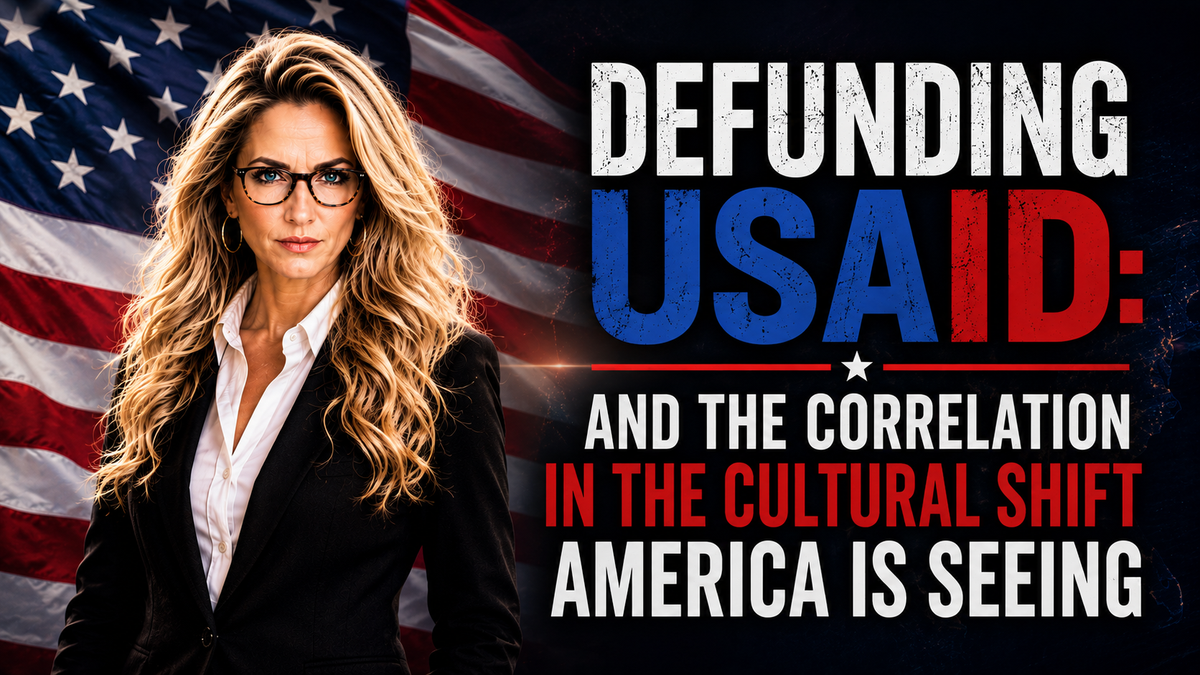
It is worth noticing the correlation between the dismantling of USAID and several major cultural trends that appear to be shifting at roughly the same time. Correlation does not prove causation, and I am not suggesting that it does. But when changes this significant begin occurring alongside one another, the timing itself deserves a closer look.
The federal government’s foreign-aid apparatus has undergone an enormous dismantling. By March 2025, more than $76.5 billion of approximately $159 billion in foreign-assistance awards had been terminated following President Trump’s order to review foreign aid.
That review also exposed something taxpayers deserve to discuss: Our government wasn’t simply funding roads, food, and medicine overseas. American money supported media-development programs and organizations promoting particular social policies and ideological priorities. USAID itself documented grants and programs supporting LGBTQ organizations, advocacy, and social-behavior-change communications around the world.
That doesn’t prove USAID deliberately attempted to undermine American culture. It does, however, raise a legitimate question: Why were American taxpayers financing ideological and cultural agendas abroad in the first place?
Meanwhile, something fascinating is occurring here at home.
For the first time since 1990, rap temporarily disappeared completely from the Billboard Hot 100’s Top 40. Hip-hop’s market share, which approached 30 percent in 2020, fell to approximately 24 percent in 2025. Billboard’s chart-rule changes contributed to that historic week, so it would be misleading to attribute the change entirely to shifting tastes. But the broader decline is real.
There have also been high-profile hip-hop concerts postponed because of poor ticket sales, although the wider concert industry—not simply hip-hop—is struggling with unsold seats for many smaller and mid-sized acts.
Then look in the opposite direction: Americans are buying Bibles.
Bible sales reached a 21-year high in 2025, with roughly 19 million copies sold—about 12 percent more than in 2024 and approximately twice the 2019 level. Research released in 2026 also found that roughly 8 million more Americans attended Christian church at least twice annually in 2025 compared with 2024.
And parents are demanding greater control over what reaches their children online.
A bipartisan coalition of more than 40 state attorneys general originally sued Meta, alleging that its platforms used features that were harmful and addictive to children. That extraordinary legal battle has now resulted in an $18 billion settlement requiring stronger safeguards, including parental controls, time limits, and restrictions on notifications during school hours.
None of these facts proves a grand conspiracy, and we shouldn’t pretend they do.
But perhaps they tell us something simpler.
For decades, Americans watched entertainment become more explicit, families become more fractured, drugs and promiscuity become increasingly normalized in popular culture, children become consumed by social media, and taxpayer dollars flow into programs many citizens would never voluntarily support.
Maybe what we’re seeing now isn’t coincidence or conspiracy.
Maybe it’s a correction.
Maybe Americans—especially parents and young people—are beginning to ask whether everything marketed as “progress” actually made us happier, stronger, or freer.
And perhaps the most encouraging cultural trend of all is that, while Washington argues about politics, millions of Americans appear to be searching again for something government cannot provide: faith, meaning, family, and God.