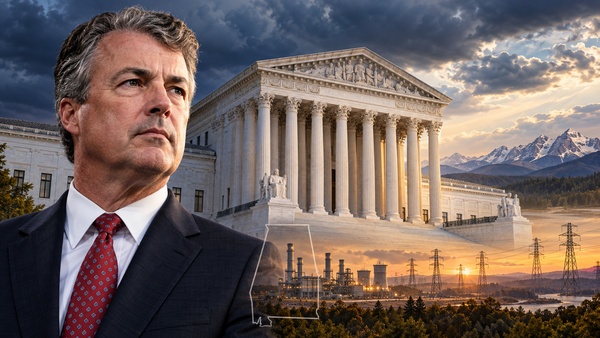
From the Bench to the Legislature: We Need Judges Who Won’t Rewrite the Law
Because justice shouldn’t be complicated. It should be right.


Okay, let’s sit for a minute and talk about something that really matters—because this isn’t just about politics. It’s about people, responsibility, and the kind of justice we want in our communities.
On my podcast, Angela’s Sweet Tea and Politics, this week with guest Michael Tewalt, candidate for District Court Judge in Madison County, what stood out to me most wasn’t just the legal talk—it was the heart behind it. And if you’ve been following along with what I’ve been saying lately, you know this ties directly into what I’ve been emphasizing: we need leaders who don’t just know the system, but respect it—and more importantly, respect the people in it.
Now here’s the thing—judicial restraint might sound like one of those fancy legal terms folks throw around, but really, it’s simple. It means a judge doesn’t make the law—they follow it. And in a world where it feels like everything is constantly shifting depending on who’s in power, that kind of steadiness matters. It means when you walk into a courtroom, you’re not walking into someone’s personal opinion—you’re walking into the law as it’s written.
And I’ll tell you, that lines up with something I say all the time: fairness should never depend on feelings, politics, or popularity.
But what I appreciated most was how he talked about balancing that firmness with compassion. Because let’s be real—life is messy. People make mistakes. Sometimes they’re hurting. Sometimes they’ve been through things we can’t even imagine. And a good judge doesn’t ignore that—but they also don’t excuse it. They hold people accountable while still recognizing their humanity.
That’s a hard line to walk, but it’s the right one.
There was that story he shared about the father who ultimately gave up his parental rights so his daughters could have a better life. That’s the kind of situation that reminds you the law isn’t just black and white—it’s lived out in real families, real heartbreak, and real sacrifice. And it takes someone grounded—someone steady—to navigate that without letting emotion override what’s ultimately best.
And that brings me back to the bigger theme we’ve been talking about: responsibility.
We’ve got to get back to a place where personal responsibility matters—where people are held accountable for their actions, but where the system also supports those who are trying to do better. It’s not either/or. It’s both.
That’s how you build strong communities. That’s how you rebuild trust in the system.
At the end of the day, what I’m hearing—and what I hope you’re hearing too—is a call for consistency, integrity, and a return to the basics: apply the law fairly, treat people with dignity, and don’t let politics cloud judgment.
Because justice shouldn’t be complicated.
It should be right.