Red State Betrayal: Alabama Never Trumpers Organize Behind Hudson
Recent polling and internal political discussions circulating among Republican operatives suggest clear voting blocs are beginning to emerge inside the primary electorate.

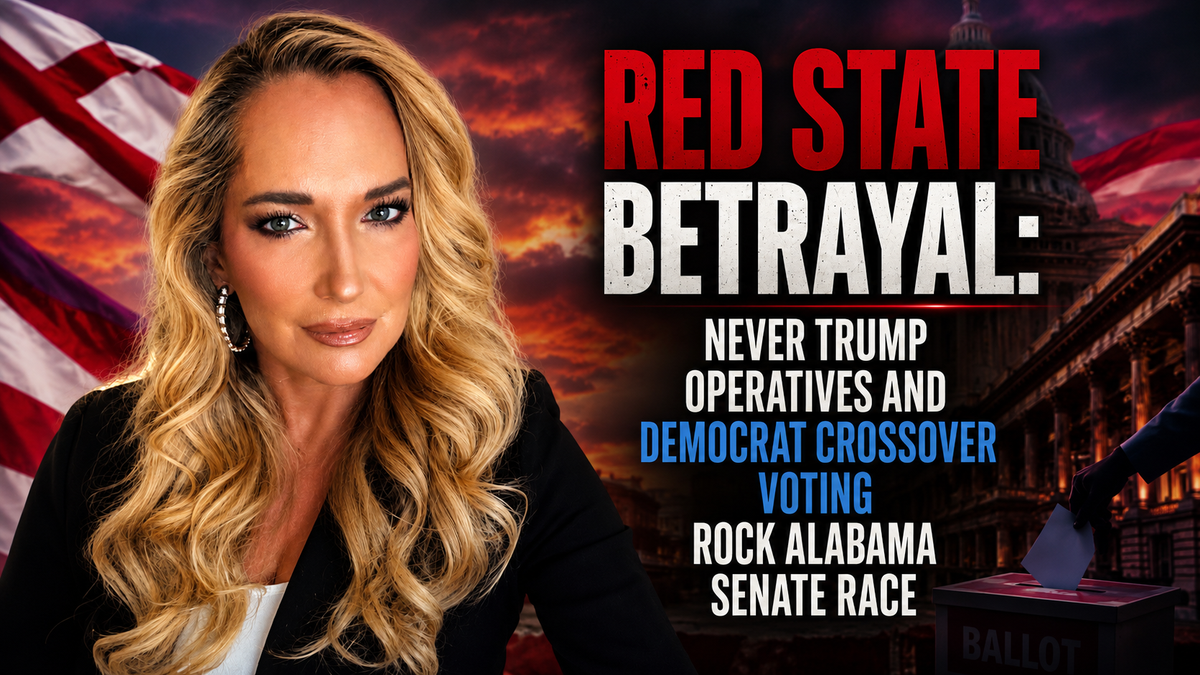
As Alabama’s Republican Senate primary enters its final stretch, many conservatives are warning that the state’s once unified MAGA movement is beginning to fracture. What was expected to be a straightforward battle over conservative credentials has instead exposed growing divisions inside the Alabama GOP between Trump loyalists, establishment Republicans, Never Trump Republicans, and voters searching for an alternative path forward.
For years, Alabama has stood as one of the strongest pro Trump states in the nation. President Donald Trump carried the state overwhelmingly, and his America First agenda reshaped Republican politics from the courthouse to Congress. But now, some grassroots conservatives fear the coalition that built the modern Alabama GOP is splintering at a critical moment.
Recent polling and internal political discussions circulating among Republican operatives suggest clear voting blocs are beginning to emerge inside the primary electorate. Trump loyalists and MAGA conservatives appear to be heavily consolidating behind Congressman Barry Moore following President Trump’s endorsement, while Attorney General Steve Marshall continues to perform strongest among more traditional establishment Republicans and longtime party insiders. Polling conversations among activists also suggest Jared Hudson is increasingly drawing support from Never Trump Republicans and anti establishment voters looking to block a more openly MAGA candidate from consolidating the race. Meanwhile, more moderate and middle of the road Republicans appear split between candidates like Rodney Walker, Dr. Dale Deas, and Seth Burton.
At the same time, former Navy SEAL Jared Hudson has found himself facing increasing scrutiny from Trump aligned conservatives who question the coalition quietly forming around his campaign. Critics have pointed to a growing number of Never Trump Republicans and anti Trump voices publicly embracing Hudson as a vehicle to stop more openly MAGA aligned candidates from consolidating support. Some conservatives argue that the movement around Hudson represents an effort to repackage establishment priorities inside an outsider campaign.
Those concerns intensified after Hudson publicly defended the Senate filibuster during a time when many Trump supporters have pushed for Republicans to aggressively use every available tool to advance President Trump’s America First agenda. For many grassroots conservatives, the fear is that Alabama Republicans are beginning to adopt the same cautious Republican politics that frustrated Trump voters in Washington for years.
Many conservatives also worry Alabama is beginning to mirror the political fractures seen in other states where establishment Republicans, Never Trump factions, and crossover voters have weakened the influence of the MAGA movement. For some voters, that possibility represents a dangerous shift for one of the reddest states in America.
Another issue causing concern inside conservative circles is the possibility of Democratic crossover voting in support of candidates viewed as less aligned with the MAGA movement. Alabama’s open primary system allows voters to choose either party’s ballot on primary day, and Republican activists have increasingly discussed whether some Democrats could strategically participate in the GOP race to influence the eventual nominee.
The theory circulating among conservatives is straightforward: Democrats understand they are unlikely to win the Senate seat outright in November, so some may view the Republican primary as their only meaningful opportunity to shape the race. In that environment, crossover voting becomes a strategic weapon rather than a statement of ideology.
Social media discussions, conservative talk radio, and grassroots Facebook groups have all amplified fears that crossover voting and establishment influence could reshape the direction of Alabama Republican politics. While there is no public evidence of organized crossover operations at scale, the concern itself reflects the growing distrust many voters feel toward political insiders and party establishments.
What is undeniable is that Alabama Republicans are entering the closing days of this primary deeply divided over strategy, authenticity, and loyalty to the conservative movement that has dominated state politics for years. Polling continues to show the race fluid and unpredictable, with no clear consensus among Republican voters.
For many conservatives, the final question is no longer simply who can win the Senate seat. It is who can truly be trusted to represent Alabama conservatives without interference from establishment Republicans, Never Trump factions, or opportunistic crossover voters.