Gabbard Files Renew Pressure on Fauci
New DNI release revives questions about Wuhan funding, congressional findings, and calls for prosecution
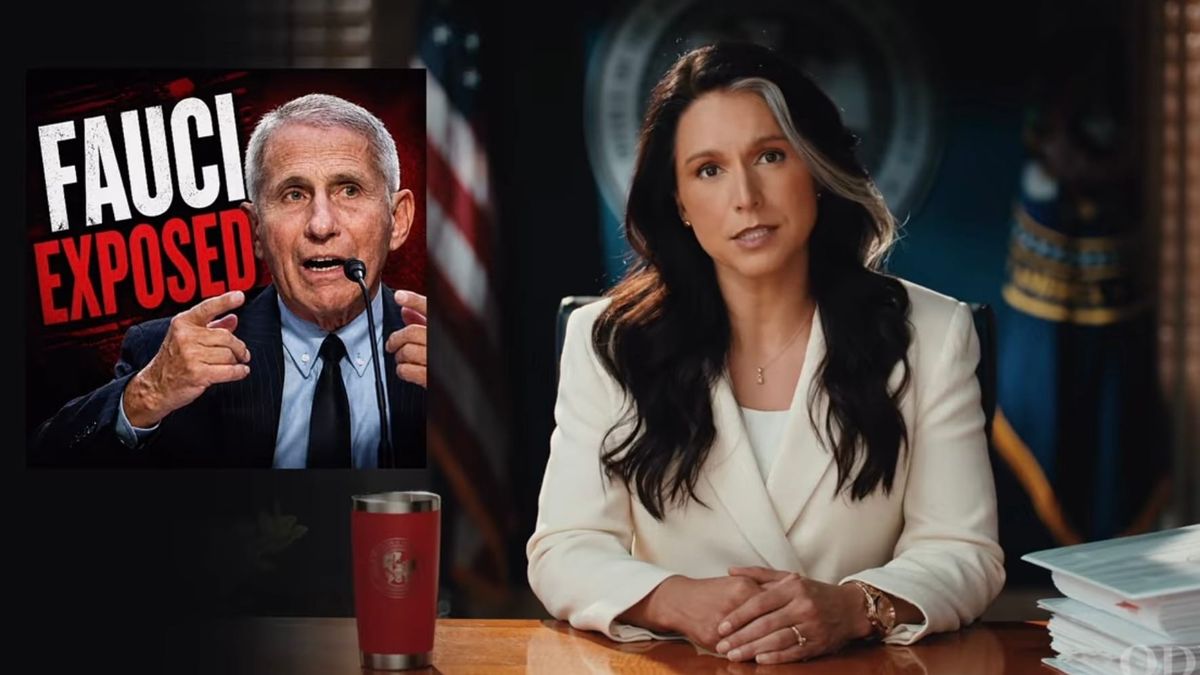
A newly-released collection of declassified records from Director of National Intelligence Tulsi Gabbard is adding fresh fuel to allegations that Dr. Anthony Fauci helped fund risky coronavirus research in Wuhan while federal officials worked to downplay legitimate questions about the pandemic's origins.
The release, published Thursday by the Office of the Director of National Intelligence, places Fauci's leadership of the National Institute of Allergy and Infectious Diseases (NIAID) back under scrutiny. According to the ODNI, millions of taxpayer dollars approved during Fauci's tenure flowed through EcoHealth Alliance to support coronavirus research at China's Wuhan Institute of Virology.
"Before the COVID-19 pandemic, Anthony Fauci, as head of the National Institute of Allergy and Infectious Diseases (NIAID), provided millions in U.S. taxpayer dollars to fund dangerous gain-of-function research on bat coronaviruses at the Wuhan Institute of Virology," the release states.
The records are the latest development in a controversy that has steadily expanded from a scientific debate into a broader question of government transparency, accountability, and public trust.
For Fauci's critics, the significance of Gabbard's release extends far beyond the research itself. They argue it reinforces years of evidence suggesting that federal officials dismissed, suppressed, or ridiculed legitimate concerns about a possible laboratory origin while presenting the public with a far more certain narrative than the available evidence justified.
Among those critics, few have been more relentless than Sen. Rand Paul (R-KY).
Since 2021, Paul has repeatedly accused Fauci of misleading Congress regarding U.S. support for coronavirus research connected to Wuhan. Their heated Senate exchanges became some of the most watched moments of the pandemic era, with Paul arguing that Fauci repeatedly evaded responsibility for research that critics believed carried significant risks.
Those disputes eventually moved beyond Capitol Hill hearings.
In 2023, Paul formally referred Fauci to the Department of Justice for possible criminal prosecution, alleging that Fauci provided false testimony under oath regarding gain-of-function research and NIH funding connected to Wuhan. Paul later renewed those referrals, arguing that newly uncovered emails, grant records, and congressional findings only strengthened the case for further investigation.
While no charges have been filed, Gabbard's release is likely to intensify calls from Fauci's critics for federal investigators to revisit the issue.
The release also arrives after years of work by the House Select Subcommittee on the Coronavirus Pandemic, whose findings painted a deeply unflattering picture of federal oversight and decision-making.
The committee concluded that the COVID-19 pandemic most likely emerged from a laboratory-associated incident and sharply criticized EcoHealth Alliance, NIH oversight practices, and what investigators described as efforts to shape public perceptions of the origin debate.
Congressional investigators found that EcoHealth Alliance repeatedly failed to comply with federal grant requirements and argued that federal agencies were slow to act even after concerns became apparent.
The committee's findings also renewed scrutiny of communications among prominent scientists and public health officials during the earliest days of the pandemic. Critics have long argued that some of those discussions appeared focused not only on understanding the virus's origins, but also on managing public messaging surrounding the possibility of a lab leak.
For many Americans, that issue has become nearly as important as the origin question itself.
The controversy surrounding COVID's origins has undergone a remarkable transformation since 2020. Ideas that were once dismissed by major media outlets as fringe speculation are now openly debated by intelligence agencies, congressional investigators, former government officials, and academic researchers.
One of the most notable examples is economist Jeffrey Sachs, who chaired The Lancet's COVID-19 Commission. Sachs later became increasingly critical of the official narrative surrounding COVID's origins and has repeatedly called for a more comprehensive investigation into research activities involving U.S. institutions and Chinese laboratories.
Independent researchers and journalists have spent years examining the connections among federal funding agencies, EcoHealth Alliance, Wuhan researchers, and public messaging campaigns that emerged during the pandemic.
Among them is author and publisher Ron Unz, whose extensive series of essays argued that the official narrative surrounding COVID's origins contained significant gaps and inconsistencies. Unz has contended that the lab-leak theory received insufficient attention during the early stages of the pandemic and that many important questions remain unresolved. (Unz’s initial essay on this topic, American Pravda: Our Coronavirus Catastrophe as Biowarfare Blowback?, April 21, 2020, has links to several of his later writings on the pandemic.)
Supporters of Fauci continue to argue that no released document has conclusively proven that NIH-funded research directly caused the pandemic. They maintain that many questions remain unanswered and caution against drawing conclusions that exceed the available evidence.
Yet even some former defenders of the official narrative now acknowledge that the public was often given a level of certainty that the underlying evidence did not support.
That reality may be the most politically damaging aspect of Gabbard's release.
The documents do not merely reopen questions about Wuhan. They reopen questions about whether powerful federal institutions were fully candid with Congress and the American people during one of the most consequential events in modern history.
For Fauci, whose influence over U.S. pandemic policy made him one of the most recognizable public officials in the country, the controversy shows little sign of fading. Instead, years after COVID-19 first emerged, new records, congressional findings, and renewed calls for investigation are ensuring that questions about his role remain very much alive.
And his Biden Autopen pardon? It likely won’t protect him.
DNI Gabbard’s press release accompanying Thursday’s information release may be read HERE.
Links to the released documents are available at THIS LINK.
Gabbard’s statement on the release may be seen on YouTube and below: