If America Wants More Cattle Farmers, USDA Has to Make It Possible to Become One

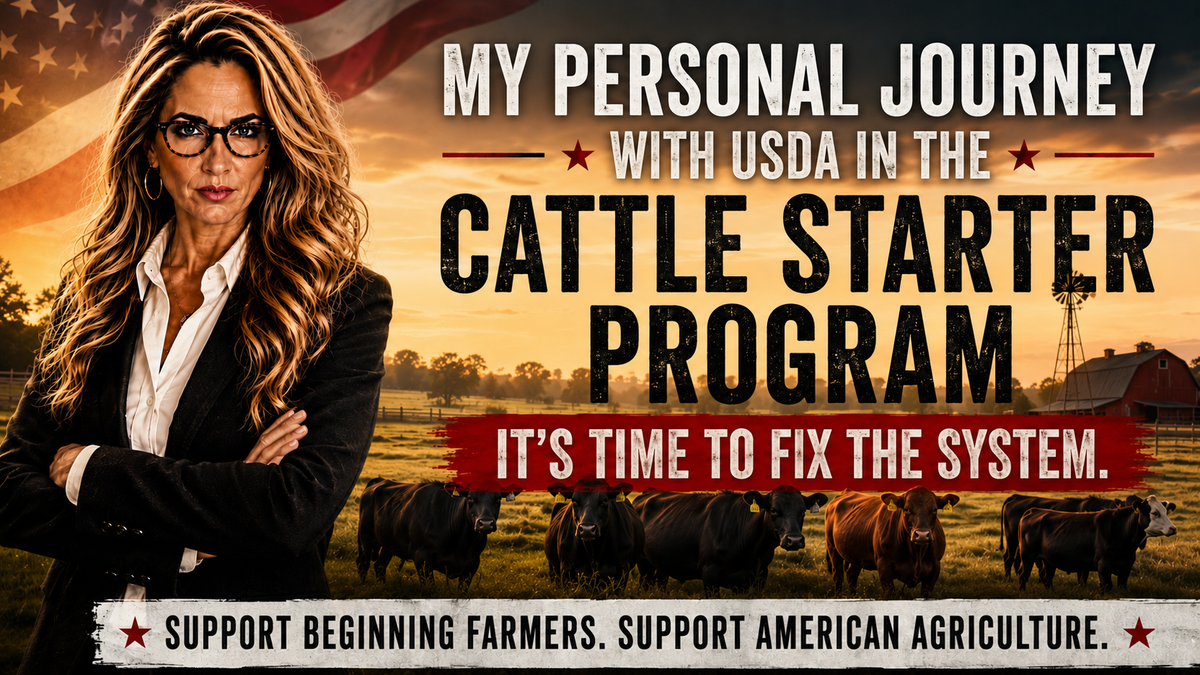
I recently decided I wanted to get back into the cattle business. I had cattle about 20 years ago during my first marriage, I have continued working with horses and livestock, and I developed a long-term plan to build a sustainable North Alabama cattle operation. I wasn’t looking for a handout. I was looking for a loan that I would have to pay back.
My plan was to start small, with approximately 10 cows and a bull, sell the calves, reinvest the proceeds and add cattle gradually until I could build a meaningful herd. It was designed to grow over time rather than trying to become a large cattle operation overnight.
That sounds like exactly the kind of person a USDA beginning-farmer program should be designed to help.
Instead, I was denied a USDA microloan.
One of the problems was the experience requirement. Although I owned cattle years ago and have extensive experience with horses, I was told my cattle experience was too long ago and that horses did not qualify as the livestock experience they were looking for within the required time period.
Think about the contradiction in that.
A program supposedly designed to help people get started in agriculture can require recent experience doing the very thing they are trying to get financing to begin doing. At some point, we have to ask: How is a beginning farmer supposed to become an experienced farmer if we make it so difficult for them to begin?
Land creates an even bigger obstacle.
For cattle, you need adequate acreage, fencing and reliable water. A commonly used planning figure in our area can be around two acres per cow, although actual stocking rates vary tremendously depending on pasture quality and management. Using that planning figure, a 50-cow herd could require roughly 100 acres.
In North Alabama, even rural agricultural land can easily approach $10,000 to $15,000 an acre depending on the property and location. At $12,000 an acre, 100 acres represents $1.2 million in land before buying the first cow, tractor, trailer, hay bale or piece of equipment.
How is a beginning cattle farmer supposed to cash-flow that?
Renting pasture sounds like the obvious solution until you actually try to find it. You need enough contiguous acreage with usable fencing, adequate grass, dependable water and an owner willing to lease it for cattle. Then you have to make the economics work.
The USDA program I dealt with allowed only an extremely limited amount toward pasture rent—around $500 per year under the terms I was given. In today’s agricultural economy, that is simply disconnected from the actual cost of obtaining usable cattle pasture.
My original financing plan was modest: approximately $45,000 for livestock and another $5,000 for pasture rental. The goal wasn’t to buy 100 cows. It was to start with around 10 cows, produce calves, reinvest, add roughly five cows per year and build the operation over time.
That’s what responsible beginning farming is supposed to look like.
USDA should reconsider how these programs work in the real world. If America is serious about rebuilding domestic agriculture and encouraging more Americans to raise cattle, we need financing programs that recognize legitimate previous livestock experience, provide realistic assistance for leasing pasture and create better pathways to land ownership.
Congress and USDA should also look seriously at grants, low-interest land programs, lease-to-own arrangements and incentives for established landowners who make pasture available to beginning farmers.
There is something fundamentally wrong when a person willing to work, invest her own money, assume the risk and repay the government loan still cannot get through the front door because she doesn’t already possess the land and recent experience the program is supposedly intended to help her obtain.
We talk constantly about protecting American agriculture, supporting cattle producers and bringing a new generation into farming.
But talk isn’t enough.
If we want more American cattle farmers, we have to create a realistic way for people to become American cattle farmers. Right now, from my experience, USDA’s beginning-farmer system isn’t doing nearly enough to make that possible.
Opinions do not reflect the views and opinions of ALPolitics.com. ALPolitics.com makes no claims nor assumes any responsibility for the information and opinions expressed above.